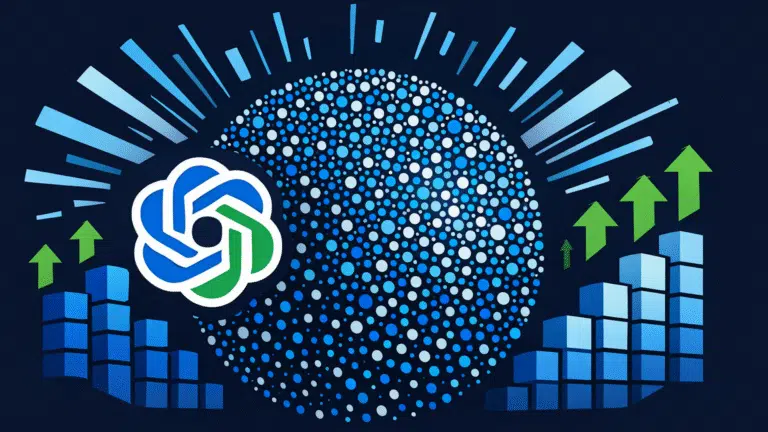
Adthena integrates ChatGPT to revolutionize competitive intelligence, offering marketers generative AI for deeper insights and optimized digital ad spend.
Adthena, a long-standing player in competitive intelligence for search advertising, has officially launched its new ChatGPT-powered ads intelligence platform. This significant move aims to leverage generative artificial intelligence to transform how marketers gain insights and optimize their digital ad spend, pushing conversational analysis to the forefront of adtech. The UK-headquartered firm has built a reputation over more than a decade for providing granular data on competitor strategies, market share, and keyword performance to enterprise clients globally. Their pivot into integrating advanced large language models (LLMs) signals a broader industry recognition: traditional SaaS platforms must evolve rapidly or risk being outmaneuvered by AI-native challengers. Adthena claims its new platform delivers "on-demand, conversational insights," allowing users to query vast datasets on competitor spending, ad copy, and bidding strategies using natural language. This promises to reduce the time spent on manual data analysis by up to 80%, ostensibly unlocking critical intelligence faster than ever before. However, a core tension remains: is this merely a sophisticated new user interface for existing data, or does it genuinely represent a novel layer of actionable intelligence? The "ChatGPT-powered" label, while a potent marketing tool, has increasingly become a lightning rod for skepticism in a crowded tech landscape. The broader adtech market is currently saturated with AI claims, spanning everything from automated bid optimization to generative creative production. Every platform, from the hyperscalers like Google and Meta down to niche providers, is grappling with the intricate challenge of integrating generative AI effectively without compromising data accuracy or introducing potentially costly hallucinations into high-stakes ad budget decisions. For Adthena’s established client base, which often includes major brands and agencies accustomed to structured dashboards and precise metrics, the transition to a conversational interface presents a fascinating user experience test case. The utility of "asking a question" versus "drilling down" will define its adoption, particularly for those whose workflows are deeply entrenched in existing analytical paradigms. The competitive landscape is poised for a reaction. Rivals such as Semrush, Similarweb, and SpyFu, all formidable players in the competitive intelligence space, have already been exploring or implementing their own AI integrations. Adthena's aggressive play with a conversational LLM could accelerate an arms race in intelligence delivery, pushing others to either replicate or differentiate with alternative AI applications. A significant technical hurdle for any LLM-driven ad intelligence platform lies in data quality and the pervasive risk of hallucination. Adtech data is notoriously complex, filled with nuances in keyword intent, geographic targeting, spend attribution, and creative effectiveness. Can an LLM consistently parse and synthesize this data to provide accurate, actionable insights without generating plausible but ultimately incorrect conclusions that could lead to misallocated ad budgets? This is not a trivial concern. Furthermore, integrating advanced AI, especially one leveraging external models, inevitably raises questions about data privacy and security. Competitive intelligence by nature deals with sensitive market data. Clients will scrutinize how their proprietary data and anonymized market insights are processed and secured within these new AI architectures, particularly given the ethical considerations surrounding large language model training and deployment. Market reception will also be telling. While the promise of instant insights is compelling, enterprise clients making critical financial decisions might remain wary of a perceived "black box" nature inherent to some AI systems. Trust in the underlying data and the interpretative accuracy of the AI will be paramount, potentially requiring a significant educational effort to overcome inherent industry conservatism. The true value proposition of generative AI in adtech might not reside in the LLM itself, but rather in its application to proprietary, high-fidelity datasets. Adthena's strategy appears to lean into this, positioning the LLM as an access layer to its meticulously curated competitive data, attempting to differentiate it from generic LLM tools that lack specific domain expertise. Looking ahead, the implications extend beyond competitive analysis. If Adthena's conversational platform proves successful, it could pave the way for a broader shift towards AI-powered full-stack ad campaign management. The question is whether generative AI will move beyond just insights to actively managing bids, optimizing creative, and even dynamically adjusting strategy in real-time, blurring the lines between intelligence and execution. Ultimately, the success of Adthena’s new ChatGPT-powered platform will hinge not just on its technological prowess and the elegance of its conversational interface, but on its demonstrable ability to deliver tangible return on investment and build unwavering trust within an industry increasingly wary of AI hype cycles.
Frequently asked questions
How does Adthena's new platform leverage ChatGPT for ads intelligence?
Adthena's platform uses ChatGPT to power conversational analysis, allowing marketers to gain deeper, more nuanced insights from competitive search advertising data. It transforms raw data into actionable intelligence through generative AI capabilities.
What benefits does AI bring to competitive ad intelligence?
AI enhances competitive ad intelligence by automating data analysis, identifying trends faster, and offering predictive insights for optimizing ad spend and strategy.
Who is Adthena's new ChatGPT platform designed for?
It's designed for marketers, advertisers, and adtech professionals looking to gain a competitive edge in search advertising through advanced AI-driven insights.
Is Adthena a new company in the adtech space?
No, Adthena is described as a 'long-standing player' in competitive intelligence for search advertising, now innovating with new AI technology.
How can marketers optimize digital ad spend using this platform?
Marketers can optimize ad spend by leveraging the platform's AI-driven insights to understand competitor strategies, identify performance gaps, and refine their own campaign targeting and messaging.
What is generative AI's role in adtech?
Generative AI in adtech, as seen with Adthena, focuses on creating insights, content, or analysis that can lead to more effective ad campaigns and better strategic decision-making.