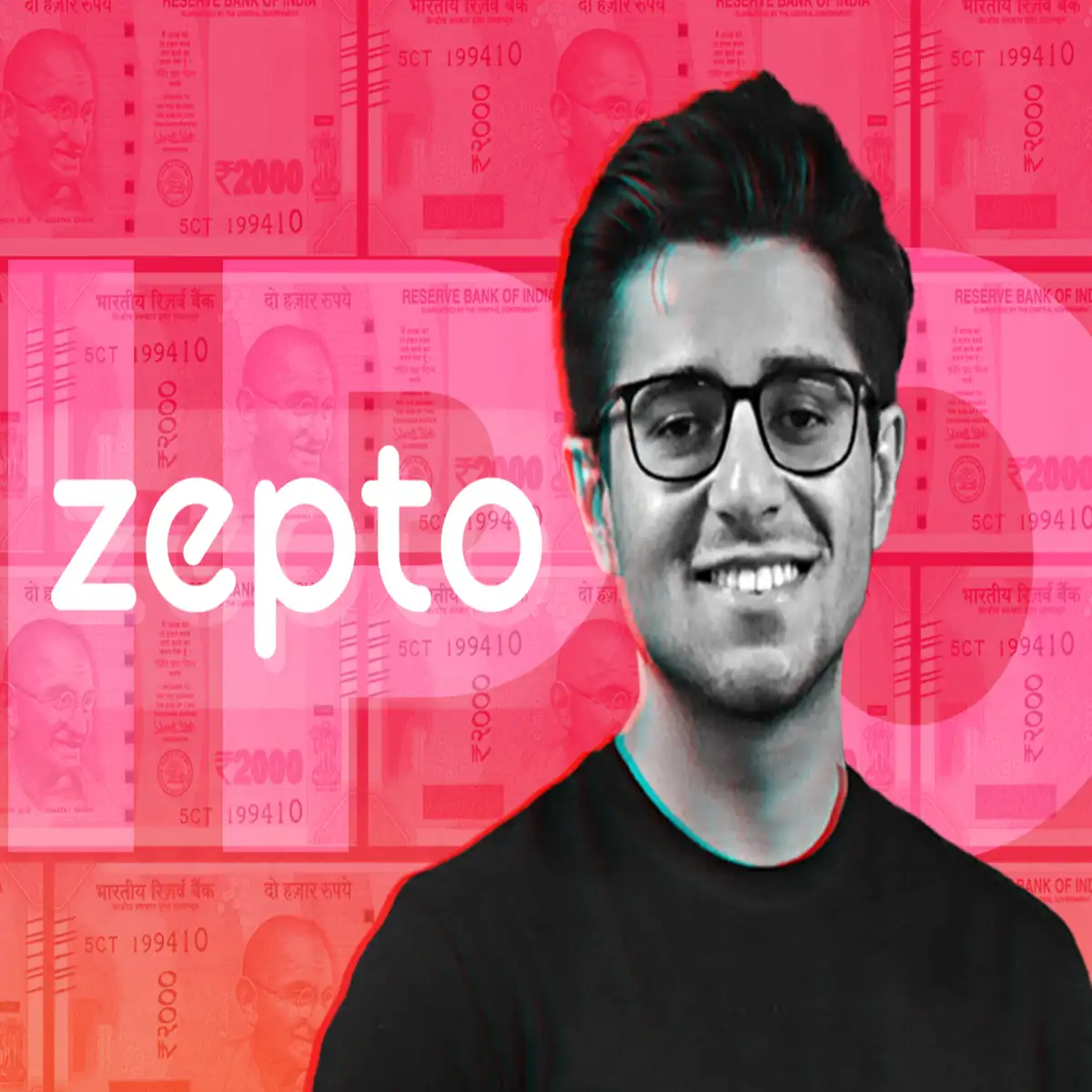
India's quick-commerce pioneer Zepto is set to make a splash with its massive Rs 8,000-9,000 crore public offering, redefining market dynamics.
The murmurs from regulatory corridors have crystallized into definitive news: Zepto, the quick-commerce trailblazer, has reportedly secured the Securities and Exchange Board of India's (SEBI) green light for its ambitious Initial Public Offering (IPO). With an issue size speculated to be between Rs 8,000-9,000 crore, this isn't just another listing; it is a seismic event poised to redefine public market perception of India's new-age economy, particularly for growth-stage startups grappling with the elusive promise of profitability.
This development marks a critical inflection point, not just for Zepto, but for the broader startup ecosystem globally. It forces a retrospective gaze at an era of unbridled exuberance, a stark contemplation of the brutal funding winter that followed, and a forward-looking analysis of what sustainable growth truly means in the public glare.
The Pre-Correction Era: Growth at All Costs
Before the funding taps tightened, the startup world operated under a different mantra: growth at all costs. The period spanning 2019-2021 saw venture capitalists pour unprecedented sums into nascent sectors, believing that market dominance, regardless of immediate unit economics, would eventually pave the way for profitability. Quick commerce, or 10-minute grocery delivery, was a poster child of this philosophy.
Fueled by pandemic-induced demand and a surge in digital adoption, companies like Zepto, founded by Stanford dropouts Aadit Palicha and Kaivalya Vohra, exploded onto the scene. They promised instant gratification, leveraging a network of dark stores and hyper-efficient logistics to deliver groceries and essentials within minutes. Competitors like Swiggy Instamart and Zomato-owned Blinkit (then Grofers) intensified the battle for market share, often at the expense of sustainable margins. Globally, players like Getir, Gorillas, and Flink mirrored this rapid expansion, raising billions and expanding aggressively across cities.
Valuations soared. Zepto itself achieved unicorn status in August 2023, valued at $1.4 billion, a testament to the investor appetite for speed and scale. The narrative was simple: capture the customer, expand relentlessly, and worry about profitability later. This approach, while effective in acquiring users and establishing brand presence, often masked deeply challenging unit economics, characterized by high customer acquisition costs (CAC), thin margins on goods, and expensive last-mile delivery infrastructure.
The Winter's Chill: A Reckoning for Unit Economics
The party couldn't last forever. As interest rates began to rise globally in late 2021 and 2022, and macroeconomic uncertainties loomed, the venture capital spigot began to constrict. The "funding winter" brought a brutal reckoning, particularly for business models that prioritized hyper-growth over sustainable financial health. Investors, no longer willing to bankroll perpetual losses, demanded a clear path to profitability.
Many quick-commerce players, both in India and internationally, buckled under the pressure. Some struggled to raise follow-on rounds, leading to layoffs, operational scale-downs, and even outright closures or distressed mergers. Dunzo, once a promising Indian quick-commerce and delivery player, faced significant financial distress, a stark reminder of the sector's inherent challenges when capital became scarce.
This period forced a fundamental shift in strategy. The focus moved from "growth at all costs" to "profitable growth." Startups were compelled to scrutinize every operational cost, optimize supply chains, improve average order values (AOV), and enhance customer retention to reduce CAC. It became evident that public markets, unlike private investors in an expansive bull run, would have zero tolerance for businesses burning cash indefinitely without a credible path to generating free cash flow.
Zepto's Pivot to Profitability: A Blueprint for Resilience
Zepto's journey through this challenging period stands out as a potential blueprint for resilience. While maintaining its aggressive growth trajectory, the company made a conscious and decisive pivot towards operational efficiency and profitability. This wasn't a superficial adjustment; it involved deep structural changes.
Key strategies included rigorous dark store optimization, leveraging data analytics to predict demand more accurately, thereby reducing inventory waste and improving stock rotation. The company focused on increasing its average order value through strategic merchandising and fostering repeat purchases. Zepto also invested heavily in its technology stack, streamlining logistics and delivery routes to minimize per-order delivery costs.
Crucially, Zepto aimed to achieve positive unit economics in a significant portion of its dark stores and geographies. This granular focus on individual store profitability, rather than just top-line growth, allowed them to demonstrate a scalable model. By carefully managing burn rates and showcasing improving margins, Zepto managed to raise its unicorn round during a period when many peers struggled, signaling investor confidence in its revised strategy.
Its ability to secure SEBI approval for an IPO of this magnitude suggests that the regulators and public market watchdogs are satisfied with its disclosures and its financial trajectory, despite the inherent challenges of the quick-commerce model.
The SEBI Nod: A Public Market Validation
The SEBI approval is more than a procedural step; it's a significant validation. It signifies that India's capital market regulator, known for its stringent oversight, believes Zepto's business model, disclosures, and risk profile are suitable for public investment. For a company in a relatively nascent and capital-intensive sector like quick commerce, this is a powerful endorsement.
An IPO of Rs 8,000-9,000 crore places Zepto among the larger public market debuts for Indian tech companies, comparable to some of the prominent listings seen in the last few years. It will test the appetite of institutional and retail investors for a high-growth, yet still evolving, business model. The success of this IPO will not only provide Zepto with substantial capital for future expansion, market penetration, and potential diversification but will also set a precedent for other Indian startups eyeing the public markets.
The Road Ahead: Navigating Public Expectations
While the IPO approval is a major milestone, Zepto's true test begins post-listing. Public market investors are notoriously less patient than their private counterparts. They demand consistent performance, quarter-on-quarter growth, and clear communication regarding financial health and strategic direction. The company will be under immense pressure to sustain its profitable growth trajectory, fend off competition, and demonstrate the scalability of its model beyond its current operational footprint.
Key challenges will include managing investor expectations regarding valuation, particularly in a market that has seen corrections in many tech stocks globally. Zepto will also need to navigate the complexities of supply chain management, delivery partner relationships, and evolving consumer preferences in a highly competitive sector. The ability to innovate, expand into new categories, and maintain operational efficiency will be paramount.
Global Echoes and Lessons for Founders
Zepto's journey and imminent IPO hold profound lessons for founders and operators globally. The "before/after/now" narrative of the quick-commerce sector, from hyper-growth to a focus on profitability, is a universal tale. It underscores the cyclical nature of capital markets and the enduring importance of fundamental business principles.
For founders in capital-intensive sectors, the takeaway is clear: develop a robust path to profitability early on, even when capital is abundant. For those in growth-stage companies, Zepto's experience highlights the necessity of adapting quickly to changing investor sentiment and pivoting strategies to meet public market expectations. The ability to demonstrate strong unit economics, efficient capital utilization, and a clear vision for sustainable value creation is no longer optional but essential for long-term success and eventual public listing.
The Indian market, with its unique blend of digital adoption, a vast consumer base, and increasingly sophisticated regulatory environment, is becoming a crucible for these new-age businesses. Zepto's IPO is not just about one company; it's a bellwether for the entire ecosystem, signaling a new era of maturity and accountability for tech ventures aiming for the public square.
Key Takeaways
Shift to Profitable Growth: Zepto's IPO signifies a critical paradigm shift in the startup ecosystem from "growth at all costs" to a mandatory focus on sustainable, profitable growth, a lesson for all founders.
Public Market Scrutiny: The Rs 8,000-9,000 crore IPO will test public investor appetite for high-growth, capital-intensive new-economy businesses, demanding transparent unit economics and a clear path to free cash flow.
Operational Efficiency as a Differentiator: Zepto's strategic pivot to optimize dark store efficiency, increase average order value, and streamline logistics proved crucial in securing investor confidence and regulatory approval during a funding downturn.
Regulatory Maturity of Indian Market: SEBI's nod for a quick-commerce player of this scale highlights the Indian capital market's growing maturity and its willingness to evaluate new-age business models under stringent financial and governance parameters.
A Blueprint for Future IPOs: Zepto's successful navigation of the funding winter and its impending public debut will serve as a crucial case study and potential blueprint for other Indian and global startups aspiring to list.
Frequently asked questions
Has Zepto received SEBI approval for its IPO?
Yes, Zepto, the quick-commerce company, has reportedly secured the Securities and Exchange Board of India's (SEBI) green light for its Initial Public Offering (IPO).
What is the estimated issue size of Zepto's IPO?
The issue size for Zepto's IPO is speculated to be between Rs 8,000-9,000 crore, according to sources.
What kind of company is Zepto?
Zepto is a leading quick-commerce company, primarily known for its rapid grocery and essential item delivery services.
What does a SEBI nod mean for an IPO?
A SEBI nod indicates that the market regulator has reviewed the company's IPO application and found it compliant, allowing the company to proceed with its public offering.
When is Zepto's IPO expected?
While SEBI approval has been granted, the exact timeline for Zepto's IPO launch is not specified, but it typically follows soon after regulatory approval.
How significant is Zepto's IPO for the Indian market?
Zepto's IPO, with its substantial issue size, is considered a seismic event that could redefine public market perceptions and investment trends in the quick-commerce sector.