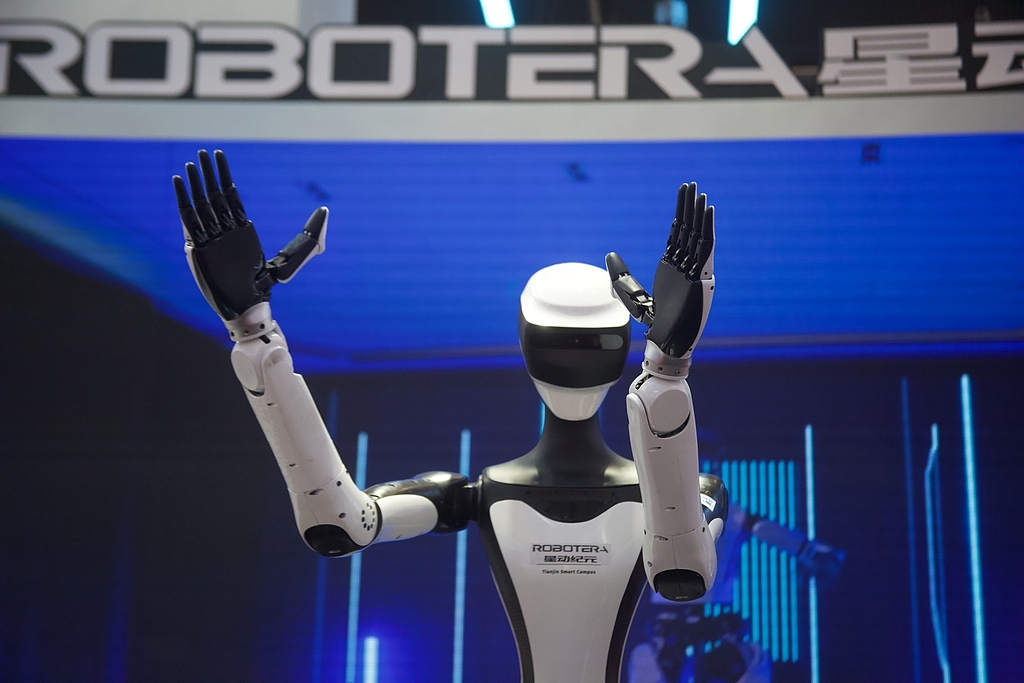
Chinese startup Robotera secures massive funding, signaling surging investor confidence in advanced automation and Beijing's tech ambitions.
Chinese robotics startup Robotera has successfully closed a funding round exceeding $200 million, a substantial capital injection that signals escalating investor confidence in advanced automation and China's strategic push for technological self-sufficiency. This significant raise positions Robotera as a formidable contender in the global robotics landscape, particularly as industries worldwide grapple with labor shortages, efficiency demands, and the imperative for supply chain resilience.
The funding round, reportedly a Series C, underscores a broader trend: while some sectors of Chinese tech have faced regulatory headwinds, the deep tech and industrial automation segments continue to attract robust investment. Robotera's achievement highlights the strategic importance placed on robotics and artificial intelligence, not just within China's industrial policy framework, but also by global capital seeking disruptive innovation.
Robotera's Core Innovation and Market Niche
Robotera specializes in developing next-generation intelligent automation platforms, combining advanced collaborative robot (cobot) hardware with proprietary AI-driven vision and path-planning software. Their solutions are particularly tailored for complex logistical challenges, precision manufacturing, and novel applications within service industries. Unlike traditional industrial robots, which often require extensive programming and operate in caged environments, Robotera's systems are designed for intuitive interaction and safe operation alongside human workers, enhancing productivity without necessitating wholesale facility redesigns.
The company's key differentiator lies in its ability to offer highly adaptable and reconfigurable robotic solutions. For instance, their modular manipulation systems, integrated with real-time perception capabilities, can perform tasks ranging from intricate assembly in electronics factories to dynamic package sorting in e-commerce fulfillment centers. This versatility addresses a critical pain point for businesses seeking flexible automation that can adapt to changing production demands and product cycles, a common challenge in modern manufacturing.
Robotera has already deployed its systems in numerous pilot projects across China, demonstrating significant improvements in operational efficiency and error reduction. Their early successes have resonated particularly within the automotive supply chain, consumer electronics manufacturing, and increasingly, in last-mile logistics operations where human labor is scarce and costly.
The Investment Landscape and Strategic Backing
While specific investors were not fully disclosed, sources close to the deal indicate participation from a mix of leading global venture capital firms, state-backed strategic investment funds, and corporate venture arms of major industrial conglomerates. This diverse investor base reflects both the purely commercial potential of Robotera's technology and its alignment with national strategic priorities.
The capital infusion is earmarked for several critical areas: accelerating research and development into new robotic capabilities, scaling up manufacturing to meet growing demand, expanding into new domestic and international markets, and attracting top-tier engineering and AI talent. This level of investment is crucial for deep tech startups, which require significant upfront capital for hardware development, advanced software refinement, and extensive testing before achieving widespread commercialization.
The round likely places Robotera's post-money valuation well into unicorn territory, solidifying its status as one of China's most promising technology ventures. This financial muscle will enable Robotera to compete more aggressively with established global players and homegrown rivals, particularly in securing intellectual property and attracting the best minds in a highly competitive talent market.
China's Grand Robotics Ambition
Robotera's substantial funding is not an isolated event but rather a clear manifestation of China's aggressive national strategy to dominate the global robotics and AI sectors. Initiatives like "Made in China 2025" and subsequent national AI development plans have explicitly prioritized intelligent manufacturing and robotics as core pillars for economic transformation. The goal is to move China from being the "world's factory" to a global innovation leader, particularly in high-value industries.
The domestic market for robotics in China is already the largest globally, driven by factors such as an aging workforce, rising labor costs, and a massive manufacturing base requiring automation upgrades. Government subsidies, preferential policies, and strategic investment funds have actively nurtured a vibrant ecosystem of robotics startups, research institutions, and industrial parks dedicated to automation. This supportive environment allows companies like Robotera to rapidly prototype, test, and deploy solutions on a vast scale.
Furthermore, China's vast domestic data resources provide an unparalleled training ground for AI algorithms, a critical component of Robotera's intelligent systems. The sheer volume and diversity of data generated across various industries enable faster iteration and improvement of their AI vision and control systems, potentially giving them an edge in performance and adaptability.
Global Implications and Competitive Dynamics
The rise of well-funded Chinese robotics firms like Robotera carries significant implications for the global automation industry. For decades, the market has been dominated by a handful of players from Japan (Fanuc, Yaskawa), Germany (Kuka, now owned by Midea of China), and Switzerland (ABB). Robotera's success signals a strong challenge to this established order, particularly in the rapidly growing cobot and intelligent autonomous systems segments.
The competition is intensifying across several fronts: technological innovation, market share, and talent acquisition. Western and Japanese robotics firms are investing heavily in AI integration and user-friendly interfaces, but Chinese firms benefit from strong domestic demand and aggressive scaling capabilities. The potential for Robotera to expand its footprint beyond China, targeting markets in Southeast Asia, Europe, and potentially North America, will reshape competitive dynamics.
"This significant capital injection underscores the critical juncture where AI and advanced robotics converge, driving unprecedented efficiency gains across industries," states Dr. Evelyn Chen, a lead analyst at Global Robotics Insights. "Robotera's focus on adaptable, AI-driven cobots for complex tasks positions them to capture substantial market share. However, their long-term global success will hinge not just on technological superiority, but also on navigating geopolitical complexities, establishing robust international supply chains, and building trust in diverse regulatory environments."
Dr. Evelyn Chen, Lead Analyst, Global Robotics Insights
Geopolitical considerations are, however, a significant factor. As a Chinese technology firm, Robotera may face increased scrutiny regarding data security, intellectual property protection, and potential dual-use concerns as it seeks to penetrate sensitive international markets. Export controls and national security reviews could become hurdles, requiring careful strategic planning for global expansion.
Challenges and the Road Ahead
Despite the substantial funding and promising technology, Robotera faces numerous challenges. Scaling production of complex robotic systems while maintaining quality and cost-effectiveness is a significant hurdle. The global supply chain for high-precision components, semiconductors, and specialized materials remains fragile, demanding robust procurement strategies.
Talent retention and attraction are also critical. The global competition for AI engineers, robotics specialists, and automation experts is fierce. Robotera will need to foster a culture of innovation and provide competitive compensation to secure and retain top talent against both domestic giants and international tech leaders.
Furthermore, while China's domestic market offers a strong foundation, successful international expansion requires more than just a superior product. It demands localized sales and support networks, compliance with diverse regulatory frameworks, and an understanding of cultural nuances in different business environments. Building trust and brand recognition outside of China will be a long-term endeavor.
Looking ahead, the success of companies like Robotera will have profound economic and societal impacts. Widespread adoption of advanced robotics promises to boost productivity, reduce manufacturing costs, and potentially create new job categories requiring human oversight and interaction with intelligent machines. The ethical considerations around job displacement, data privacy, and the responsible deployment of AI will continue to be central discussions.
Robotera's $200 million funding round is more than just a financial milestone; it is a powerful indicator of the accelerating pace of innovation in robotics and AI, driven by strategic national ambition and global market demand. The coming years will reveal whether this Chinese contender can translate its financial backing and technological prowess into global market leadership, fundamentally reshaping the industrial landscape.
Key Takeaways
Significant Capital Injection: Robotera's over $200 million funding round highlights robust investor confidence in advanced robotics and China's strategic tech push.
Next-Gen Cobot Focus: The company specializes in AI-driven collaborative robots for complex logistics, precision manufacturing, and service industries, offering adaptable automation.
Strategic National Alignment: The funding reinforces China's "Made in China 2025" goals, leveraging a large domestic market and government support for robotics and AI.
Global Competitive Threat: Robotera's rise intensifies competition with established global players, potentially reshaping market dynamics in automation.
Challenges for Expansion: Hurdles include scaling production, talent retention, navigating geopolitical scrutiny, and building international market trust.
Frequently asked questions
What is Robotera?
Robotera is a Chinese robotics startup that recently secured over $200 million in funding. It's becoming a significant player in the global advanced automation and robotics landscape, focusing on technological self-sufficiency for China.
How much funding did Robotera raise?
Robotera successfully raised over $200 million in its latest funding round, marking a substantial capital injection.
Why is Robotera's funding significant?
This funding signifies escalating investor confidence in advanced automation and highlights China's strategic push for technological self-sufficiency, positioning Robotera as a formidable global contender.
What industry does Robotera operate in?
Robotera operates within the advanced automation and robotics industry, contributing to global technological advancements.
What does Robotera's funding mean for China?
The funding reinforces China's strategic commitment to technological self-sufficiency and strengthens its presence in the competitive global robotics landscape.
Where is Robotera based?
Robotera is a Chinese robotics startup, indicating its primary operations and base are located in China.