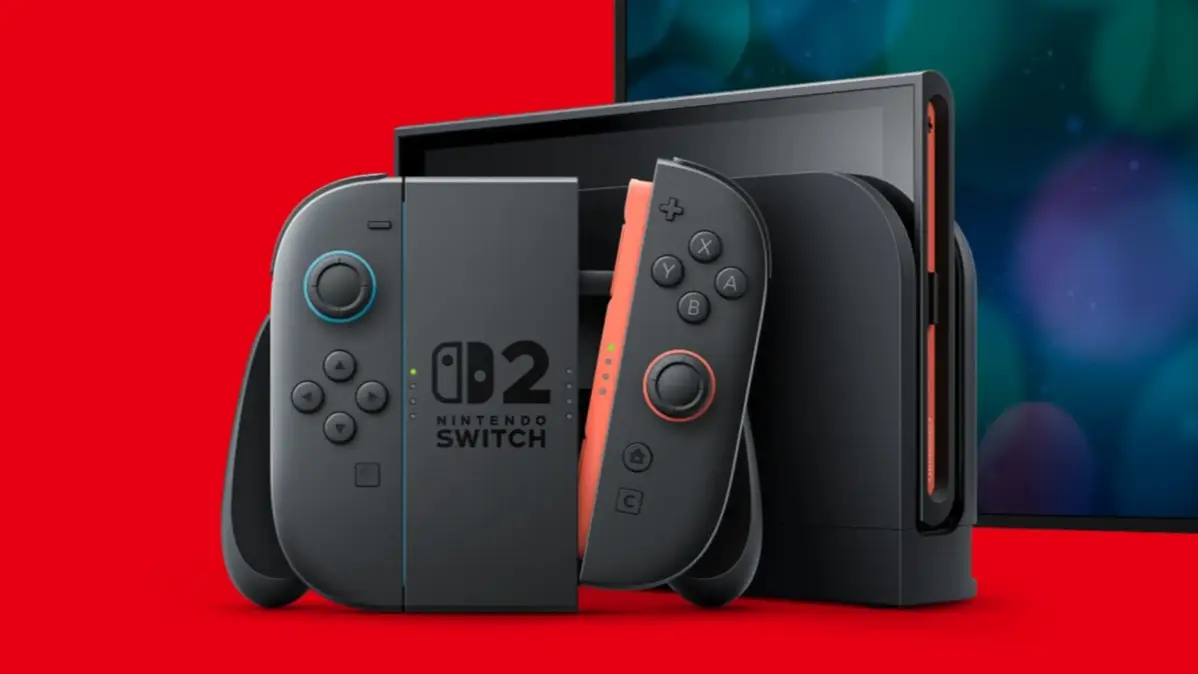
In November 2025, Nintendo President Shuntaro Furukawa made a promise with a caveat so large it functioned as a warning: the Switch 2 price would not increase in 2026, unless inflationary pressures from tariffs or component costs made it unavoidable. Five months later, the caveat swallowed the promise. Nintendo announced a $50 price increase in the U.S. — from $449.99 to $499.99, effective September 1 — along with a ¥10,000 hike in Japan, effective May 25, and a parallel rise across Europe to €499.99. The stock reacted the way markets react when a red line gets crossed: swiftly and without mercy.
But the story underneath the share price move is more structurally interesting than a single earnings miss. What happened to Nintendo in the first week of May 2026 is what happens when a consumer hardware company built for one economic era collides with a supply chain organized for another.
What Actually Happened — and What The Numbers Obscure
The fiscal year that just closed (ended March 2026) was, by any honest reading, extraordinary. Nintendo reported net sales of 2.31 trillion yen, nearly double the prior year. Net profit climbed 52.1% to 424 billion yen. Switch 2 shipped 19.86 million units — ahead of Nintendo's own 19 million forecast and representing the fastest first-year adoption of any Nintendo console ever. Mario Kart World sold 14.7 million copies. The Super Mario Galaxy Movie generated nearly $900 million globally. By any reasonable benchmark, this was a company firing on all cylinders.
Then came the guidance for fiscal year 2027 (ending March 2027), and the picture shattered.
The guidance that moved the market:
Metric | FY2026 (Actual) | FY2027 (Forecast) | Change |
|---|---|---|---|
Net sales (yen) | ¥2.31 trillion | ¥2.05 trillion | −11.4% |
Net profit (yen) | ¥424 billion | ¥310 billion | −26.9% |
Switch 2 hardware units | 19.86 million | 16.5 million | −16.9% |
Dividend per share | ¥219 | ¥162 | −26.0% |
Macroeconomic headwind estimate | — | ¥100 billion | — |
That guidance came in roughly ¥400 billion below analyst expectations on the sales line — a miss so large it cannot be explained by conservative management messaging alone. Toyo Research Institute analyst Hideki Yasuda told Bloomberg that while Nintendo typically opens the year with cautious forecasts, this one was "unusually weak." The market, which had already been selling Nintendo down — shares had fallen roughly 45% over the prior 12 months — concluded that "unusually weak" warranted another leg down.
A16z Isn't In This Story, But NVIDIA Basically Is
Here is the structural explanation that most gaming coverage is missing: Nintendo's margin problem is not primarily a Nintendo problem. It is a consequence of decisions made by Meta, Google, Microsoft, Amazon, and every hyperscaler that signed long-term memory supply contracts with Samsung, SK Hynix, and Micron to feed the AI data center buildout.
Samsung, SK Hynix, and Micron control over 95% of global DRAM production. For the past 18 months, all three have been systematically reallocating wafer capacity away from consumer-grade DRAM and NAND flash toward high-bandwidth memory (HBM) chips. HBM is what sits next to NVIDIA's Blackwell GPUs in AI data centers. A single NVIDIA B300 GPU requires 96 DRAM dies. A fully configured DGX B300 system — eight GPUs — consumes 768 DRAM dies just for HBM alone. The math of AI infrastructure is cannibalizing the math of consumer electronics at scale.
The Switch 2 runs 12GB of LPDDR5X RAM. By late 2025, Nintendo was reportedly paying 41% more for those memory modules than it had at launch. TrendForce data suggests NAND contract prices surged as much as 90% in Q1 2026 quarter-over-quarter. Memory modules now account for an estimated 21–23% of total Switch 2 hardware costs — a component share that would have been unthinkable at the time the Switch 2's pricing was designed. Nintendo's ¥100 billion macroeconomic headwind estimate includes memory, tariffs, and elevated shipping costs tied to the Iran conflict disrupting global logistics. All three of those inputs are external. None of them are within Nintendo's operational control.
"The clock was ticking for Nintendo for months now. The impact is quite dramatic, as console sales usually go up in the second year — and not down as Nintendo predicts this time."
— Serkan Toto, CEO of Kantan Games, speaking to CNBC, May 8, 2026
Toto's observation is the key one. Every console generation in modern gaming history has followed a predictable adoption curve: sell at or near break-even in year one, then ride the software attach rate, subscription revenue, and modest hardware margin improvements as manufacturing costs come down. The Switch 2 sold 19.86 million units in year one. The expectation — the historically validated expectation — was that year two would add volume. Instead, Nintendo is guiding for a 17% decline. That inversion of the standard console lifecycle is what spooked investors, not the price hike in isolation.
Who Wins, Who Loses, Who Should Be Watching
The obvious loser is the consumer in price-sensitive markets. Japan's hike from ¥49,980 to ¥59,980 is a 20% increase for a market where the console was already effectively sold at a loss. Nintendo also announced price increases for Switch Online subscriptions in Japan and South Korea effective July 1 — a move that signals the company is trying to recover margin across every revenue line simultaneously. For Southeast Asian consumers, where gaming hardware price sensitivity is materially higher than in Japan or the U.S., a $500 Switch 2 is a meaningful barrier.
The non-obvious winner is Sony, but not in the way you'd expect. Sony's PlayStation division is facing its own memory cost pressures and recently forecast lower gaming division sales due to weaker PS5 demand. In that context, Nintendo's price hike is competitive cover — it normalizes a ¥499 price point across the console market and gives Sony room to adjust its own pricing without looking like the aggressor. Microsoft's Xbox hardware line has already absorbed $100–$150 price increases across its lineup. The whole industry is repricing, and Nintendo just provided the most prominent data point.
The genuinely interesting winner is first-party software. Nintendo is projecting Switch 2 game software sales of 60 million units in fiscal 2027, up 23% from 48.7 million. If that software guidance holds while hardware volume contracts, it would validate the business model that Nintendo has always claimed — that the console is a vessel for the software ecosystem, not an end in itself. Mario Kart World at $80 is the most expensive Nintendo first-party title ever released. Donkey Kong Bananza, Tomodachi Life: Living the Dream, and Pokémon Legends Z-A have all performed ahead of internal targets. If Nintendo can sustain a 60M software run rate on 16.5M hardware units, the attachment rate per user would be historically high. That's not a bad business — it's just not the business the market was pricing in.
The Skeptic's Corner
The bulls on Nintendo cite brand inelasticity, franchise depth, and the software guide as reasons this selloff is overdone. They have a point, but they're answering the wrong question.
The concern isn't whether Nintendo survives this. It's whether the Switch 2's mid-cycle trajectory mirrors the original Switch — which hit 140+ million lifetime units through aggressive price cuts and software momentum — or whether it plateaus early because a $500 price floor prevents the mass-market penetration that drove the original Switch's long tail. Nintendo has explicitly promised not to cut the Switch 2 price in the medium term given cost structures. That means the "price cut to reignite growth" lever that the original Switch used twice isn't available. What's unknown — and what nobody in this earnings cycle adequately answered — is whether Nintendo's 129 million annual active users can absorb $500 hardware and $80 software sustainably, or whether the addressable market at that price point is structurally smaller than the one Nintendo has spent a decade building.
What to Watch
DTCC's July 2026 production milestone — wait, wrong beat. More relevantly: whether the U.S. tariff pause holds past early July. Trump administration country-specific reciprocal tariffs are currently paused, with the pause expiring in early July. If those tariffs resume at full rates on electronics imports before the September 1 price hike takes effect, Nintendo's ¥100 billion headwind estimate is almost certainly too low.
TrendForce's Q2 NAND pricing data. Memory costs are projected to surge further before stabilizing. IDC expects 2026 DRAM and NAND supply growth to land below historical norms at 16% and 17% respectively. If cost pressure extends into 2027 as the last available semiconductor CEO commentary suggested, Nintendo's fiscal 2027 guidance may itself prove optimistic.
Software attach rate at the new price point. The 60M software unit forecast is the load-bearing number in Nintendo's bull case. Watch monthly software data from Circana (U.S.) and Famitsu (Japan) for signs that the $500 hardware price is creating friction in the early buyer's software spend. If games-per-console drops, the business model argument weakens.
Sony's next pricing move. Sony has previously raised PS5 prices mid-generation in response to input cost pressure. A matching move from Sony in the back half of 2026 would validate Nintendo's action as market necessity rather than brand risk. A Sony hold would apply competitive pressure.
Nintendo Switch Online subscriber retention in Japan and South Korea post-July 1. A subscription price increase in the company's most price-sensitive core markets, concurrent with a hardware hike, is a compounding stress test on consumer loyalty. Subscriber churn data, if it surfaces, will be a leading indicator.
Key Takeaways
Nintendo drops 8% on May 8, 2026, and most coverage frames it as a story about a console maker getting punished for raising prices. That's not wrong, but it's incomplete.
The signal underneath the signal:
The memory supply chain is now structurally bifurcated between AI infrastructure and everything else. Consumer hardware companies — Nintendo, Sony, Valve (whose Steam Deck also went out of stock due to memory shortages), and eventually smartphone OEMs — are competing for the residual output of fabs that have been contractually committed to hyperscaler AI demand. That structural condition will not resolve quickly. IDC projects below-norm supply growth through 2026. Industry forecasts suggest it persists into 2027.
For founders and operators, the implication is broader than gaming. Any hardware product with meaningful DRAM or NAND content — consumer IoT, edge AI devices, wearables, robotics — is operating in a cost environment that has been permanently repriced by the AI infrastructure buildout. Nintendo is the largest and most visible company experiencing this in consumer electronics. It will not be the last.
The question Shuntaro Furukawa couldn't answer on May 8, and that the market is still pricing, is whether Nintendo built a $500 hardware business or a $450 one that circumstances forced to $500. That distinction will define the Switch 2's second half — and it will matter to every operator building a hardware product in the next two years.