The TikTok parent company's massive investment highlights its aggressive strategy to dominate the evolving digital landscape and generative AI race.
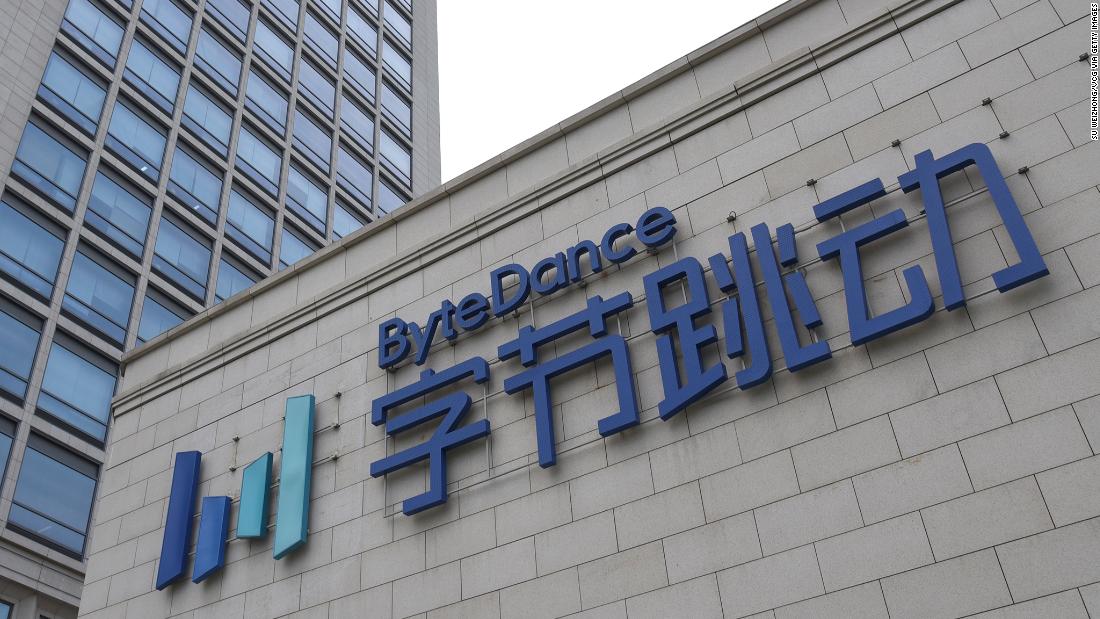
ByteDance, the Beijing-headquartered technology conglomerate behind TikTok and Douyin, is reportedly committing an estimated $30 billion to artificial intelligence initiatives within China by 2026. This substantial investment underscores the company's aggressive strategy to solidify its leadership in the evolving digital landscape, particularly in the race for generative AI capabilities and their integration across its vast product ecosystem.
The reported outlay positions ByteDance as one of the most significant corporate investors in China's burgeoning AI sector. Industry observers suggest the funds will be channeled into a broad spectrum of AI research and development, including foundational models, large language models (LLMs), computational infrastructure, and talent acquisition. This move is seen as a direct response to escalating competition from domestic rivals like Tencent, Alibaba, and Baidu, as well as a strategic play to align with China's national ambitions for AI supremacy.
Strategic Imperative: Fueling Future Growth
ByteDance's reported $30 billion commitment by 2026 is not merely a defensive posture but a proactive drive to redefine its core businesses and explore new frontiers. The company has historically leveraged sophisticated AI algorithms for content recommendation on platforms like Douyin and TikTok, which have accumulated billions of users globally. Advancements in generative AI, particularly in areas such as video generation, personalized content creation, and interactive user experiences, are expected to be central to ByteDance's next phase of innovation.
Analysts from a major financial institution, in a recent research note, projected that ByteDance aims to integrate advanced AI capabilities into virtually all its product lines. This includes enhancing short-form video content with AI-generated effects and personalized soundtracks, improving e-commerce recommendations on Douyin E-commerce, and developing more sophisticated AI assistants for its enterprise collaboration suite, Lark. The investment indicates a clear strategy to deepen user engagement and open up new monetization avenues.
Key Investment Focus: Foundational Models, LLMs, Computational Infrastructure, AI Talent Acquisition.
The Competitive Landscape in China
ByteDance operates within an intensely competitive Chinese technology market, where major players are also pouring significant resources into AI. Baidu, for example, has been at the forefront with its ERNIE Bot, a generative AI model that has seen substantial public adoption and integration into various Baidu products. Alibaba Cloud has also launched its Tongyi Qianwen large language model, while Tencent has made strides with its Hunyuan model, aiming to power its social media, gaming, and cloud services.
A recent report by a Beijing-based technology consultancy indicated that cumulative AI investments by China's top five technology firms exceeded $100 billion between 2020 and 2023. ByteDance's $30 billion commitment over the next three years represents a substantial portion of this ongoing capital expenditure, signaling an accelerated pace of investment necessary to maintain its competitive edge.
The race for AI talent is equally fierce. Companies are actively recruiting top researchers and engineers, often offering attractive compensation packages. ByteDance's investment is expected to bolster its internal research teams, potentially leading to new AI labs and partnerships with academic institutions across China.
Impact on ByteDance's Ecosystem
The direct beneficiaries of this investment will be ByteDance's sprawling portfolio of applications and services. For its flagship short-video platforms, TikTok and Douyin, the integration of advanced AI could revolutionize content creation, enabling users to generate complex videos, animations, and soundscapes with minimal effort. This could further expand the creator economy and differentiate the platforms from rivals.
In e-commerce, where Douyin has become a significant player, AI is poised to enhance recommendation engines, virtual try-on experiences, and customer service chatbots. ByteDance's gaming division, Nuverse, could also see AI-powered game development tools, more intelligent non-player characters, and dynamic content generation that adapts to player behavior. Furthermore, the enterprise collaboration tool Lark, designed to compete with Tencent's WeChat Work and Alibaba's DingTalk, stands to benefit from AI-driven meeting summaries, automated task management, and enhanced natural language processing for communication.
The company's commitment to building proprietary AI chips or collaborating closely with domestic chip manufacturers is also anticipated. Given global supply chain pressures and geopolitical considerations, securing a stable and powerful computing infrastructure is paramount for large-scale AI development.
Broader Implications for China's AI Ambitions
ByteDance's significant investment aligns with and reinforces China's national strategic imperative to become a global leader in artificial intelligence by 2030. The Chinese government has outlined ambitious plans, including substantial funding for AI research, the establishment of national AI innovation platforms, and policies to cultivate a robust AI talent pool. Large-scale corporate investments like ByteDance's are critical catalysts for achieving these national goals.
This capital injection is expected to stimulate further innovation across the Chinese AI ecosystem, from startups developing specialized AI applications to hardware manufacturers providing the necessary computational power. It could lead to the acceleration of breakthroughs in various AI subfields, including natural language processing, computer vision, and autonomous systems. The sheer volume of data ByteDance collects from its hundreds of millions of daily active users provides an unparalleled training ground for its AI models, a significant advantage in the data-intensive field of deep learning.
Challenges and Roadblocks Ahead
Despite the substantial investment, ByteDance faces several challenges. Geopolitical tensions, particularly between the United States and China, could impact access to advanced AI chips and technologies. While China is actively developing its domestic semiconductor industry, achieving parity with leading global suppliers remains a long-term endeavor.
Talent retention and attraction also present a hurdle. The global demand for top-tier AI researchers and engineers is immense, and Chinese tech companies compete with global giants as well as numerous well-funded startups. Ethical considerations and regulatory compliance for AI development are also growing concerns. Chinese regulators have already introduced guidelines for generative AI, and companies must navigate these evolving frameworks to ensure responsible AI deployment.
Furthermore, the high computational costs associated with training and deploying large language models mean that even with a $30 billion investment, efficient resource allocation and continuous innovation in model optimization will be crucial.
Global Context and the AI Race
ByteDance's $30 billion bet on AI in China is not isolated but part of a larger global race among technology giants. Companies like Google, Microsoft, Meta, and OpenAI are investing tens of billions of dollars annually into AI research and infrastructure. This global competition is driving rapid advancements, but it also means that companies must continually innovate to stay relevant.
The scale of ByteDance's investment positions it as a formidable contender in this global arena, particularly in areas where it has a strong user base and data advantage, such as short-form video and content recommendation. Success in integrating cutting-edge AI could help ByteDance not only dominate its existing markets but also expand into new sectors, potentially challenging established players worldwide.
Ultimately, this massive financial commitment underscores ByteDance's conviction that artificial intelligence is the foundational technology for the next decade of digital innovation. Its ability to effectively deploy this capital will significantly shape its future trajectory and influence the broader technological landscape, both within China and globally.
Key Takeways
ByteDance plans to invest an estimated $30 billion in AI initiatives within China by 2026.
The investment targets foundational models, large language models, computational infrastructure, and AI talent.
This strategic move aims to enhance ByteDance's core products like TikTok, Douyin, and Lark, while also positioning the company to compete with major domestic rivals such as Baidu, Alibaba, and Tencent.
The substantial outlay aligns with China's national goal of becoming a global leader in artificial intelligence and is expected to further stimulate the country's AI ecosystem.
Challenges include geopolitical hurdles impacting access to advanced chips, intense competition for AI talent, and navigating evolving regulatory frameworks for AI development.
What to watch next
The rollout of new AI-powered features across ByteDance's product suite, especially within Douyin and TikTok, will offer early indicators of the investment's impact. Observe how these features enhance user engagement and potentially drive new revenue streams.
Monitor the development of ByteDance's internal AI chip capabilities or strategic partnerships with domestic chip manufacturers, as securing a robust computing infrastructure is critical for sustained AI innovation amidst global supply chain uncertainties.
Watch for shifts in the competitive landscape, specifically how rivals like Tencent, Alibaba, and Baidu respond with their own accelerated AI investments and product integrations in the wake of ByteDance's massive commitment.
Historical context
Over the past 5-10 years, China has transformed into a global powerhouse in artificial intelligence, moving from an early adopter to a significant innovator. A pivotal moment was the release of China's "New Generation Artificial Intelligence Development Plan" in 2017, which outlined an ambitious strategy to become the world leader in AI by 2030, spurring significant government and private sector investment.
From 2018 to 2022, China saw an explosion in AI startups, with companies like SenseTime, Megvii, and iFlytek achieving unicorn status, primarily focusing on computer vision and speech recognition. Simultaneously, tech giants like Baidu, Alibaba, and Tencent initiated substantial AI research divisions, often competing fiercely for top academic talent. The period also witnessed increasing US-China tech tensions, leading to a greater emphasis on domestic AI self-sufficiency, particularly in semiconductor technology.
The emergence of large language models globally around 2022, following OpenAI's ChatGPT, ignited a new wave of investment and strategic focus. Chinese companies, including ByteDance, quickly pivoted to develop their own powerful LLMs, recognizing their transformative potential. ByteDance's current $30 billion commitment by 2026 places it squarely within this accelerated phase of AI development, reflecting a culmination of past trends and a forward-looking strategy to dominate the next era of AI-driven innovation.
Frequently asked questions
What is ByteDance's investment in AI?
ByteDance is reportedly committing an estimated $30 billion to artificial intelligence initiatives within China by 2026.
Why is ByteDance investing so heavily in AI?
The investment underscores ByteDance's aggressive strategy to solidify its leadership in the evolving digital landscape, particularly in the race for generative AI capabilities.
What is generative AI?
Generative AI refers to artificial intelligence models capable of producing various types of content, including text, images, audio, and synthetic data.
Which ByteDance products will benefit from this AI investment?
Products like TikTok and Douyin, as well as new initiatives, are expected to leverage these AI advancements to enhance user experience and content generation.
When is this AI investment expected to be completed?
ByteDance's $30 billion commitment to AI initiatives in China is projected to be completed by 2026.
How does this investment impact the global AI market?
This significant investment by a major tech conglomerate like ByteDance signals a strong acceleration in the global AI market, intensifying competition and driving innovation, especially in the generative AI sector.