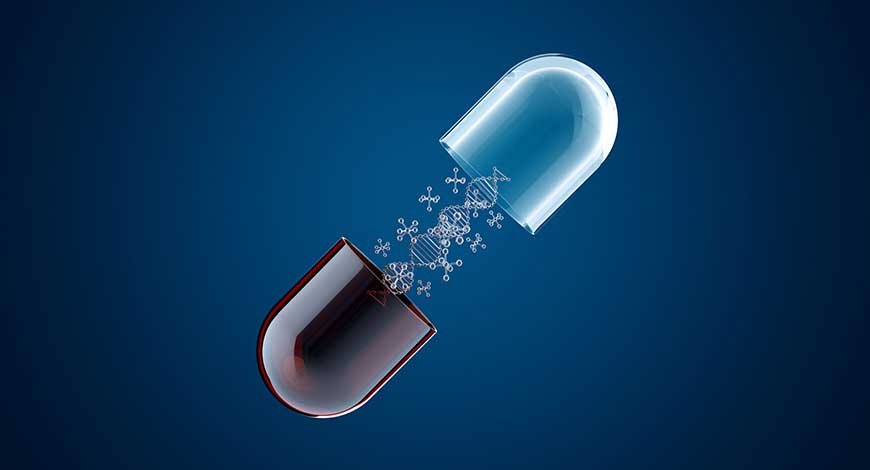
DeepMind spinout Isomorphic Labs seeks $2B funding, accelerating AI's transformative impact on drug discovery and development.
The convergence of artificial intelligence with life sciences is not merely a trend; it represents a fundamental re-architecture of how new medicines are discovered, developed, and brought to market. At the vanguard of this transformation stands Isomorphic Labs, a DeepMind spinout, whose reported pursuit of a nearly $2 billion funding round signals a momentous shift in the technological landscape. This substantial capital infusion underscores the immense confidence investors place in AI's capacity to revolutionize an industry historically characterized by prohibitive costs, protracted timelines, and high failure rates.
Isomorphic Labs' impressive fundraising trajectory is more than just a testament to its technological prowess or the pedigree of its parent company, DeepMind. It is a potent indicator of a broader macroeconomic re-evaluation of AI's economic potential within highly complex, data-rich domains. In an era where venture capital has shown signs of contraction across many tech sectors, the sustained investment in AI-driven drug discovery platforms highlights a robust belief in its disruptive power and long-term value creation.
The DeepMind Legacy and Isomorphic Labs' Ascent
Isomorphic Labs emerged from DeepMind, a Google subsidiary renowned for its groundbreaking work in artificial intelligence. DeepMind's most celebrated achievement in the biological sciences is AlphaFold, an AI system that accurately predicts the 3D structure of proteins from their amino acid sequences. This breakthrough, first announced in 2020 and expanded upon with AlphaFold 2, was hailed as a paradigm shift, effectively solving a 50-year grand challenge in biology and earning the distinction of being one of the most significant scientific advancements of its time.
The ability to predict protein structures with high accuracy is crucial because a protein's shape dictates its function. Understanding these structures is fundamental to designing drugs that can interact precisely with target proteins to treat diseases. Before AlphaFold, determining these structures relied on laborious, expensive, and time-consuming experimental methods such as X-ray crystallography or cryo-electron microscopy. AlphaFold's computational approach dramatically accelerates this initial, critical step in the drug discovery pipeline.
Isomorphic Labs was founded in 2021 with the explicit mission to apply DeepMind's advanced AI capabilities, including those derived from AlphaFold, directly to the challenge of drug discovery. Its ambition is not simply to assist researchers but to fundamentally redesign the entire process, from target identification to lead optimization, using AI as the central engine. The near $2 billion raise positions Isomorphic Labs as a formidable player, capable of attracting top talent and investing heavily in cutting-edge research and infrastructure, effectively building an AI-first pharmaceutical company from the ground up.
The AI Drug Discovery Gold Rush
The traditional drug discovery process is notoriously inefficient. It takes an average of 10-15 years and over $2 billion to bring a new drug to market, with a success rate of less than 10% for compounds entering clinical trials. This inefficiency stems from the sheer complexity of biological systems, the vastness of chemical space, and the inherent trial-and-error nature of experimental biology.
AI promises to drastically reduce these bottlenecks. By leveraging machine learning algorithms, researchers can analyze vast datasets of genomics, proteomics, chemical compounds, and clinical trial results at speeds and scales impossible for humans. This allows for more precise target identification, the rational design of novel molecules with desired properties, the prediction of drug efficacy and toxicity, and the optimization of clinical trial design.
The space is rapidly filling with innovative companies. BenevolentAI, based in the UK, utilizes AI to identify new drug targets and develop novel compounds, having brought several candidates into clinical development. Recursion Pharmaceuticals, a US-based firm, combines AI with automated wet-lab experimentation to map human biology and discover potential therapeutics. In Asia, companies like Insilico Medicine, headquartered in Hong Kong, have demonstrated the full cycle of AI-driven drug discovery, moving from AI-identified target to AI-generated molecule and into clinical trials, including an AI-discovered drug for idiopathic pulmonary fibrosis that recently entered Phase II trials.
These examples illustrate a global phenomenon. Venture capital firms and institutional investors are increasingly allocating significant capital to this sector, recognizing the potential for substantial returns on investment if AI can indeed deliver on its promise to shorten development timelines and increase success rates. The Isomorphic Labs funding round, therefore, is not an isolated event but a bellwether for the continuing investment surge into this strategically vital segment of the technology industry.
Google's Strategic Play: From Research to Commercialization
Alphabet's decision to spin out Isomorphic Labs from DeepMind reflects a deliberate strategy to monetize its foundational AI research. While DeepMind focuses on advancing general AI capabilities, Isomorphic Labs is tasked with translating these breakthroughs into tangible commercial applications within a specific, high-value domain. This model allows DeepMind to maintain its pure research focus, pushing the boundaries of AI, while Isomorphic Labs can operate with the agility and specialized focus required to compete in the fast-paced pharmaceutical industry.
This approach mirrors similar patterns seen across other major tech companies where core AI research departments incubate specialized units or spinouts. It allows for distinct funding pathways, attracting investors who prefer to back focused, revenue-generating entities rather than broad research initiatives. For Isomorphic Labs, this means access to DeepMind's intellectual property and talent pool, combined with the operational independence and capital necessary to build a dedicated drug discovery platform.
The move also positions Alphabet to capture a significant share of the burgeoning AI drug discovery market. By holding a stake in Isomorphic Labs, Google can participate directly in the commercial success of AI-driven therapeutics, potentially generating substantial returns that go beyond its core advertising and cloud businesses. This diversification into healthcare, underpinned by its AI leadership, represents a shrewd long-term strategic play.
Technological Foundations: Beyond AlphaFold
While AlphaFold laid critical groundwork, the AI revolution in drug discovery extends far beyond protein structure prediction. Generative AI models, akin to those used for generating text or images, are now being employed to design novel molecules with specific desired properties. These models can explore chemical space much more efficiently than traditional methods, proposing millions of potential drug candidates in a fraction of the time.
Reinforcement learning, another AI paradigm, is being utilized to optimize experimental protocols in the lab, guiding robotic systems to conduct experiments more efficiently and intelligently. Large Language Models (LLMs), which have recently captured public imagination, are also finding applications in scientific discovery. They can rapidly sift through vast amounts of scientific literature, synthesize information, identify research gaps, and even generate hypotheses, accelerating the early stages of research and development.
The availability of massive datasets is another crucial enabler. Genomics, proteomics, metabolomics, and real-world clinical data provide the fuel for these AI algorithms. Companies are building sophisticated data platforms that integrate diverse data types, allowing AI models to learn complex relationships between genes, proteins, diseases, and drug compounds. This data-centric approach is transforming biology into an information science, paving the way for truly personalized medicine.
The Global Race and Regional Dynamics
The race to leverage AI for drug discovery is inherently global, with innovation hubs emerging across continents. In North America, Boston and the Bay Area remain epicenters, attracting billions in venture capital and fostering a dense ecosystem of biotech startups and established pharmaceutical giants. Europe, particularly the UK, benefits from strong academic research institutions and government support for AI, positioning cities like London and Cambridge as key players.
Asia is rapidly asserting its presence in this global landscape. China, with its vast patient data, significant government investment in AI and biotech, and a growing pool of scientific talent, is home to numerous AI-driven drug discovery companies. Shanghai and Shenzhen are becoming significant hubs. Singapore, with its strategic focus on biomedical sciences and strong regulatory framework, is also fostering innovation in this area. India, leveraging its IT prowess and pharmaceutical manufacturing capabilities, is seeing an uptick in AI applications for drug development.
These regional dynamics contribute to a highly competitive yet collaborative environment. Partnerships between AI startups, big pharma, and academic institutions are becoming increasingly common, as no single entity possesses all the necessary expertise or resources. This global interplay of talent, capital, and technology is accelerating the pace of discovery, promising to deliver novel therapies to patients worldwide.
Challenges and the Path Ahead
Despite the immense promise and significant investment, the AI drug discovery sector faces substantial challenges. Data quality and access remain critical bottlenecks. AI models are only as good as the data they are trained on, and robust, curated, and diverse biological and chemical datasets are often scarce or fragmented. The interpretability of complex AI models, sometimes referred to as the "black box" problem, also presents hurdles, especially in a highly regulated industry like pharmaceuticals where understanding mechanisms of action is paramount.
The "last mile" problem is perhaps the most significant. While AI can dramatically accelerate *in silico* predictions and identify promising drug candidates, these predictions still require rigorous validation through costly and time-consuming *in vitro* and *in vivo* experiments, culminating in human clinical trials. Navigating regulatory approvals, which are designed for traditional drug development pathways, will also require adaptation and collaboration between innovators and regulatory bodies. Ethical considerations around data privacy, algorithmic bias, and equitable access to AI-discovered medicines will also need careful navigation.
The long timelines inherent in drug development mean that the full impact of today's AI investments will not be realized for many years. However, the foundational changes being implemented now are setting the stage for a future where drug discovery is faster, more targeted, and ultimately more successful.
Historical context
The concept of using computational methods in drug discovery is not new; it dates back decades to the early days of cheminformatics and quantitative structure-activity relationship (QSAR) modeling. These early approaches, primarily rule-based and relying on limited computational power, offered glimpses into the potential of rational drug design. However, they were largely constrained by the rudimentary nature of available algorithms, the scarcity of biological data, and the sheer computational limits of the era.
The last 5-10 years have witnessed an inflection point, driven by several converging factors. Firstly, the explosion of 'omics' data (genomics, proteomics, transcriptomics), alongside advances in high-throughput screening, provided the necessary fuel for data-hungry machine learning algorithms. Secondly, the dramatic increase in computational power, particularly with the advent of cloud computing and specialized hardware like GPUs, made it feasible to train complex neural networks. Thirdly, the maturation of deep learning techniques, initially in fields like image recognition and natural language processing, began to be successfully applied to biological problems.
The breakthrough moment arguably arrived around 2020-2021 with DeepMind's AlphaFold, which demonstrated unprecedented accuracy in protein structure prediction. This achievement was a powerful validation of AI's capability to solve long-standing biological challenges that had eluded traditional methods. Its success catalyzed a wave of investment and new company formation in AI drug discovery, moving the field from niche academic interest to a mainstream commercial endeavor. In parallel, established pharmaceutical companies began to heavily invest in internal AI capabilities and forge partnerships with AI startups, signaling a widespread recognition of AI's transformative potential.
Key Takeways
Isomorphic Labs' near $2 billion raise signifies a major endorsement of AI's potential to revolutionize drug discovery, even amidst a broader tech funding slowdown.
The company, a DeepMind spinout, leverages advanced AI, including insights from AlphaFold, to fundamentally redesign the drug development process.
AI is addressing critical bottlenecks in traditional drug discovery by improving target identification, molecule design, and prediction of drug properties.
The global AI drug discovery market is highly competitive, attracting significant investment and fostering innovation hubs across North America, Europe, and Asia.
While promising, the sector faces challenges related to data quality, model interpretability, and the rigorous validation required for regulatory approval.
What to watch next
The next phase of AI drug discovery will be defined by several key indicators. Watch for the first major AI-discovered and designed drug candidates to successfully navigate late-stage clinical trials and achieve regulatory approval. This will be the ultimate validation of the technology's clinical efficacy and commercial viability, moving beyond promising predictions to tangible patient impact.
Observe the evolving strategies of large pharmaceutical companies. Will they increasingly acquire AI drug discovery startups, build out their internal AI capabilities, or continue to rely primarily on partnerships? The balance of these approaches will indicate how quickly and deeply AI integrates into the industry's established titans. Furthermore, monitor the regulatory landscape. As AI-generated insights become more central to drug development, expect regulatory bodies to issue updated guidelines and potentially create new frameworks to assess AI-driven submissions, ensuring both innovation and patient safety.