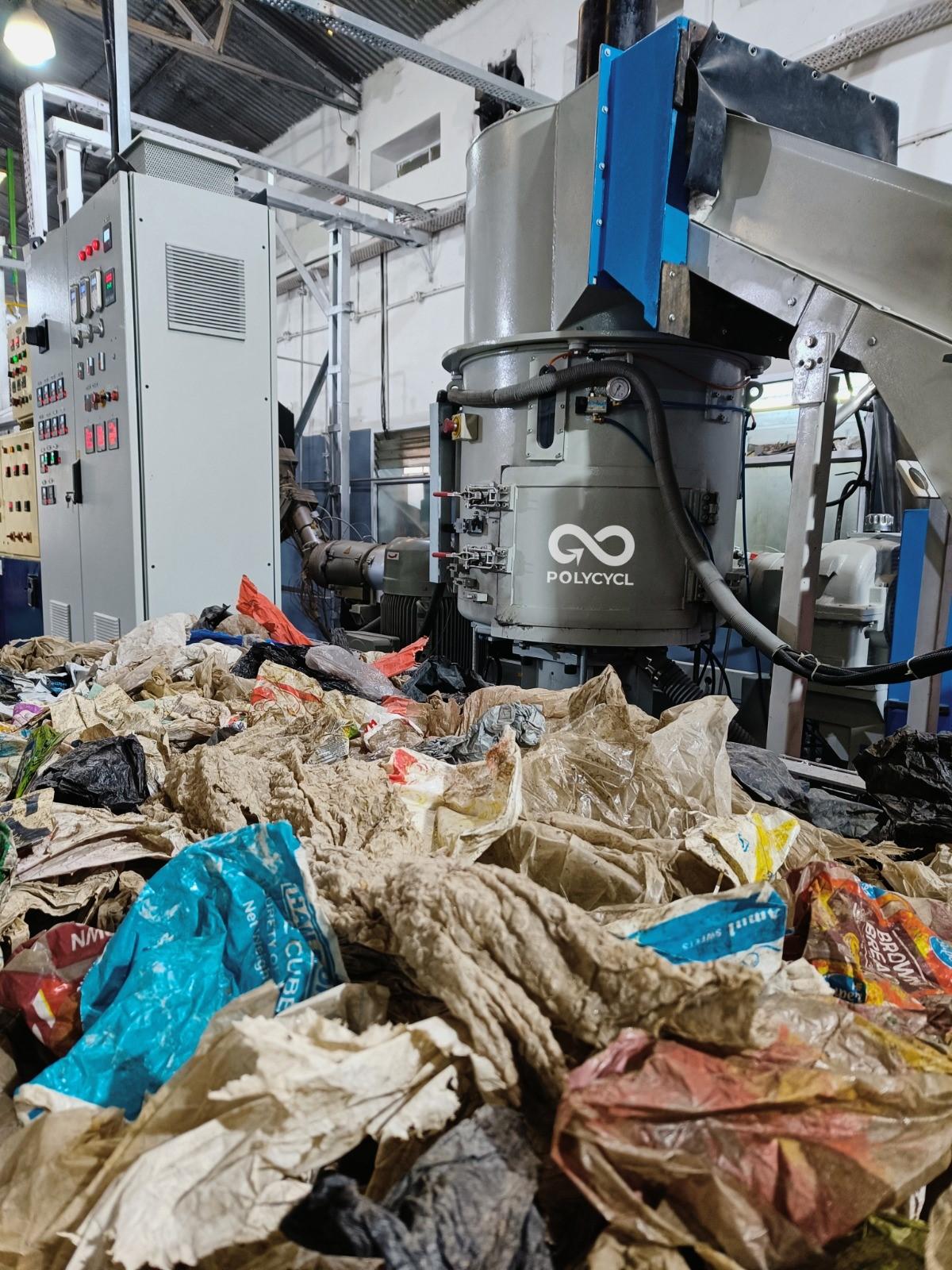
The blue recycling bin sitting in your office is, statistically speaking, a placebo. While global capital has poured into mechanical recycling startups for decades, the industry has ignored a brutal contradiction: nearly 90% of plastic waste—the multi-layer films, the soiled sachets, and the mixed polymers—is fundamentally unrecyclable by traditional means. Today, May 1, 2026, the narrative is shifting from "sorting" to "transformation" as Polycycl, a pioneer in chemical depolymerization, moves to monetize the 88% of plastic that usually ends its life in a furnace or a landfill. This isn't just a environmental play; it is a high-alpha move in the CleanTech sector that seeks to redefine the efficiency of Waste to Energy by extracting industrial-grade chemicals from the world's most stubborn trash.
For the venture community, the "circular economy" has long been a graveyard of subsidized dreams and poor unit economics. Mechanical recycling is limited by polymer degradation—you can only turn a bottle into a rug so many times before the fibers fail. Polycycl is betting on a different physics: breaking the polymer chains back into their original molecular building blocks. By processing heterogeneous, hard-to-recycle plastics, the company is positioning itself as the critical infrastructure layer for a world where "virgin plastic" is becoming a regulatory liability.
The Feedstock Fallacy: Why Mechanical Recycling Hit a Wall
The investment thesis for traditional recycling relied on clean, segregated streams—white PET bottles and clear HDPE jugs. But the real volume of global waste is "dirty." It is the laminated packaging used by FMCG giants to keep food fresh in emerging markets. In India alone, the Central Pollution Control Board (CPCB) reports that millions of tones of plastic waste go unprocessed annually because mechanical plants simply cannot handle the complexity of the material.
What happened? The market optimized for the easy wins. Founders built fancy optical sorters to pick the low-hanging fruit, leaving the "residue"—the remaining 88%—to be baled and shipped to cement kilns for low-value incineration. Polycycl’s approach flips this. By utilizing a proprietary continuous thermochemical process, they take the waste that cement plants are currently paid to take and turn it into high-value oils that can be refined back into virgin-grade polymers.
"The industry spent twenty years trying to wash and sort our way out of a crisis. We’ve finally realized that plastic is just stored energy in a solid state. If you can unlock that molecular bond without the carbon intensity of traditional cracking, you aren't a trash man—you're an oil driller in a landfill."
— Dr. Elena Rossi, Lead Researcher at the Global Institute for Circular Chemistry
The Regulatory Tailwind: Why Waste to Energy is Being Repriced
For years, the phrase Waste to Energy was synonymous with incineration—a dirty word in the ESG lexicon. However, the regulatory climate has undergone a radical maturation. The Global Plastics Treaty and the aggressive rollout of Extended Producer Responsibility (EPR) frameworks in jurisdictions like the EU and India have changed the math.
Under new EPR mandates, producers are no longer just responsible for collecting waste; they are increasingly mandated to include "recycled content" in their new packaging. This has created a massive supply-demand imbalance. There simply isn't enough high-quality recycled resin to go around. Polycycl’s "Circular Oil" output provides a bridge. It allows petrochemical companies to feed recycled feedstock into their existing crackers, satisfying regulatory quotas without sacrificing the mechanical integrity of the final product.
The Unit Economics of the 88%
Feedstock Cost: Often negative or near-zero (tipping fees from waste aggregators).
Yield: Approximately 750-800 liters of high-value oil per tonne of mixed plastic waste.
Carbon Delta: 60% reduction in CO2 footprint compared to virgin naphtha production.
Market Opportunity: A projected $250 billion gap in recycled polymer supply by 2030.
The Global Dimension: The India-to-EU Nexus
The geography of Polycycl’s operation is its primary strategic moat. Unlike Western startups that struggle with the high cost of waste collection and labor, Polycycl is scaling in the Indian market—a region where the informal waste-picking economy provides a hyper-efficient, albeit complex, logistics network. India’s recent ban on certain single-use plastics and its strict EPR guidelines have forced local brands to seek out domestic technology solutions.
However, the ambition is global. The company is eyeing the European market, where the "Plastic Tax" is already biting. For a VC looking at a Series B or C round, the play is clear: prove the tech in the high-volume, low-opex environment of South Asia, then license the intellectual property into the high-subsidy, high-regulatory environment of the European Union. Notable regional players like Circulate Capital and various ESG-focused sovereign wealth funds are already tracking this "cross-pollination" of hardware and policy.
Skeptic’s Corner: The Contamination Trap
The contrarian view on chemical recycling has always been centered on energy intensity and contamination. Skeptics argue that if the incoming waste is too "dirty" (containing PVC or organic matter), the resulting oil is too contaminated for high-end refineries. Furthermore, if the energy required to break the molecular bonds exceeds the energy value of the resulting oil, you’ve essentially built an expensive heater. Polycycl’s challenge is to prove that their continuous process can maintain "up-time" and purity levels when fed a diet of the world's most disorganized trash. If the catalysts foul or the reactors coke up, the "88% arbitrage" evaporates.
Key Takeaways for the GP
Decoupling from Oil Prices: As carbon taxes increase, the "green premium" for recycled feedstock will eventually decouple from the price of Brent Crude.
Infrastructure as a Moat: Unlike SaaS, the barriers to entry here are physical. The "First-Mover" advantage in securing long-term feedstock contracts with municipal bodies is a structural defense.
The Refinery Pivot: Big Oil is not the enemy here; they are the exit. Companies like Shell and TotalEnergies are desperate for recycled feedstock to meet their 2050 net-zero targets.
What to Watch Next
The 50,000 Tonne Milestone: Scale is the only thing that matters in hardware. Watch for Polycycl’s first multi-reactor facility to hit full capacity—this is where the unit economics either solidify or crumble.
ISCC+ Certification: Watch for the certification of their output. Without "International Sustainability and Carbon Certification," the oil cannot be sold at a premium to global polymer manufacturers.
The Competition from Pyrolysis 2.0: Keep an eye on competitors like Agilyx or Mura Technology. The winner won't be the one with the best lab results, but the one that handles the "dirty" reality of municipal waste without a catastrophic maintenance schedule.
The Invested Conclusion
The era of "hopeful recycling"—the idea that if we sort it, someone will fix it—is dead. Investors who continue to back mechanical sorting plants are chasing the 9% of the market that is already saturated. The real alpha lies in the "unrecyclable" residue. By applying advanced thermochemistry to the waste that society has given up on, Polycycl is moving the needle for both CleanTech and the broader Waste to Energy sector. It is an investigative, capital-intensive, and undeniably gritty business, but in a world drowning in polymers, the company that can turn a potato chip bag into a pristine plastic pellet is holding the keys to the kingdom.
The math is simple: the 12% is a commodity; the 88% is the future. If you want to see where the next decade of environmental returns will come from, stop looking at the green bin and start looking at what’s being left behind.