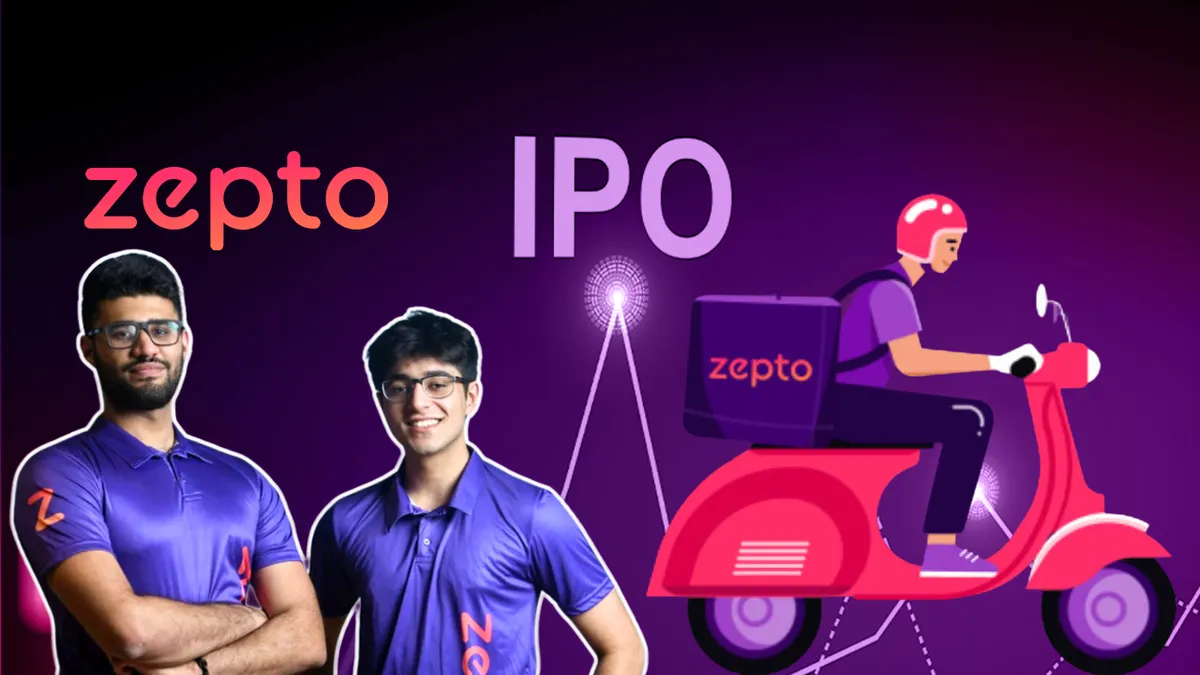
India's rapid-delivery giant Zepto plans a massive ₹11,000 Cr IPO, signaling a major shift in the global ultra-fast grocery market.
India’s rapid-delivery grocery market is about to get a major shake-up, and it could offer a glimpse into the future of ultra-fast commerce worldwide. Zepto, a startup that promises groceries delivered in mere minutes, is reportedly gearing up to go public on the Indian stock exchange with an IPO valued at around $1.3 billion. That’s a significant move for a company founded just three years ago, and it signals serious investor confidence in the lightning-fast delivery model.
Here’s what’s happening: Zepto, a so-called "quick commerce" unicorn, is reportedly aiming to launch its Initial Public Offering (IPO) by the end of July. This comes just weeks after the Securities and Exchange Board of India (SEBI), the country's market regulator, gave a preliminary green light for its proposed public offering. The IPO, which will largely involve raising new capital directly for the company, could make Zepto the third quick commerce player to list in India, following Blinkit's parent company and Swiggy.
For those unfamiliar, quick commerce is essentially grocery delivery on hyper-speed, often promising items in 10-20 minutes. Zepto achieves this through a network of "dark stores" — essentially small, automated warehouses located strategically across cities, not open to the public but optimized for rapid order fulfillment. Founded in 2021 by Stanford dropouts Aadit Palicha and Kaivalya Vohra, Zepto quickly became a leader in India’s bustling quick commerce scene, battling major players like Blinkit, Swiggy Instamart, and even newer entrants from e-commerce giants Amazon Now and Flipkart Minutes.
The company's scale is impressive. Reports suggest Zepto operates nearly 1,255 dark stores across 61 Indian cities, processing around 1.6 million orders daily. This logistical prowess has helped it attract significant venture capital, having raised over $2.3 billion to date from investors including Epiq Capital, General Catalyst, and Y Combinator, reaching a valuation of $7 billion in its last funding round in October.
Why This Matters to You
While Zepto operates thousands of miles away, its journey reflects a global trend that directly impacts how consumers everywhere might shop for groceries in the future. In North America, we've seen a surge and then a contraction in the quick commerce space, with companies like Gorillas and Buyk exiting the US market or being acquired. Zepto's potential IPO, and its success in a highly competitive market like India, could provide valuable lessons on sustainability and profitability for the ultra-fast delivery model.
For consumers, Zepto’s success story highlights the increasing demand for convenience and speed. Imagine needing a forgotten ingredient for dinner, or a quick snack, and having it at your door in under 15 minutes. This level of instant gratification sets new expectations, pushing traditional grocery chains and even mainstream delivery services to adapt. The concept of "dark stores" and hyper-localized inventory, which Zepto has mastered, is a crucial innovation that could be further refined and adopted globally, influencing how cities are planned and how retail infrastructure evolves.
The Indian quick commerce market, where Zepto is a dominant force, is projected to swell into a $40 billion opportunity by 2030, with players expected to achieve $68 billion in gross merchandise value (GMV) — a key metric representing the total value of goods sold — by 2031. This immense growth potential, driven by a young, tech-savvy population and increasing internet penetration, makes India a crucial testing ground for the future of digital retail, and Zepto is at its forefront.
The Investor and Founder Playbook
For investors, Zepto's IPO represents a chance to tap into one of the world's fastest-growing digital economies. The decision to go public now, despite a sometimes turbulent global market for tech IPOs, suggests a strong belief in the company’s fundamentals and the long-term potential of the Indian consumer market. An IPO, or Initial Public Offering, is when a private company first offers shares to the public on a stock exchange, allowing it to raise significant capital for expansion, debt repayment, or other strategic initiatives.
From a founder's perspective, Aadit Palicha and Kaivalya Vohra are not just building a delivery service; they’re building an infrastructure that can redefine urban consumption. The capital raised from a primary issuance in the IPO will be crucial for Zepto to continue its aggressive expansion, invest in technology, and potentially fend off competition. This kind of capital infusion is vital for a sector that demands heavy investment in logistics, technology, and customer acquisition to maintain its edge.
Zepto's journey from a startup to a potential public company in just three years is a testament to the venture capital ecosystem's appetite for high-growth, high-impact businesses, particularly in emerging markets. Their ability to secure significant funding rounds, culminating in a $7 billion valuation, highlights the investor confidence in their unique operational model and leadership team. However, the true test will be how the public market values the company and its path to sustained profitability.
The competitive landscape in India’s quick commerce sector is intense, with every major e-commerce and food delivery player vying for market share. Blinkit, backed by Zomato, and Swiggy Instamart are formidable rivals, with similar dark store networks and aggressive expansion plans. Even global giants like Amazon and local powerhouse Flipkart are ramping up their quick commerce offerings. Amazon recently announced a substantial investment of $335 million (₹2,800 Cr) to expand its Amazon Now service to 100 Indian cities, while Flipkart is also heavily investing in its dark store network. This fierce competition means that Zepto's IPO proceeds will be critical for maintaining its operational lead and continuing to innovate.
Analysts are closely watching Zepto's impending public debut, as it could set a precedent for other quick commerce startups globally, especially regarding valuation and investor expectations for profitability. While growth has been explosive, the quick commerce model often operates on thin margins due to high operational costs, including delivery personnel salaries, dark store rents, and marketing. The IPO documents will likely shed more light on Zepto’s strategies for achieving profitability amidst rapid expansion and stiff competition.
Ultimately, Zepto's journey to the public markets isn't just an Indian business story; it's a global case study in the evolution of consumer behavior and the future of retail. Its success could validate the hyper-fast delivery model and its underlying dark store logistics, potentially inspiring further innovation and investment in similar ventures across North America and beyond. As consumers worldwide increasingly prioritize convenience and speed, the lessons learned from Zepto’s public market debut will resonate far beyond India’s borders, shaping how we think about grocery shopping and instant gratification for years to come.
Frequently asked questions
What is Zepto's IPO valuation?
Zepto's initial public offering is reportedly valued at ₹11,000 Cr, which translates to approximately $1.3 billion, marking a significant milestone for the quick commerce startup.
When is Zepto planning its IPO?
Zepto is reportedly gearing up to float its IPO on the Indian stock exchange by July.
What industry is Zepto in?
Zepto operates in the rapid-delivery grocery market, a segment of the broader e-commerce and quick commerce industry.
How old is Zepto as a company?
Zepto was founded just three years ago, making its planned IPO a rapid progression for the startup.
Where will Zepto's IPO be listed?
Zepto plans to list its IPO on the Indian stock exchange.
What is quick commerce?
Quick commerce refers to a business model focused on ultra-fast delivery of groceries and other convenience items, often within minutes of an order.