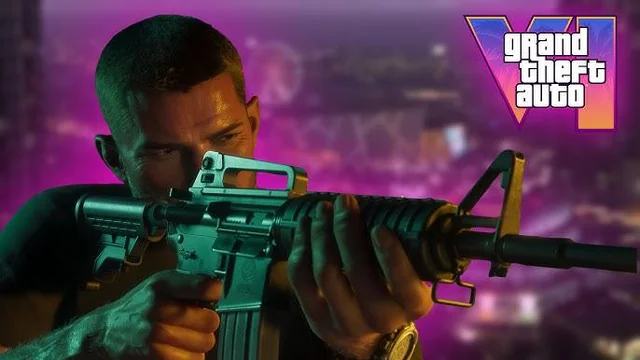
The gaming industry, a volatile landscape of innovation and financial gambles, rarely sees its tectonic plates shift without significant tremor. The recent whispers, now solidified into estimates, that Grand Theft Auto 6 could command a development and marketing budget exceeding $1 billion, have sent shockwaves across the global tech and entertainment sectors. Take-Two Interactive CEO Strauss Zelnick's acknowledgment that the game "was expensive" serves less as a revelation and more as an understatement of epic proportions, an implicit nod to the unprecedented financial scale of this undertaking.
For many founders and operators in tech, particularly those accustomed to lean startups and iterative product development, such a figure registers as an anomaly, an almost reckless expenditure. The conventional wisdom quickly asserts itself: a billion dollars for a video game is exorbitant, unsustainable, and indicative of an industry spiraling into budgetary excess. Comparisons are drawn to Hollywood blockbusters, where only the most ambitious tentpole films, like James Cameron's Avatar sequels or Marvel's Avengers epics, breach this financial threshold. The immediate conclusion for many is that this level of investment is a dangerous precedent, narrowing the field for competition and concentrating power in the hands of a few mega-publishers.
This perspective holds a certain undeniable logic. The sheer scale of development teams, the escalating costs of talent, the ever-increasing graphical fidelity demanded by players, and the decade-long development cycles all contribute to ballooning budgets. Critics argue that such sums stifle innovation, forcing studios to chase safe, proven formulas rather than risk capital on novel concepts. They point to the dozens of smaller, innovative studios that could be funded with a fraction of this sum, fostering a more diverse and vibrant ecosystem. This view, in its strongest form, suggests that the industry is pricing itself out of sustainable growth, creating an environment where only a handful of multi-billion dollar franchises can survive.
The Billion-Dollar Bet: A Calculated Investment
However, to view the Grand Theft Auto 6 budget solely through the lens of conventional software development costs is to fundamentally misunderstand the nature of modern AAA entertainment, particularly a franchise of GTA's caliber. This isn't merely a game; it's a global cultural phenomenon, a digital theme park, and a social platform rolled into one. The $1 billion figure, while staggering, is not an arbitrary sum but a calculated, strategic investment in what is arguably the most valuable intellectual property in interactive entertainment.
Consider the performance of its predecessor, Grand Theft Auto V. Launched in 2013, it has sold over 195 million units worldwide, generating more than $8 billion in revenue to date. This unparalleled longevity and profitability, fueled by consistent sales and the enduring success of Grand Theft Auto Online, provides a crucial context. GTA V did not merely recoup its initial, then-record-breaking, $265 million budget; it became one of the most profitable entertainment products in history, transcending gaming to embed itself deeply in popular culture.
Grand Theft Auto V Financial Impact:Over $8 billion in revenue generated, with more than 195 million units sold globally since its 2013 launch. This unprecedented success sets the financial precedent for GTA 6's investment.
Rockstar Games and Take-Two Interactive are not making a speculative bet on an unproven IP. They are investing in a guaranteed commercial behemoth, a product with a demonstrable track record of attracting hundreds of millions of players and sustaining engagement for over a decade. The anticipated budget for GTA 6, therefore, must be seen as an investment not just in a single product launch, but in the foundation of a multi-decade entertainment pillar.
Beyond Development: The Scope of a Mega-Franchise
What exactly does a $1 billion budget encompass? It extends far beyond the typical development costs of coding, art assets, and level design. It's a holistic investment in creating and launching a global cultural event. This includes:
Unprecedented Development Scale: Enormous teams of thousands of developers across multiple studios, working for a decade, pushing the boundaries of technology, animation, environmental design, and artificial intelligence. This includes motion capture, voice acting for a vast cast, intricate scripting, and a soundtrack featuring licensed music that can run into the tens of millions.
Cutting-Edge Technology & Infrastructure: Investment in proprietary engines, tools, and R&D that will define the next generation of open-world gaming. Crucially, it includes the robust server infrastructure necessary to support an even more ambitious Grand Theft Auto Online component, designed for millions of concurrent players.
Global Marketing & PR Blitz: A marketing campaign commensurate with a global blockbuster film, targeting every major media market, from traditional advertising to influencer partnerships, social media saturation, and experiential activations. This alone can account for hundreds of millions of dollars.
Post-Launch Content & Live Service: A substantial portion of the budget will be allocated not just to the initial game, but to years of planned updates, expansions, and seasonal content for the online component. This ensures player retention and continued monetization long after the initial purchase.
Operational Overhead: Legal costs, licensing fees (e.g., car manufacturers, music), quality assurance at an epic scale, and corporate overhead for a company operating at this level.
In essence, Rockstar is building a virtual world that serves as a canvas for countless future experiences, not just a standalone title. The budget reflects the ambition to create a persistent, evolving digital ecosystem that can generate revenue through initial sales, recurrent consumer spending (microtransactions, battle passes, cosmetic items), and potentially even future platform integrations or media spin-offs.
The Evolving Business Model: Game as a Service
The "game as a service" (GaaS) model, perfected by GTA Online, is central to understanding this investment. The initial $70 or $80 purchase price is merely the entry ticket to a world designed for long-term engagement. The real revenue drivers are the optional purchases within the online environment, which allow players to customize their experience, acquire virtual goods, and accelerate progress. This model transforms a one-time purchase into a continuous revenue stream, significantly de-risking the enormous upfront investment.
The longevity of GTA V's online component has demonstrated the immense profitability of this approach. GTA 6 is poised to take this to an entirely new level, leveraging next-generation hardware and a decade of learning from its predecessor. The target audience of founders and operators should recognize this as a sophisticated, long-term product strategy, akin to building a SaaS platform with robust recurring revenue streams, rather than a one-off retail product.
"The scale of investment in Grand Theft Auto 6 signals a profound shift in the economics of top-tier interactive entertainment. We're no longer talking about mere 'games'; these are digital nations, persistent universes designed to captivate audiences for a decade or more. The upfront cost, while immense, is amortized over an extended lifecycle of content, engagement, and multi-faceted monetization. It's less a budget, more a capital expenditure for a global entertainment utility."
Dr. Evelyn Reed, Professor of Digital Economics and Media Strategy
Global Implications for the Tech & Gaming Ecosystem
While Rockstar's ability to command such a budget is unique, its implications ripple across the entire tech and gaming landscape globally. For founders and operators, several key takeaways emerge:
Firstly, it underscores the increasing concentration of capital and talent in the hands of a few dominant players. Only companies with a proven track record, deep pockets, and established global distribution networks can undertake projects of this magnitude. This means that while innovation continues across the industry, the highest-fidelity, most expansive experiences will likely remain the domain of a select few.
Secondly, it raises the bar for technical ambition. Projects like GTA 6 push the boundaries of what's possible in real-time rendering, artificial intelligence, networking, and world simulation. The advancements made by Rockstar will inevitably spill over, benefiting middleware providers, engine developers, and even smaller studios who can leverage these new benchmarks.
Thirdly, it highlights the continued evolution of entertainment monetization. The future of premium content, whether in gaming, streaming, or other digital media, increasingly involves hybrid models that combine upfront purchases with ongoing service-based revenue. Understanding and adapting to this model is critical for any founder in the digital content space.
Finally, for all the talk of cost, the sheer anticipation and cultural impact of a new Grand Theft Auto title cannot be overstated. It generates billions in marketing equivalent value through organic hype, social media discourse, and mainstream media coverage. This inherent virality and cultural resonance are factors that justify an investment far beyond typical product launches.
KEY TAKEAWAYS
The estimated $1 billion budget for Grand Theft Auto 6 is not solely a development cost, but a comprehensive investment in a multi-decade global entertainment platform, encompassing R&D, infrastructure, marketing, and extensive post-launch content.
This figure is contextualized by Grand Theft Auto V's unprecedented success, which generated over $8 billion in revenue and sold nearly 200 million units, validating the strategic return on investment for such an iconic IP.
The budget reflects the "game as a service" model, where initial sales are supplemented by recurring consumer spending through a robust online component, ensuring long-term monetization and player engagement.
While concentrating capital within a few major publishers, this level of investment simultaneously pushes technological boundaries in areas like AI, rendering, and networking, benefiting the broader tech and gaming ecosystem.
For founders and operators, GTA 6 exemplifies the future of premium digital content: a hybrid business model combining upfront purchases with persistent, evolving, and monetized online experiences that command cultural resonance.
The $1 billion budget for Grand Theft Auto 6, therefore, is not a sign of an industry gone mad with excess. It is a testament to the unique position of a franchise that transcends gaming, a calculated and strategic investment in a proven money-making machine and a cultural touchstone. For founders and operators, it offers a masterclass in scaling an entertainment product into a long-term, multi-faceted digital enterprise, where the upfront cost, however astronomical, is a prerequisite for capturing and sustaining a global audience for decades to come.
Frequently asked questions
What is the estimated budget for Grand Theft Auto 6?
The estimated budget for Grand Theft Auto 6, including both development and marketing, is projected to exceed $1 billion. This figure would make it one of, if not the most, expensive video games ever produced, setting a new benchmark in the gaming industry.
Who confirmed the high costs of GTA 6?
Take-Two Interactive CEO, Strauss Zelnick, confirmed the high costs, stating that the game "was expensive."
Is this budget a record for the gaming industry?
Yes, a budget exceeding $1 billion would set a new record for development and marketing in the video game industry.
What does the budget cover?
The budget covers both the extensive development of the game and its global marketing campaign.
Who is the developer of Grand Theft Auto 6?
Grand Theft Auto 6 is being developed by Rockstar Games, a subsidiary of Take-Two Interactive.
How will this budget impact the final game?
A massive budget typically allows for extensive development, cutting-edge graphics, expansive open worlds, and deep gameplay, aiming for a highly polished and immersive experience.