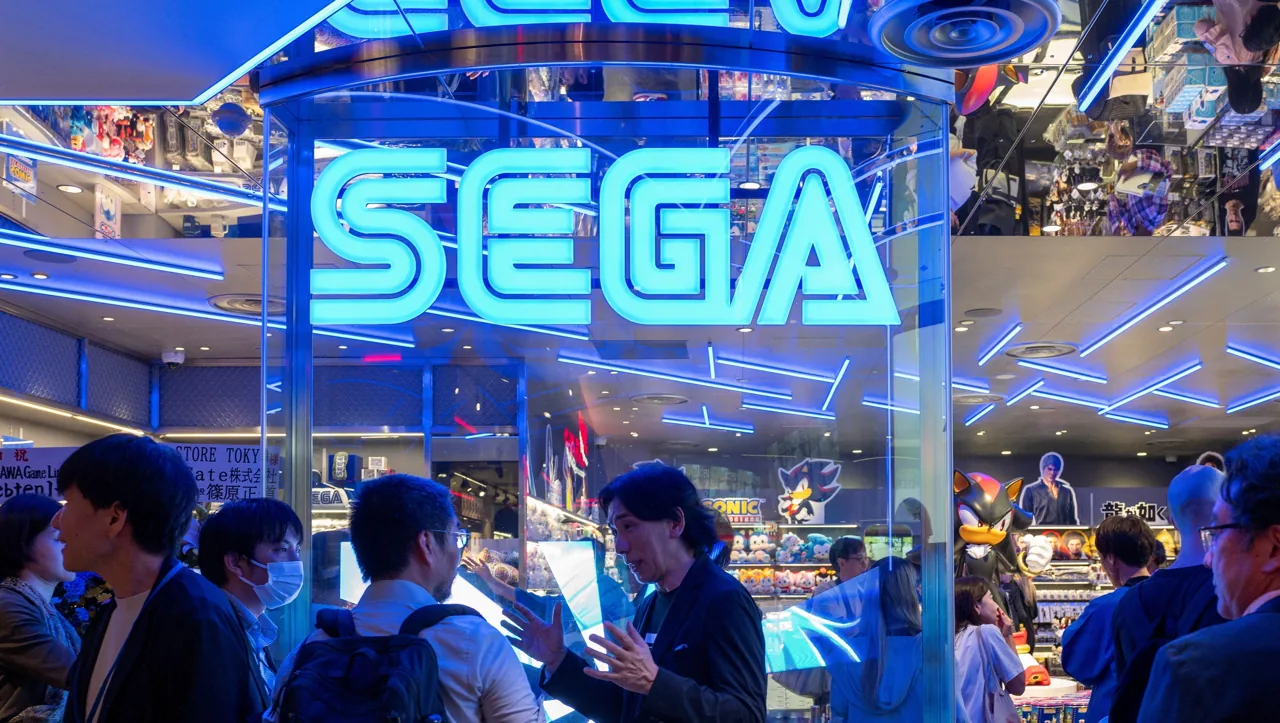
After years of speculation, Sega officially scraps its ambitious 'Super Game' project, a high-stakes endeavor aimed at global domination.
What became of Sega's enigmatic "Super Game" initiative, a project once heralded as a transformative leap into the future of interactive entertainment? After years shrouded in mystery and speculation, Sega has officially confirmed the cancellation of its ambitious "Super Game," bringing an end to a high-stakes endeavor that aimed to redefine the company's global presence and compete in the highly lucrative, yet intensely competitive, live-service market.
The decision, confirmed by Sega's Co-Chief Operating Officer Shuji Utsumi in a recent interview, marks a significant strategic pivot for the venerable Japanese publisher. It closes the chapter on a concept that, while perpetually vague in its public descriptions, consistently evoked comparisons to massively popular, persistent online worlds like Epic Games' Fortnite or Roblox, due to its stated ambitions for global reach, community engagement, and cross-media integration.
The Genesis of a 'Super' Ambition
The "Super Game" project first emerged into public view in the spring of 2021 as a cornerstone of Sega Sammy Holdings' five-year business plan. At the time, the company outlined an audacious vision: to develop a "large-scale title" that would "transcend existing game frameworks" and become a global phenomenon. Sega committed an initial investment of approximately ¥250 billion, equivalent to roughly $1.9 billion USD at the time, towards this and other strategic initiatives, underscoring the immense financial backing and corporate faith placed in the "Super Game" concept.
From the outset, the descriptions were grand but lacked tangible details. Sega spokespersons spoke of a multi-platform experience designed to attract a "massive global audience," incorporating elements of online multiplayer, community-driven content, and leveraging Sega's rich intellectual property library. The emphasis was repeatedly placed on creating a game with a long-term service model, fostering player communities, and establishing a new paradigm for how Sega interacted with its global fanbase. This language, coupled with the staggering investment figures, immediately led many industry observers and the gaming public to infer an intent to enter the "games as a service" (GaaS) market at its highest tier, competing directly with established giants.
Sega's leadership, including then-CEO Haruki Satomi, often highlighted the project as a critical element for the company's future growth, aiming to balance its strong legacy in single-player and arcade experiences with a robust presence in the ever-expanding online multiplayer space. The initiative also involved significant recruitment efforts, with Sega openly seeking top-tier talent from across the globe to bring this ambitious project to fruition.
Signs of Struggle and the Unraveling Mystery
Despite the initial fanfare and significant financial commitment, concrete details about the "Super Game" remained conspicuously absent for over three years. While Sega provided periodic updates on its recruitment drives and internal restructuring to support the project, no gameplay footage, specific genre classifications, or even a definitive title ever materialized. This prolonged period of vagueness fueled increasing skepticism within the industry and among investors.
Analysts began to question the feasibility of such a broad, undefined project, particularly given the intense competition in the GaaS sector. Developing and sustaining a successful live-service game requires not only immense initial capital and development expertise but also a constant stream of new content, robust community management, and the ability to adapt to rapidly changing player preferences. Many companies, even those with significant resources, have struggled to launch and maintain such titles, often incurring substantial losses.
The lack of transparency surrounding the "Super Game" became a growing concern. In a market increasingly driven by hype cycles and early reveals, Sega's strategy of maintaining extreme secrecy around such a pivotal project started to look less like strategic planning and more like a sign of internal struggles. Questions arose about whether the project had a clear direction, if its scope was spiraling, or if it was simply failing to meet internal development milestones.
Sega's broader corporate strategy also showed signs of recalibration. While the "Super Game" was being incubated, the company found considerable success by doubling down on its existing, proven intellectual properties. The global resurgence of the Sonic the Hedgehog franchise through successful movies and well-received games, the continued critical and commercial triumph of the Persona series, and the consistent performance of the Like a Dragon (formerly Yakuza) franchise demonstrated a clear path to profitability by leveraging established fan bases and refining existing gameplay formulas. This success likely prompted a re-evaluation of the risk-reward profile of an entirely new, unproven, and massively expensive GaaS venture.
The Official Confirmation and Its Immediate Ramifications
The official cancellation was confirmed by Shuji Utsumi, who candidly stated that the project had been "reviewed" as part of a broader strategy to "optimize the title portfolio." This suggests that the "Super Game," despite its grand aspirations, ultimately failed to meet internal benchmarks for viability, market fit, or perhaps even quality, leading to the decision to cut losses. Utsumi emphasized Sega's commitment to focusing on high-quality titles that align with the company's strengths, implicitly acknowledging that the "Super Game" might have strayed too far from that core.
For a project that absorbed significant capital and development resources for years, its cancellation carries multiple implications. Firstly, it represents a considerable write-off, although the exact financial impact in terms of sunk costs will be revealed in future financial reports. Secondly, it affects the morale of the development teams involved, many of whom were recruited specifically for this ambitious endeavor. However, redirecting these talented individuals to other established or more clearly defined projects could ultimately prove beneficial for Sega's overall development pipeline.
From an investor perspective, the cancellation might paradoxically be viewed positively. While the failure to deliver on a promised flagship project is a setback, pulling the plug on a potentially unending money pit before it consumes further billions demonstrates fiscal prudence. It signals a company willing to make tough decisions to protect shareholder value and reallocate resources to more promising ventures.
Key Investment Data:
Initial announced investment for "Super Game" and other strategic initiatives (2021): Approximately ¥250 billion (equivalent to ~$1.9 billion USD at the time).
Project duration from public announcement to cancellation: Approximately 3 years.
Estimated cost of developing a AAA live-service title to launch: Can range from $100 million to over $300 million, with ongoing operational costs in the tens of millions annually.
An Analytical Dive: Why Did It Fail?
The failure of the "Super Game" can be attributed to several critical factors, offering valuable lessons for the wider gaming industry:
Over-Ambition and Lack of Focus: The project's broad, ill-defined scope was its greatest weakness. Attempting to create a game that "transcends existing frameworks" and appeals to "everyone" often results in a product that appeals to no one specifically. The GaaS market thrives on unique hooks, strong IP, and highly specialized communities, not generic broadness.
Market Saturation and Competition: The live-service space is dominated by entrenched giants like Fortnite, Roblox, Minecraft, Call of Duty, and League of Legends. These titles benefit from massive established player bases, highly refined ecosystems, and continuous investment. Breaking into this tier with a new IP, especially one from a publisher not historically known for GaaS mastery, is extraordinarily difficult and expensive. The "Fortnite wannabe" label, while colloquial, highlighted the monumental challenge of creating a compelling alternative.
Sega's Core Strengths vs. Project Vision: Sega's recent successes have come from leveraging its established IPs and focusing on strong single-player narratives or unique arcade-style experiences. Developing a persistent, global live-service game requires a fundamentally different organizational structure, development philosophy, and operational expertise than what Sega has historically excelled at. It was a venture into unfamiliar territory without a clear competitive advantage.
Development Hell and Scope Creep: The prolonged silence and vague updates strongly suggested internal difficulties. Large-scale, ambitious projects are prone to scope creep, where features are continually added or changed, delaying progress and inflating budgets. The inability to finalize a core concept or demonstrate tangible progress for years is a classic symptom of development struggling to coalesce.
Talent Acquisition and Retention: While Sega made efforts to recruit top talent, the competitive landscape for experienced GaaS developers is fierce. Attracting and retaining the best minds for a project that lacks a clear vision and has a high risk profile can be challenging, even for a company with Sega's legacy.
Changing Market Dynamics: The post-pandemic boom in gaming has cooled, and consumer spending habits are shifting. The "live-service fatigue" phenomenon is real, with players increasingly selective about where they invest their time and money. Companies are becoming more cautious about launching new, high-risk GaaS titles, with several other developers also cancelling or scaling back similar projects in recent months.
Consequences and the Future Outlook for Sega
The cancellation of the "Super Game" marks a critical juncture for Sega. It underscores the challenges facing legacy publishers attempting to adapt to new market paradigms and the inherent risks of chasing trends without a clear, differentiated strategy.
Moving forward, Sega appears poised to double down on its proven strengths. The success of Persona 3 Reload, the continued anticipation for upcoming Sonic titles, and the steady performance of the Like a Dragon series indicate a clearer, more sustainable path. This strategy involves:
Leveraging Existing IP: Further investing in and expanding beloved franchises with proven fan bases.
Strategic Acquisitions: Sega has previously shown interest in acquiring studios that complement its existing portfolio or bring specific expertise, which could be a less risky way to diversify than internal "Super Game" development.
Focus on Quality over Quantity: Emphasizing polished, high-quality experiences that resonate with specific audiences, rather than chasing a broad, undefined market.
Measured Expansion into Online: Rather than a single "Super Game," Sega might explore more targeted online experiences that naturally extend existing IPs or fill specific niches, learning from past missteps.
The "Super Game" saga serves as a cautionary tale in the modern gaming industry. It highlights the immense difficulty, even for established giants like Sega, of conjuring a new, transformative global hit in the intensely competitive live-service arena. While the ambition was commendable, the execution demanded a clarity of vision and strategic differentiation that ultimately proved elusive. Sega's decision to cut its losses and re-focus on its core strengths is not merely an admission of failure but a pragmatic strategic adjustment that could ultimately position the company for more sustainable and predictable growth in the years to come.
Key Takeaways:
Sega has officially cancelled its highly ambitious and long-mysterious "Super Game" project after years of development.
The project, announced in 2021 with a significant ¥250 billion investment, aimed to create a multi-platform, global, online-focused title akin to major live-service games.
The cancellation reflects challenges in defining a clear vision, intense market competition in the GaaS sector, and a strategic pivot back to Sega's proven intellectual properties.
The decision, while costly in terms of sunk investment, signals a pragmatic shift for Sega to focus on high-quality, targeted game development rather than an undifferentiated, high-risk venture.
Frequently asked questions
What was Sega's 'Super Game' initiative?
Sega's 'Super Game' was an ambitious project intended to be a large-scale, global online title aiming to redefine the company's presence in interactive entertainment. It was often speculated to be a service-based game designed to compete with popular titles like Fortnite.
Why did Sega cancel the 'Super Game'?
Sega cited a review of its game development pipeline and the need to focus resources on other profitable projects.
When was the 'Super Game' first announced?
The 'Super Game' initiative was first teased by Sega around 2021 as a long-term strategic project.
Will Sega pursue similar large-scale projects?
Sega plans to continue focusing on core franchises and potentially exploring new avenues, but not necessarily under the 'Super Game' branding.
How does this cancellation impact Sega's strategy?
It signals a potential shift towards more targeted, manageable projects or a re-evaluation of its live-service ambitions.
Was the 'Super Game' ever officially named?
No, 'Super Game' was a codename and the project's official title was never revealed to the public.