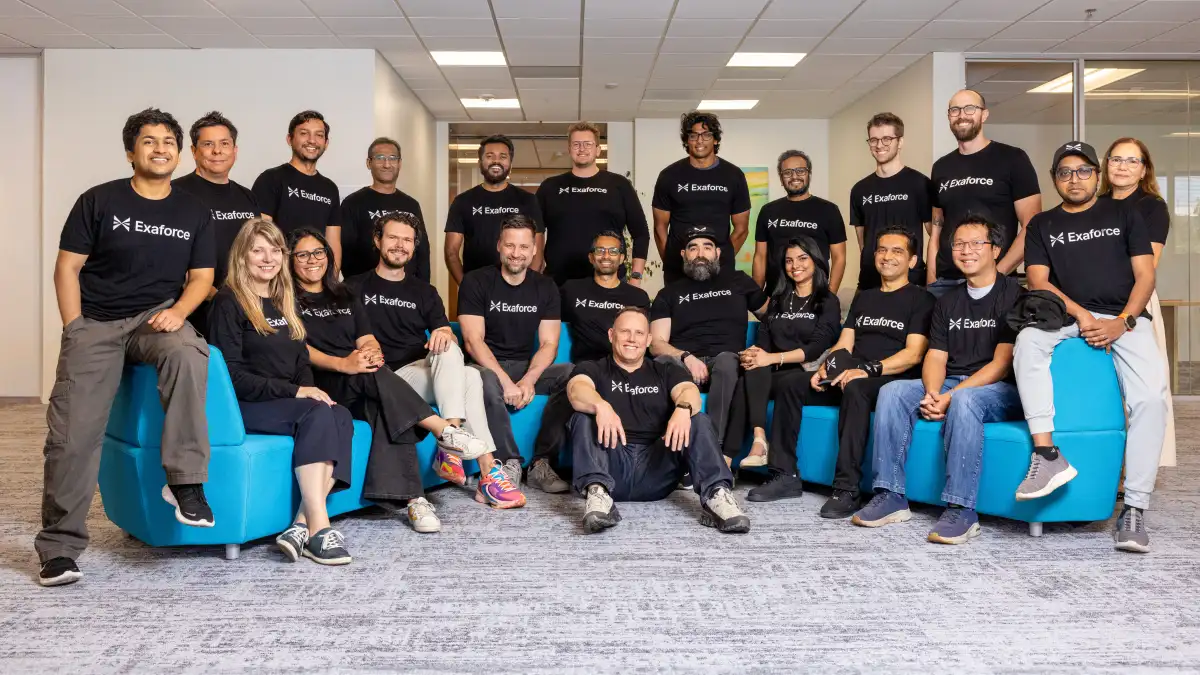
Leading VC firm, born from Sequoia Capital India & SEA, invests big in cutting-edge AI cyber defense, signaling robust sector growth.
The recent announcement that Peak XV, a leading venture capital firm born from the esteemed Sequoia Capital India & SEA legacy, has participated in a $125 million funding round for an AI cybersecurity startup has ignited considerable discussion across the global tech and investment landscape. This significant capital infusion into a sector often characterized by both explosive growth and intense skepticism prompts a critical examination of prevailing assumptions regarding artificial intelligence in defense, venture capital strategy, and the very nature of market saturation.
The conventional wisdom, frequently articulated by industry veterans and market analysts, holds a cautious, if not jaded, view on the proliferation of AI within cybersecurity. This perspective asserts that the market is already oversaturated with countless startups peddling often-similar AI solutions, many of which are deemed to be more marketing hype than substantive innovation. The narrative suggests that true differentiation is elusive, leading to a "race to the bottom" where companies struggle to achieve sustainable profitability amid fierce competition and high customer acquisition costs. Furthermore, there is a deep-seated belief that AI in cybersecurity, despite its promises, often falls short of delivering truly autonomous, infallible defense. Critics argue that these systems frequently generate an unmanageable volume of false positives, necessitating extensive human intervention and thus failing to alleviate the burden on already stretched security teams. The most cynical view posits that large funding rounds in this crowded field are indicative of a speculative bubble, driven by investor FOMO (fear of missing out) on the next big AI wave, rather than a rigorous assessment of a startup's long-term viability or unique technological edge. This conventional understanding often points to the fundamental challenge of AI: its reliance on historical data, which can leave it vulnerable to novel, zero-day attacks, and its inherent lack of human intuition in navigating complex, ambiguous threat landscapes. For a firm like Peak XV, known for its discerning investments, committing such substantial capital might, under this lens, appear to be a high-stakes gamble in a notoriously challenging domain, potentially overvaluing a company amidst a sea of competitors.
While the concerns embedded within this conventional wisdom are not entirely unfounded and warrant careful consideration, a deeper, more analytical examination reveals a compelling counter-narrative, one supported by evolving market dynamics, technological breakthroughs, and strategic investment patterns. The notion of market saturation, while superficially appealing, often masks a critical distinction between generic AI applications and truly transformative innovations that address the escalating complexity and scale of modern cyber threats. The global cybersecurity market, projected to exceed $300 billion by 2027, is not merely growing; it is evolving in response to a threat landscape that is becoming exponentially more sophisticated and pervasive.
The Undeniable Imperative for Advanced Defense
The first piece of challenging evidence stems from the sheer, unyielding demand for advanced cybersecurity solutions. Manual, rule-based security operations are demonstrably failing to keep pace with the volume and velocity of attacks. According to recent reports, the global cost of cybercrime is projected to surpass $10.5 trillion annually by 2025, a stark increase from $3 trillion in 2015. This escalating financial toll, coupled with the increasing frequency of high-profile breaches impacting critical infrastructure, supply chains, and sensitive data, has created an existential imperative for organizations to adopt more proactive and intelligent defense mechanisms. The conventional view of an oversaturated market often overlooks the qualitative gaps that still exist. Many organizations struggle with alert fatigue, fragmented security stacks, and a severe shortage of skilled cybersecurity professionals. This reality creates a fertile ground for AI solutions that can genuinely augment human capabilities, automate mundane tasks, and provide predictive intelligence at a scale previously unimaginable.
Cybercrime Cost Projections:
2015: $3 Trillion USD
2025 (Projected): Over $10.5 Trillion USD Annually
Source: Cybersecurity Ventures
Maturity and Specialization of AI in Cybersecurity
The second pillar challenging the conventional view is the significant maturation and specialization of AI technologies themselves. The early iterations of AI in security might have indeed suffered from high false positive rates and limited adaptability. However, modern AI, particularly advanced machine learning, deep learning, and even nascent generative AI applications, has evolved dramatically. Contemporary AI cybersecurity platforms are moving beyond simplistic anomaly detection to encompass:
Behavioral Analytics: Profiling normal user and system behavior to detect deviations that signify sophisticated attacks, often capable of identifying zero-day threats by their anomalous actions rather than known signatures. Companies like Darktrace have demonstrated the power of self-learning AI in autonomous response.
Predictive Threat Intelligence: Utilizing machine learning to analyze vast datasets of global threat indicators, geopolitical trends, and vulnerability disclosures to forecast potential attack vectors and targets. This shifts defense from reactive to truly proactive.
Automated Incident Response: Orchestrating complex response actions, from isolating compromised endpoints to reconfiguring network policies, often in milliseconds, significantly reducing dwell time for attackers. SentinelOne's AI-powered endpoint protection is a prime example of this capability.
Cloud Security Posture Management (CSPM) and Cloud Workload Protection (CWPP): AI is crucial in managing the complexity and dynamism of cloud environments, automatically identifying misconfigurations, vulnerabilities, and suspicious activities across multi-cloud deployments. Palo Alto Networks' Prisma Cloud leverages AI extensively in this domain.
Natural Language Processing (NLP) for Threat Analysis: AI-driven NLP can rapidly parse vast quantities of unstructured data from threat reports, dark web forums, and open-source intelligence to identify emerging threats and contextualize security events, making human analysts far more efficient.
These advancements demonstrate that AI is not merely an augmentation tool but is becoming an indispensable component of a layered defense strategy, capable of operating at speeds and scales impossible for humans alone. The false positive issue, while still present, is being actively mitigated through more sophisticated algorithms, contextual learning, and explainable AI (XAI) frameworks that provide greater transparency into AI decisions.
Peak XV's Strategic Investment Philosophy
The third and perhaps most compelling piece of evidence lies in the strategic acumen of investors like Peak XV. Peak XV (formerly Sequoia Capital India & SEA) is not a firm known for indiscriminate, trend-following investments. With a track record spanning decades and a portfolio boasting numerous market leaders across Asia and beyond, their investment philosophy is characterized by deep due diligence, a long-term vision, and a keen eye for disruptive innovation. A $125 million round, particularly in a Series B or C stage, implies several key findings by Peak XV:
Proprietary and Differentiated Technology: The startup likely possesses unique intellectual property, a novel architectural approach, or a specialized focus that sets it apart from the perceived "crowd." This could be in areas like quantum-safe cryptography, advanced behavioral biometrics, or hyper-specific industry vertical solutions.
Strong Market Traction: The investment signals significant customer adoption, recurring revenue, and demonstrable proof of concept in real-world deployments. Peak XV would have scrutinized metrics like customer retention, growth rates, and the total addressable market.
Exceptional Leadership Team: The startup's founders and executive team are likely seasoned professionals with deep domain expertise, a clear vision, and a proven ability to execute.
Scalable Business Model: The investment suggests confidence in the company's ability to scale its operations, expand globally, and achieve a robust path to profitability, rather than merely chasing growth at all costs.
Peak XV's involvement, therefore, is not merely an act of jumping on an AI bandwagon. It represents a calculated and informed bet on a specific company that they believe has the potential to redefine a segment of the cybersecurity market, delivering tangible value and achieving significant market share despite existing competition. Their rigorous selection process often identifies companies that challenge conventional wisdom and possess the foundational elements for sustained success.
Economic and Regulatory Tailwinds
Further bolstering the case for strategic AI cybersecurity investments are significant macroeconomic and regulatory forces. Globally, governments and regulatory bodies are imposing increasingly stringent data protection and cybersecurity mandates. Regulations such as Europe's General Data Protection Regulation (GDPR), the California Consumer Privacy Act (CCPA), and the upcoming NIS2 Directive (Network and Information Security Directive 2) in the EU, along with numerous national cybersecurity frameworks, compel organizations to adopt robust, auditable security postures. AI-driven solutions are often the most efficient and scalable means of achieving and maintaining compliance, particularly for complex, multinational operations. Moreover, the ongoing digital transformation across all industries, from healthcare to manufacturing, means that more critical assets are online and vulnerable, further amplifying the demand for sophisticated protection. The global shortage of cybersecurity talent, estimated to be several million professionals, also makes AI-driven automation not just a luxury, but an absolute necessity for organizations striving to maintain a resilient security posture.
Key Drivers for AI Cybersecurity Growth:
Exploding global cost of cybercrime.
Maturation of AI algorithms and applications.
Strategic investments from discerning VC firms.
Increasingly stringent global regulatory mandates.
Persistent cybersecurity talent shortage.
Ubiquitous digital transformation.
The Path Forward: Nuance and Vigilance
While the arguments challenging the conventional wisdom are robust, it is crucial to maintain a nuanced perspective. The AI cybersecurity market is indeed complex, and not every startup will succeed. Challenges remain, including the ethical implications of AI in surveillance, the potential for adversarial AI attacks, and the continuous need for human oversight to guide and validate AI decisions. However, dismissing the entire segment as overhyped ignores the profound advancements and the critical need being addressed. The investment by Peak XV into an AI cybersecurity startup with a $125 million round signifies more than just another funding event. It represents a strategic endorsement of a specific vision and technology that, after rigorous scrutiny, is believed to possess the capacity to deliver real, measurable impact against an ever-evolving threat landscape. It underscores a fundamental shift in how security is approached, moving from reactive, human-intensive processes to proactive, AI-augmented defense mechanisms. The market is not merely saturated; it is differentiating, and the firms that can demonstrate genuine innovation, efficacy, and scalability will continue to attract significant capital and ultimately redefine the cybersecurity paradigm.
Frequently asked questions
Is the cybersecurity market experiencing growth?
Yes, the cybersecurity market, especially within the AI segment, is characterized by explosive growth and intense innovation dueence to the increasing digital threats.