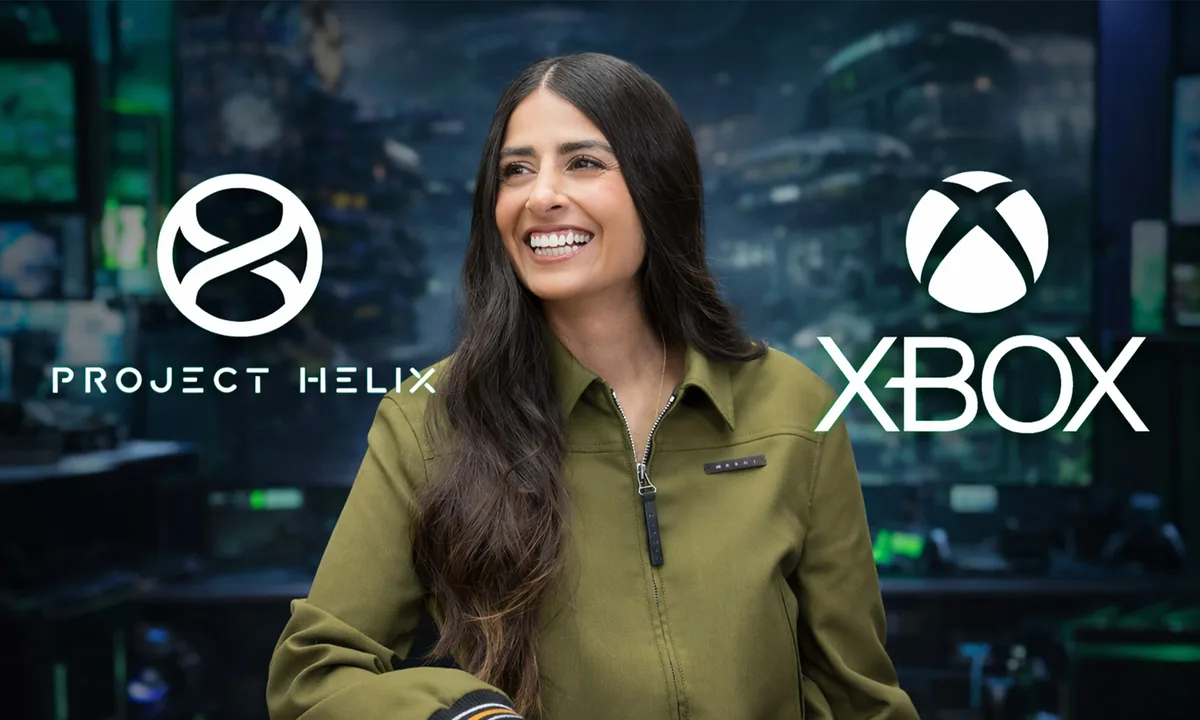
Newly appointed Xbox CEO Asha Sharma confirmed in an interview with Game File that the next-generation Xbox console is feeling the impact of memory shortages GameSpot — joining a growing chorus of hardware makers forced to reckon with AI's voracious appetite for the same components that power gaming. Her statement was measured, but the implication was plain: Project Helix, Microsoft's long-awaited next-gen console, doesn't have a launch window because the global memory equation hasn't resolved itself.
"All of these things are an equation," Sharma told Game File. "Memory costs will impact pricing, will impact availability. As we think about being where the world plays, we will take that into consideration. So we're not ready to share a launch timeline right now. The world's pretty dynamic." GameSpot
The world's pretty dynamic. That's one way to describe a memory market where prices have swung violently upward in months, where AI capital expenditure is reshaping semiconductor supply chains at a structural level, and where every consumer electronics company is competing for chips against data centres funded by trillion-dollar balance sheets.
Project Helix, the Memory Crisis, and What Sharma Isn't Saying
Microsoft has been deliberately oblique about Project Helix's specifications, timeline, and market positioning — but the breadcrumbs accumulating over recent months tell a coherent story. In March 2026, Sharma confirmed via a post on X that the next-generation console will be able to play both Xbox and PC games GamesRadar+ — a significant positioning shift that frames Project Helix less as a traditional closed-platform console and more as a hybrid that competes with Valve's Steam Machine.
During the Xbox Developer Summit keynote at GDC 2026, it was confirmed that dev kits would be shipped to developers at the beginning of 2027. GamesRadar+ That timeline matters enormously: dev kits arriving in early 2027 essentially eliminates any possibility of a 2027 consumer launch. Hardware needs time to stabilise, software needs time to optimise, and supply chains need time to ramp. The realistic window, even before the memory crisis entered the conversation, was looking like late 2027 at the absolute earliest — and more plausibly 2028.
The memory crisis makes that calculus harder. Industry experts predict the "tremendous shortage for the conventional side" will persist through at least 2027, possibly longer. Micron Executive Vice President Manish Bhatia confirmed that high-bandwidth memory for AI chips is consuming so much manufacturing capacity that it's creating scarcity everywhere else. Western Digital reportedly sold out its entire 2026 storage capacity. PressPlay Finance
Tech giants including Alphabet, Amazon, and Microsoft are projected to spend $650 billion on AI infrastructure in 2026 alone, up from $360 billion the prior year. PressPlay Finance The bitter irony for Microsoft's gaming division: it sits inside the same corporate structure as Azure, one of the world's largest consumers of the very memory components its console desperately needs. The AI arms race that Microsoft is funding through Azure is, in part, driving up the cost of building Xbox.
"All I can share is that we have development kits going out next year, and we're working really hard and have a lot to continue to do and a lot to continue to learn. But we're really excited about Project Helix and the initial feedback that we're getting."
— Asha Sharma, CEO, Xbox
The Broader Console Industry Is Caught in the Same Vice
Microsoft isn't suffering alone. The memory crisis is the most significant structural disruption to console gaming since the pandemic-era chip shortage — and this one looks harder to escape.
Bloomberg reported in February 2026 that Sony is considering delaying the PlayStation 6 to 2028 or even 2029 due to skyrocketing memory costs. A 2029 release would be the longest gap between PlayStation generations in the company's history — nine years since the PS5's November 2020 launch. syncTObest The PS6 reportedly requires approximately 30GB of GDDR7 RAM to meet its performance targets. At current memory pricing, sourcing that RAM at volumes necessary for a mainstream console launch at a commercially viable price point is not feasible until market conditions improve. syncTObest
Nintendo is not immune either. Nintendo launched the Switch 2 at $449 in June 2025, but is now contemplating raising the price in 2026 as RAM costs have increased 41% compared to initial projections. Dataconomy A company that launched a wildly successful console less than a year ago is already considering hiking its price to absorb memory inflation. That's how acute the disruption is.
Data centres will consume 70% of global memory chip production in 2026, according to industry forecasts. That leaves the remaining 30% to be divided among every consumer electronics manufacturer on earth — smartphone makers, PC manufacturers, TV producers, automotive suppliers, and gaming console developers all competing for the same constrained slice.
For context: DRAM prices have skyrocketed by 75% in a single month according to some industry reports. Even component manufacturers like Transcend have reported costs rising 50–100% in a single week. PressPlay Finance These aren't quarterly fluctuations absorbed in margin management. These are supply chain shocks that force fundamental hardware design and pricing decisions.
What Sharma's Xbox Admission Reveals About the Platform's Larger Bet
Sharma's memory crisis comments don't exist in a vacuum. They land in the middle of a comprehensive strategic reset at Xbox that she and Chief Content Officer Matt Booty have been telegraphing since taking the helm. Their joint letter to employees led with the admission that Xbox has "work to do" because "players are frustrated" — specifically that new feature drops on console have been less frequent, PC presence isn't strong enough, and core experiences like search, discovery, and social still feel too fragmented. GamesRadar+
The Project Helix positioning — a console that plays Xbox and PC games — is the strategic answer to that fragmentation problem. Rather than building a closed hardware box that demands consumer hardware loyalty, Microsoft is pitching the next-gen Xbox as essentially a Steam Machine rival GamesRadar+, a device that slots into the existing PC gaming ecosystem rather than competing against it. The "where the world plays" language Sharma deployed in the Game File interview is the marketing shorthand for that ambition: Xbox as platform layer, not just as hardware.
Xbox is wanting to see a return to growth next year, with daily active players established as the new north star metric — emphasising expansion across consoles, mobiles, game streaming, and everything in between. TweakTown In that framing, Project Helix is one node in a larger ecosystem play, not the make-or-break moment for Xbox's survival. The memory crisis delays the hardware node without necessarily derailing the platform strategy.
That's the most charitable reading. The less charitable one: a hardware launch already burdened by strategic ambiguity — is it a console? A PC? A hybrid? — is now also burdened by supply chain uncertainty, with no launch window and dev kits that won't reach studios until 2027 at the earliest.
Key Takeaways
1. Sharma's candour is new, and it matters. Previous Xbox leadership rarely acknowledged hardware headwinds this directly. That Sharma named the memory crisis as a pricing and availability factor is a signal that transparency is part of her brand-rebuilding strategy — but it also sets expectations that a 2027 launch is unlikely.
2. The AI memory crisis is structural, not cyclical. Unlike the 2020–2022 pandemic chip shortage, this is not a supply disruption that resolves when factories reopen. AI data centre investment is accelerating, not plateauing, and the memory manufacturers have made deliberate strategic choices to prioritise it.
3. Sony, Microsoft, and Nintendo are all impacted. No major console platform escapes this. A potential PS6 delay to 2028–2029, Nintendo contemplating Switch 2 price hikes, and Project Helix without a launch window all stem from the same root cause.
4. Project Helix's PC-console hybrid positioning is both opportunity and complication. By targeting PC game compatibility, Microsoft reduces its dependence on an exclusive first-party software library — but it also muddies the consumer value proposition at exactly the moment when clarity matters most.
5. Microsoft's AI infrastructure spending is, paradoxically, part of its own console problem. Azure's AI buildout contributes to the memory demand that squeezes gaming hardware supply. The same corporate entity is on both sides of the shortage equation.
The Honest Counterargument
There is a version of this story where the memory crisis is less catastrophic than it looks from the outside. Reports suggest Microsoft has signed a massive, exclusive RAM supply deal with SK Hynix Pure Xbox — which, if accurate, would provide a degree of supply certainty that most hardware makers lack. Securing dedicated chip supply ahead of a console launch is exactly what a company with Microsoft's balance sheet and semiconductor relationships should be doing.
AMD, which designs the semi-custom chips inside both Xbox and PlayStation hardware, told investors in February 2026 that the next-gen Xbox SoC is ready to support launch in 2027 TweakTown. A chip that's ready to go is meaningfully different from a chip that's delayed — it means the design work is complete and the constraint is manufacturing and component sourcing, not engineering. That's an easier problem to solve with capital than an engineering one.
Xbox co-creators have been blunt about the challenges facing Project Helix, with one noting that Microsoft investors are "psychotically interested" in AI Wccftech — suggesting internal resource competition that could further complicate gaming hardware's claims on corporate attention. Whether Sharma has the organisational muscle to protect Project Helix's timeline against Azure's gravitational pull is a question that no press interview can fully answer.
What This Means for the Gaming Industry's Next Chapter
The console generation cycle that gave us PlayStation 5 and Xbox Series X|S in 2020 — at $499 and $499 respectively, during a global pandemic, despite component shortages — was already considered miraculous in retrospect. Industry analysts now suggest next-gen consoles could launch at $700–$1,000+, potentially pricing out traditional console audiences and accelerating the shift to cloud gaming. PressPlay Finance If that pricing materialises, it doesn't just change the economics of a hardware launch — it changes the composition of the gaming audience itself.
That shift would actually benefit Microsoft's platform strategy more than Sony's. A consumer priced out of a $799 console might still subscribe to Game Pass and stream games to a device they already own. Sharma's "where the world plays" framing implicitly acknowledges a future where the console is optional, not mandatory, for Xbox participation. The memory crisis, perversely, may accelerate exactly the cloud-first transition that Microsoft has been positioning toward for years.
For founders watching this space — particularly those building in cloud gaming infrastructure, AI-native game development, or alternative distribution channels — the delayed console generation creates an extended window. Every year that next-gen hardware doesn't arrive is a year that software innovation happens on existing hardware, that streaming services mature, and that PC gaming platforms like Steam consolidate their user base.
AI gave us large language models and autonomous agents. It is also, as an unintended consequence, making it harder to build the consoles that will run the games those models help create. Asha Sharma didn't say any of that directly. But between the lines of "the world's pretty dynamic" and "memory costs will impact pricing, will impact availability," the message was clear enough.
Project Helix is coming. The question is when the world's memory supply will let it.