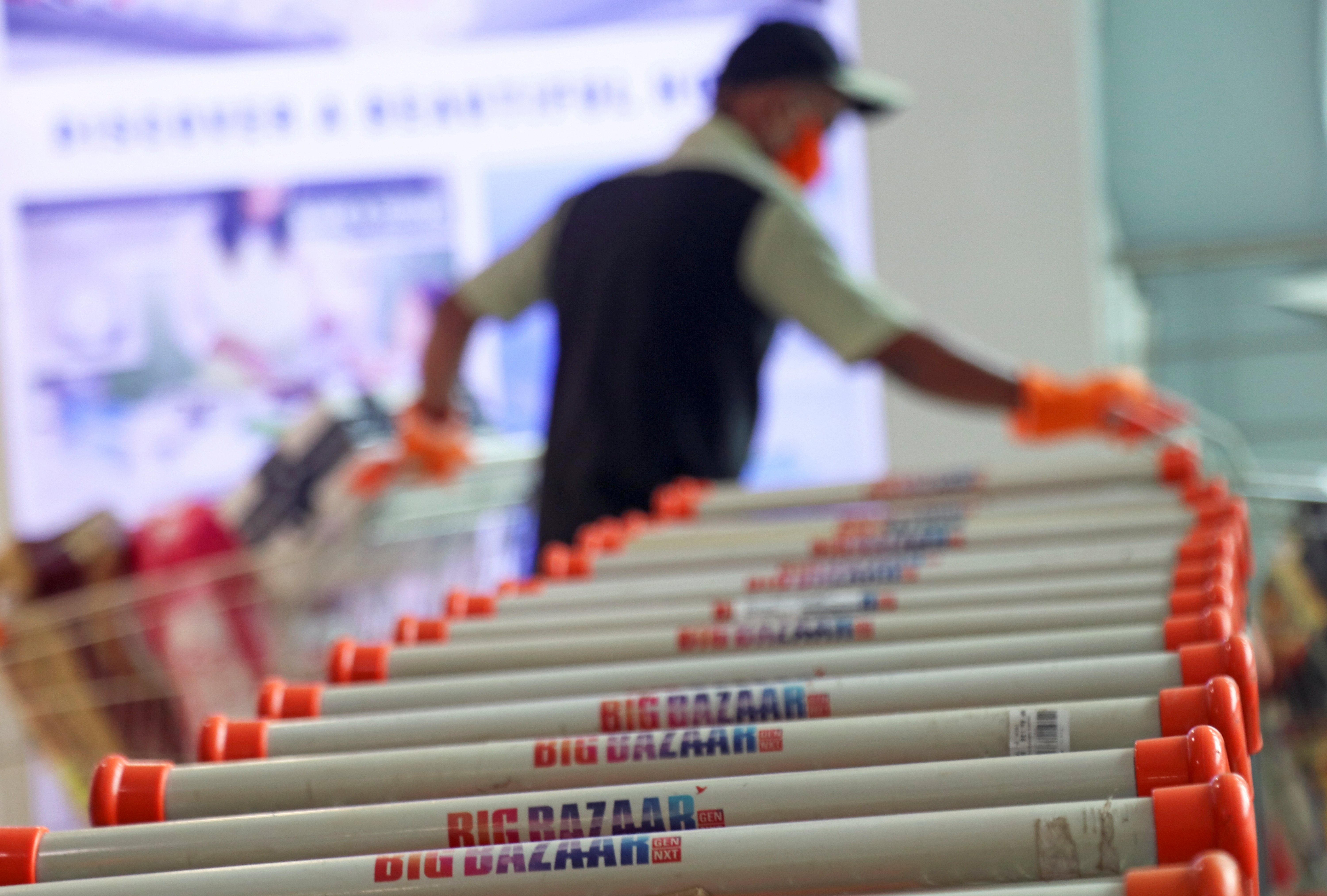
Amazon India has announced a ₹2,800 crore (approximately $300 million) investment to dramatically scale its quick commerce vertical, Amazon Now. NewsBytes The company plans to expand Amazon Now to 100 cities across India, backed by a network of over 1,000 micro-fulfilment centres. Business Today This isn't a feature update. It's the opening move of an infrastructure war that will reshape Indian retail for the rest of the decade.
From Spectator to Aggressor: Amazon's Belated Quick Commerce Reckoning
Amazon Now currently operates in Delhi NCR, Mumbai, and Bengaluru with around 300 micro-fulfilment centres. NewsBytes Scaling to 1,000+ MFCs across 100 cities means tripling-plus the physical footprint in what is likely an 18-to-24-month execution window. The cities targeted tell the real story. The expansion will see Amazon Now enter Pune, Hyderabad, Chennai, Kolkata, Jaipur, Lucknow, Kanpur, Chandigarh, Ahmedabad, Meerut, Mysuru, Panipat, Kochi, Amritsar, Mangaluru, and Visakhapatnam — while deepening its presence in existing metro markets. Business Today
That list is not metro India. It's the India that built UPI's transaction volumes, that drove Meesho's hypergrowth, that made Jio profitable. Tier II and tier III cities are where the next 200 million e-commerce customers live — customers who have smartphones and UPI, but have historically been underserved by the quick commerce players that optimised for Mumbai's Bandra and Delhi's Hauz Khas. Blinkit's density is a metro phenomenon. Amazon is betting it can win the next tier before Blinkit gets there.
The ₹2,800 crore investment builds on Amazon's ₹2,000 crore deployment in 2025, which enabled the launch of 17 new fulfilment centres, six sortation centres, and 75 last-mile delivery stations across India. Open Magazine And both are components of something much larger: Amazon's total commitment to India stands at $75 billion by 2030, following a fresh $35 billion pledge that covers AI, exports, logistics, and job creation. India.com Quick commerce isn't a budget line. It's a strategic pillar.
"We have accelerated our expansion plans and will scale Amazon Now to 100 cities, powered by more than 1,000 micro-fulfilment centres. This will also enable over 16,000 farmers to leverage our technology and operations to directly reach customers."
— Harsh Goyal, Vice President – Everyday Essentials, Amazon India
The Market Amazon Is Walking Into
India's quick commerce landscape is not a level playing field. It's a market with an established hierarchy, ferocious unit economics pressure, and one player that has separated itself from the pack.
As of early 2026, Blinkit holds over 50% of the quick commerce market share — a significant increase from approximately 40% in 2024. Zepto and Swiggy Instamart each hold a mid-20% market share. GrabOn Morgan Stanley pegs the total addressable market for India's quick commerce industry at $57 billion — a more than 35% increase from its previous forecast of $42 billion. MEDIANAMA That's the number that matters. TAM expansion of that magnitude at that speed means the race isn't zero-sum yet. There is still market to build.
Blinkit processed 424 million orders in fiscal 2025; analysts forecast that climbing to 863 million in 2026. Its average order value is projected to reach ₹709 in 2026, roughly ₹90 higher than Swiggy Instamart's ₹619, suggesting a premiumisation advantage that directly improves unit economics. S&P Global Blinkit is not just winning on share — it's winning on the metrics that actually build a durable business.
Zepto's FY25 revenue jumped approximately 150% year-on-year to ₹11,110 crore Akoi, a number that silences anyone who questioned whether a company built by two teenagers with a 10-minute promise could sustain institutional scale. Zepto is now eyeing a public listing, which will give it currency to compete structurally with the Eternal-backed Blinkit machine.
Into this competitive pressure cooker walks Amazon — with deeper pockets than any of them, but without the operational muscle memory that years of dark-store logistics build.
The regulatory dimension matters too. Amazon has long operated in India's complex FDI-constrained e-commerce environment, where foreign firms cannot hold inventory directly. Its marketplace model has repeatedly drawn scrutiny from the Competition Commission of India — and separate regulatory investigations into its seller practices have dragged through Indian courts. Quick commerce, with its MFC-based model, adds another layer of structural sensitivity. Whether Amazon's operational structure in India can scale 1,000 MFCs without triggering fresh regulatory friction is a question the company's legal team is undoubtedly gaming out even as its logistics team draws up the expansion maps.
Why Amazon's Moat Is Different — But Not Obviously Better
The case for Amazon Now is not "we'll deliver faster than Blinkit." Blinkit's dark store density in its top cities makes matching its 10-to-12-minute delivery time a multi-year infrastructure challenge. Amazon's actual advantages lie elsewhere.
Prime membership is the first. Early user engagement data shows Prime members tripling their shopping frequency on Amazon Now, and Prime members receive unlimited free deliveries as part of the service. Whalesbook Amazon has tens of millions of Prime subscribers in India — a pre-converted, high-frequency base that no quick commerce player has had to acquire from scratch. Blinkit and Zepto spent heavily on loyalty programmes to build that customer behaviour. Amazon already owns it.
The second advantage is seller infrastructure. Amazon Now will also help over 16,000 farmers leverage Amazon's technology and operations to directly reach customers through sellers on the platform. Business Today A farm-to-consumer model embedded in quick commerce is differentiated from what Blinkit or Zepto offer. Fresh produce sourced directly from farmers, with quality signalled through the Amazon brand, targets the segment of consumer anxiety that remains a persistent friction point in quick commerce — the "is this actually fresh?" problem.
The third is cross-category scale. Traditional e-commerce players like Amazon are growing at 18–25% YoY while quick commerce captures the high-frequency grocery and FMCG layer. Productgrowth Amazon's bet is that it can use Amazon Now to own the high-frequency, daily-need layer, while its core marketplace captures the considered, higher-AOV purchases that quick commerce can't economically serve. If that flywheel works — quick commerce builds daily habit, daily habit drives Prime retention, Prime retention drives marketplace GMV — the unit economics look very different from running a standalone dark-store business.
Key Takeaways
1. Amazon isn't chasing Blinkit's metro stronghold — it's flanking it via Tier II. Cities like Meerut, Panipat, and Amritsar represent underserved markets where Blinkit's dark-store density hasn't penetrated. First-mover advantage in those cities could be structurally decisive.
2. 1,000 MFCs is a capital commitment, not a roadmap. Executing that buildout without sacrificing delivery speed or cost discipline is the operational challenge. Blinkit and Zepto have years of iteration on dark-store placement and inventory velocity that Amazon Now must compress.
3. Prime is Amazon's actual quick commerce weapon. The tripling of shopping frequency among Prime members suggests the retention flywheel is turning. No other quick commerce player walks in with a pre-built, high-value loyalty base at scale.
4. The farmer integration is a supply-chain differentiator. Sixteen thousand farmers feeding directly into an urban quick commerce network creates a fresh produce story that commodity dark stores can't easily replicate.
5. Regulatory risk remains the variable no expansion plan can fully price in. Amazon's history with India's FDI rules and CCI scrutiny means that as its quick commerce footprint grows, so does its visibility as a regulatory target.
The Honest Counterargument
Speed of capital deployment is not the same as speed of operational execution. Amazon's ₹2,800 crore sounds decisive — and it is large — but the losses in India's quick commerce sector have barely dented momentum, underscoring how aggressively companies are betting on an idea long dismissed as a logistical fantasy. Bloomberg Blinkit, Zepto, and Instamart have spent years absorbing those losses while building the dark-store placement science, the inventory velocity algorithms, and the last-mile driver networks that make 10-minute delivery actually work. Amazon is buying its way into that knowledge gap, not around it.
Zomato's short-lived experiment with "Quick," its 10-minute food delivery feature, serves as a cautionary tale MEDIANAMA — even a company with deep logistics muscle and a massive delivery network couldn't make the model work on its terms. Amazon Now's challenge in the ready-to-eat segment, where Zepto Café and Swiggy's Bolt are building habits that pure grocery delivery can't replicate, is a real strategic hole.
And then there's Flipkart. Flipkart Minutes currently operates around 800 dark stores and is reportedly expanding to 1,200 by 2026, with plans for a standalone app. Business Today Walmart-backed Flipkart understands the Indian consumer as well as any platform alive. If Flipkart Minutes accelerates its Tier II push simultaneously with Amazon Now's expansion, the capital intensity of the quick commerce land-grab increases for everyone — including the incumbents who may respond by accelerating their own dark-store rollouts in self-defence.
What a 100-City Amazon Looks Like for India's Startup Ecosystem
The ripple effects of Amazon Now going national extend well beyond grocery delivery. Quick commerce at this scale creates demand for cold-chain logistics startups, dark-store real estate tech, hyper-local inventory management software, and gig-economy workforce platforms. India's logistics and supply-chain startup ecosystem — companies like Shiprocket, Delhivery, and a constellation of warehouse-tech players — will all feel the pull of Amazon's infrastructure buildout, either as partners or as firms whose customers are now being served by Amazon's captive network.
For D2C brands already selling on Amazon's marketplace, Amazon Now creates a new distribution window: the same-hour slot, not just the same-day one. Brands that previously thought of Amazon as a 24-to-48-hour channel now have to rethink SKU strategy, packaging, and pricing for a 10-to-30-minute delivery context. That's a meaningful product development conversation for thousands of brands simultaneously.
Over two-thirds of online grocery orders and 10% of online retail spending came through quick commerce apps in 2024 MEDIANAMA, according to Bain & Company and Flipkart research. As Amazon deepens its quick commerce footprint, those percentages will climb — and the companies that don't have a quick commerce shelf presence will increasingly find themselves invisible at the moment of peak consumer intent.
India's quick commerce battle has been fought, until now, largely between Indian-founded startups and one Walmart-backed giant. Amazon entering at scale — with $300 million in immediate capital, a 100-city ambition, 1,000 MFCs, and the full weight of a $75 billion India commitment behind it — fundamentally changes the character of that competition. The three-way contest between Blinkit, Zepto, and Instamart was already brutal. A four-way war, with Amazon's logistics infrastructure and Prime flywheel added to the mix, will be something else entirely.
For Harsh Goyal and Amazon India's leadership, the pressure is execution: turning a capital commitment into operational reality faster than the incumbents can entrench. For Zepto's Aadit Palicha, for Blinkit's parent Eternal, for Swiggy — the pressure is different. Amazon's arrival doesn't threaten their existence. But it does threaten the premium valuations that a cosy competitive structure was quietly sustaining.
The quick commerce market just got a lot more interesting. And a lot more expensive.