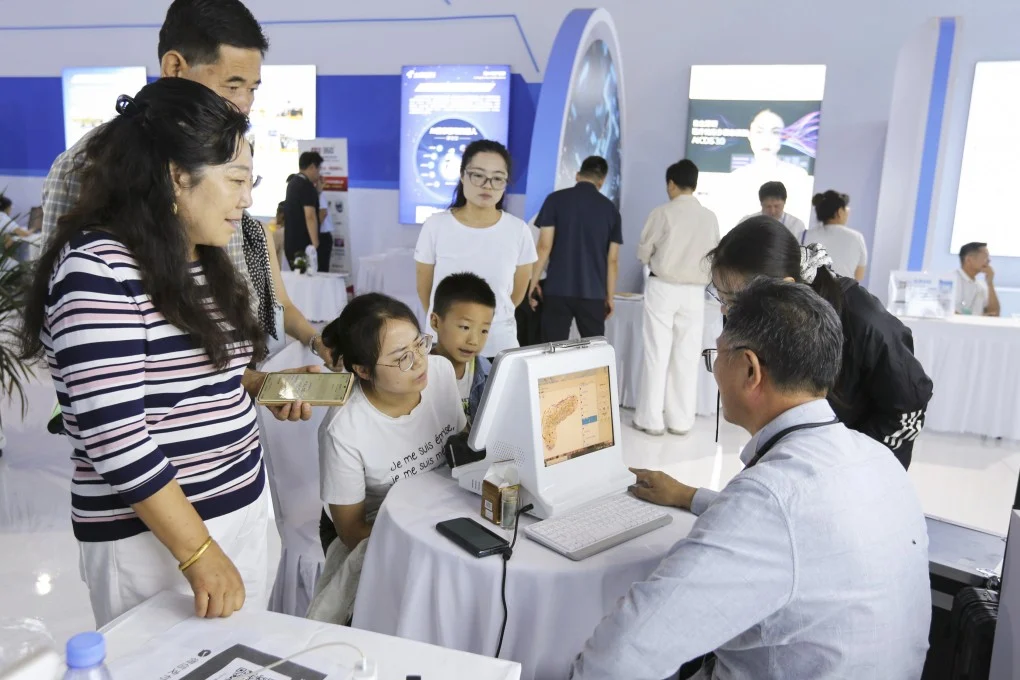
China's rapid ascent in healthcare AI positions it as a global leader, solidifying its 3rd rank behind the US and UK in a new index.
China has solidified its position as a global powerhouse in artificial intelligence for healthcare, achieving third place behind the United States and the United Kingdom in a newly released international index, signaling a profound reordering of the multi-trillion dollar health technology market. This ascent, driven by massive state-backed investment and rapid data accumulation, portends heightened competition for Western pharmaceutical and medical device giants while offering new avenues for technological collaboration and strategic capital deployment.
The comprehensive "Global Healthcare AI Index 2024," compiled by an independent consortium of research institutions, evaluated nations on more than 50 metrics including research output, venture capital funding, clinical integration, regulatory frameworks, and talent pool. China's leap past several European nations and Canada underscores its aggressive national AI strategy, which has prioritized healthcare as a key application domain since its inception in 2017. The report highlights China's particular strengths in medical imaging diagnostics and drug discovery platforms, areas where its vast patient data sets and computational power provide significant advantages.
Total venture capital investment into Chinese healthcare AI firms reached an estimated $12.5 billion in 2023, a 15% increase from the previous year, even as global tech funding experienced a broader slowdown, according to data from PitchBook. Leading players like Alibaba Health Information Technology Ltd., Ping An Good Doctor, and Tencent Holdings Ltd. have leveraged their extensive user bases and cloud infrastructure to develop AI-powered diagnostic tools, online consultation platforms, and personalized health management solutions. This concentrated investment and development activity is now translating into tangible market share and advanced capabilities, challenging the long-held dominance of Western innovators.
What It Means
China's robust performance in healthcare AI carries significant implications for global market dynamics, intellectual property landscapes, and the future of patient care. The country's ability to rapidly scale AI solutions across its enormous population provides an unparalleled testing ground for new technologies, potentially accelerating product development cycles and refining algorithms at a pace difficult for smaller markets to match. This could lead to a bifurcation of the global healthcare AI market, with distinct ecosystems developing around different data governance models and regulatory philosophies, influencing cross-border technology adoption and investment strategies.
For multinational pharmaceutical companies and medical technology firms, China's rise presents both a formidable competitive threat and a potential partnership opportunity. Companies failing to integrate advanced AI capabilities risk being outmaneuvered by agile Chinese counterparts, particularly in emerging markets where affordability and accessibility drive adoption. Conversely, collaborations with Chinese tech giants could offer unparalleled access to data, development talent, and a massive domestic market, albeit with complex considerations around data localization and intellectual property protection. The strategic imperative for global players now involves navigating this increasingly complex landscape, balancing competition with potential alliances to maintain market relevance.
Global healthcare AI market projected to exceed $188 billion by 2030, with China expected to capture over 25% of this value, up from 15% in 2022.
The Context
China's strategic push into healthcare AI began with the "Next Generation Artificial Intelligence Development Plan" unveiled in 2017, which explicitly identified healthcare as a priority sector for AI integration. This national strategy has been bolstered by initiatives such as "Healthy China 2030," aiming to modernize the country's healthcare system through digital transformation and advanced technology. The government has facilitated data sharing among medical institutions and invested heavily in computing infrastructure, creating fertile ground for AI development.
The United States and the United Kingdom, while maintaining their top two positions, have benefited from established research institutions, robust venture capital ecosystems, and a strong legacy of innovation in life sciences. The U.S. continues to lead in foundational AI research and the commercialization of cutting-edge solutions, particularly in areas like genomics and precision medicine. The U.K., leveraging its National Health Service (NHS) as a single payer system, has demonstrated strengths in real-world data integration and large-scale clinical trials, providing a unique environment for AI validation. However, both nations face challenges in data interoperability and regulatory bottlenecks that China's more centralized approach has, in some respects, circumvented.
What Analysts Say
"China's trajectory in healthcare AI is not merely about catching up; it's about establishing a distinct, parallel innovation pathway," stated Dr. Lena Chen, Head of Asia Technology Research at Sterling Capital Markets. "While Western markets grapple with fragmented data and stringent privacy regulations, China's more integrated approach, coupled with its massive data repositories, allows for rapid model training and deployment. The challenge for China, however, lies in gaining international trust and navigating increasingly complex geopolitical headwinds, particularly concerning data governance and algorithmic transparency in global health contexts."
Concerns persist among some analysts regarding the ethical implications and data security protocols within China's rapidly expanding healthcare AI sector. The vast scale of data collection, while a boon for development, also raises questions about individual privacy and the potential for misuse. Moreover, the capacity for these highly localized AI solutions to seamlessly integrate into diverse international healthcare systems remains a key consideration for global adoption and market penetration beyond its borders, potentially creating a "two-speed" global health AI market.
Investors and policymakers will closely watch the next iteration of China's "Intelligent Healthcare Development Plan," anticipated in late 2024, for clues on specific government incentives and regulatory easing aimed at accelerating commercialization and international expansion. Further consolidation among Chinese healthcare AI startups and potential offshore IPOs could also signal a new phase of global market integration, with key indicators including new cross-border clinical trial partnerships and intellectual property filings in Western jurisdictions over the next 12 to 18 months.
Frequently asked questions
Where does China rank in global healthcare AI?
China ranks 3rd globally in healthcare AI, trailing only the United States and the United Kingdom, according to a new international index report.
What drives China's rise in healthcare AI?
China's ascent in healthcare AI is largely driven by massive state-backed investment and rapid data accumulation, fostering significant technological advancements.
Which countries lead the healthcare AI index?
The United States and the United Kingdom hold the top two positions, respectively, in the global healthcare AI index.
How is China's position impacting health technology?
China's solidified third-place position is signaling a profound reordering and increased competition within the multi-trillion dollar global health technology market.
What is the global healthcare AI index?
The global healthcare AI index is a newly released international report that assesses and ranks countries based on their advancements and position in artificial intelligence for healthcare.
Is healthcare AI a growing market?
Yes, healthcare AI is a rapidly expanding market, with significant investment and innovation leading to a multi-trillion dollar global health technology sector.