Apple's highly anticipated macOS 26.5 'Redwood' update brings advanced on-device AI capabilities and professional-grade tools to your Mac. Download it now!
macOS 26.5 'Redwood' Lands, Bringing On-Device AI and Pro-Grade Tools
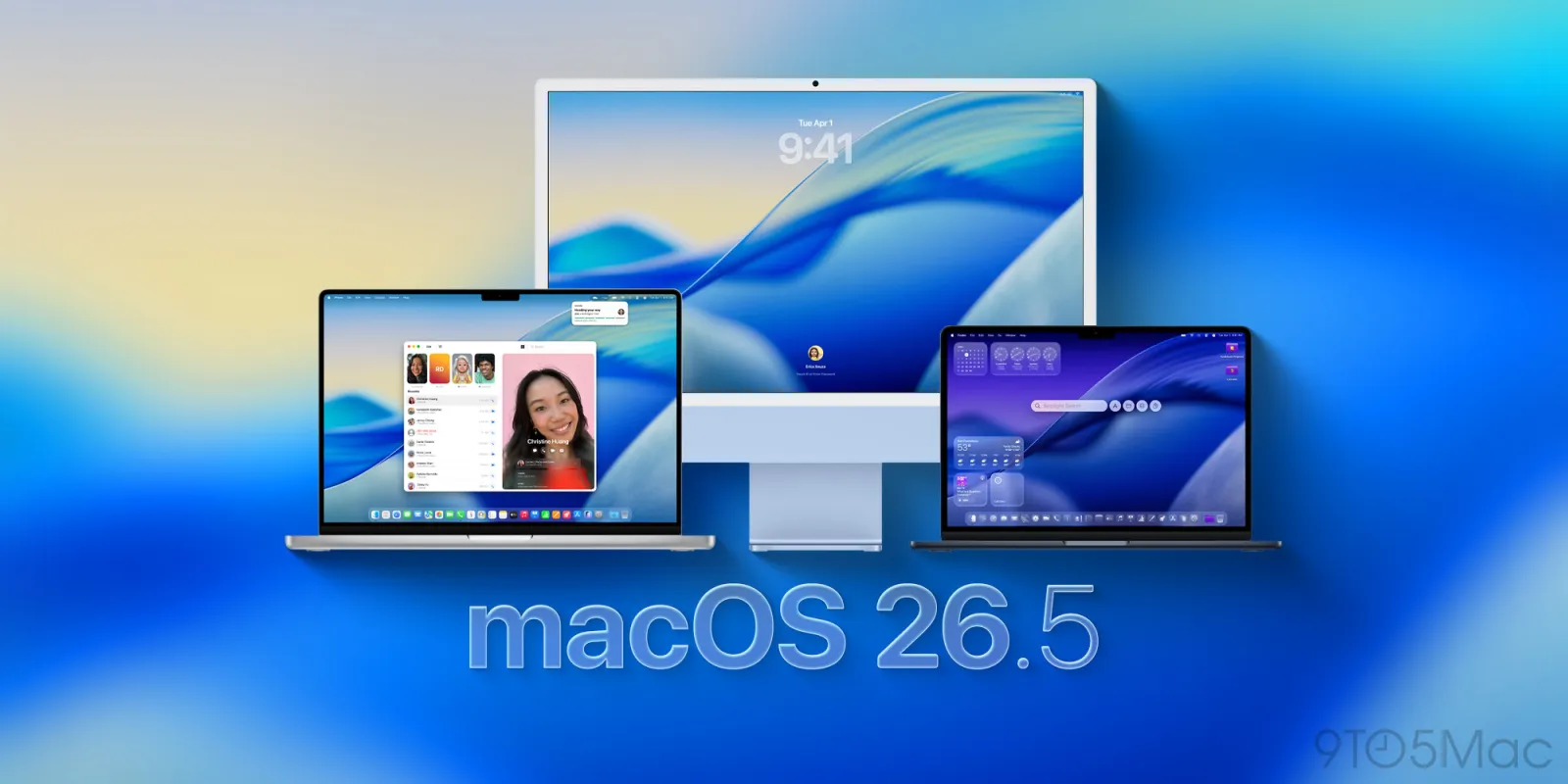
Apple today officially rolled out macOS 26.5, dubbed 'Redwood,' making the highly anticipated operating system update available for immediate download across compatible Mac devices. The release ushers in a suite of significant enhancements, most notably a deeply integrated on-device AI architecture and substantial upgrades for professional developers.
This launch comes at a critical juncture for Apple, as the company faces increasing pressure to demonstrate its AI prowess amidst a rapidly evolving tech landscape dominated by generative models. macOS Redwood is positioned as Apple's definitive answer, aiming to redefine desktop computing through intelligent, privacy-centric capabilities that leverage its powerful M-series silicon.
A cornerstone of Redwood is the new "Cognitive Core," an on-device neural engine framework designed to power a new generation of intelligent applications and system-level features, according to Apple's developer documentation. The company claims this architecture can execute large language models (LLMs) and diffusion models with unprecedented efficiency directly on Mac hardware, sidestepping cloud dependencies for many tasks.
That's a big claim, especially as rivals like Microsoft push their "Copilot+ PC" initiative with dedicated NPUs and cloud-heavy AI, raising questions about whether Apple’s on-device strategy can match the breadth of cloud-powered services.
The broader industry context sees every major platform player racing to embed AI at the operating system level, creating a new battleground for developer mindshare and user experience. Apple's move is a clear defensive and offensive play, aiming to lock in its ecosystem advantages by offering a unique blend of performance, privacy, and seamless integration across its hardware stack.
One of the most immediate impacts for developers will be the updated Xcode 16.5, which includes new SDKs for the Cognitive Core, allowing direct access to on-device AI models. Developers can now build applications performing complex inference tasks locally, from real-time transcription to advanced image analysis, without sending user data off-device.
The privacy implications of this approach are significant. Apple has consistently differentiated itself through a strong stance on user privacy, and Redwood's on-device AI further reinforces this narrative. By processing sensitive data locally, Apple aims to mitigate concerns about data breaches and surveillance that plague many cloud-based AI services, a considerable advantage for enterprise users and privacy-conscious consumers alike.
Beyond AI, Redwood introduces "Adaptive Desktop," a dynamic workspace manager that intelligently rearranges and prioritizes applications based on user activity and context. Leveraging the Cognitive Core, this feature observes usage patterns to predict workflows, offering predictive app launching and automated window grouping, evolving beyond Stage Manager.
For professionals, the system-level integration of containerization technologies like Docker and Kubernetes receives a substantial boost. macOS Redwood ships with a redesigned virtualization framework, offering near-native performance for Linux and Windows VMs. This is a critical upgrade for engineers and IT running complex development environments directly on their Macs.
Security enhancements are also a core part of Redwood. The Secure Enclave Processor has been upgraded to support a new generation of cryptographic keys and hardware-backed attestation features, further hardening the operating system against sophisticated attacks. This provides a more robust foundation for zero-trust architectures, particularly relevant for corporate deployments.
Apple has also quietly improved its file system, introducing "APFS+," an evolution of the Apple File System designed for enhanced data integrity and performance with large datasets. While not a headline feature, its impact on I/O-intensive workloads in video editing, scientific computing, and machine learning is expected to be substantial.
The new OS also deepens its integration with the broader Apple ecosystem, particularly with the Vision Pro. Users can now seamlessly extend their macOS desktop into a mixed-reality environment, allowing for infinite virtual display space and collaborative workflows within shared AR spaces. This positions the Mac as a central hub for spatial computing development and interaction.
Energy efficiency, a perennial Apple focus, is further optimized in Redwood. New power management algorithms, tailored for the latest M3 and M4 chips, promise extended battery life and reduced power consumption, even under heavy AI workload. This is crucial for mobile professionals and aligns with broader environmental sustainability goals.
However, analysts remain cautious about the real-world performance of these on-device AI capabilities. While impressive in controlled demos, the sheer computational demands of modern LLMs mean only a subset of tasks might run efficiently without cloud augmentation, potentially limiting practical scope for many users outside specific developer contexts.
The minimum hardware requirements for Redwood have also subtly shifted. While older M-series Macs are supported, many advanced Cognitive Core features require Neural Engine capabilities in M3 or newer chips. This nudges users towards hardware upgrades to fully leverage the new OS, a familiar Apple strategy.
Developer reaction has been mixed so far. While excitement surrounds new AI APIs, apprehension exists regarding the learning curve of a new architectural paradigm and potential fragmentation if Apple's on-device models don't easily port. Redwood's AI success hinges on robust developer adoption and a vibrant third-party ecosystem.
Competitors are not standing still. Microsoft's aggressive push with Copilot+ PCs, powered by Qualcomm's Snapdragon X Elite, offers a different vision of AI integration, one that relies more heavily on cloud infrastructure and aims for broader hardware compatibility. This sets up a fascinating platform war. Apple's tight hardware-software integration faces a more open, yet potentially less private, alternative.
Furthermore, the enterprise market, a segment Apple has aggressively courted in recent years, will be watching closely. Enhanced security, virtualization, and management features are compelling. Yet, IT departments will weigh benefits against the complexity of deploying a new OS, especially one with deep-seated AI components, within existing infrastructure.
Apple’s consistent message of
Frequently asked questions
When is macOS 26.5 available?
macOS 26.5 'Redwood' was officially released today and is now available for immediate download on all compatible Mac devices. Users can access the update through System Settings.
What are the main new features in macOS 26.5?
The primary new features include a deeply integrated on-device AI architecture and substantial upgrades for pro-grade tools, enhancing productivity and creative workflows across the system.
How do I download macOS 26.5 Redwood?
You can download macOS 26.5 by navigating to System Settings > General > Software Update on your compatible Mac. Follow the on-screen prompts to begin the installation process.
Which Mac models are compatible with macOS 26.5?
The article preview mentions 'compatible Mac devices.' A full list of compatible models will be provided by Apple, typically covering recent MacBook Air, MacBook Pro, Mac mini, iMac, Mac Studio, and Mac Pro models.
What is on-device AI in macOS 26.5?
On-device AI refers to artificial intelligence processing that occurs directly on your Mac, rather than relying on cloud servers. This enhances privacy, speed, and responsiveness for AI-powered features within the operating system.
Is macOS 26.5 a free update?
Historically, major macOS updates are provided as a free download by Apple for compatible devices. It is expected that macOS 26.5 'Redwood' will follow this tradition.