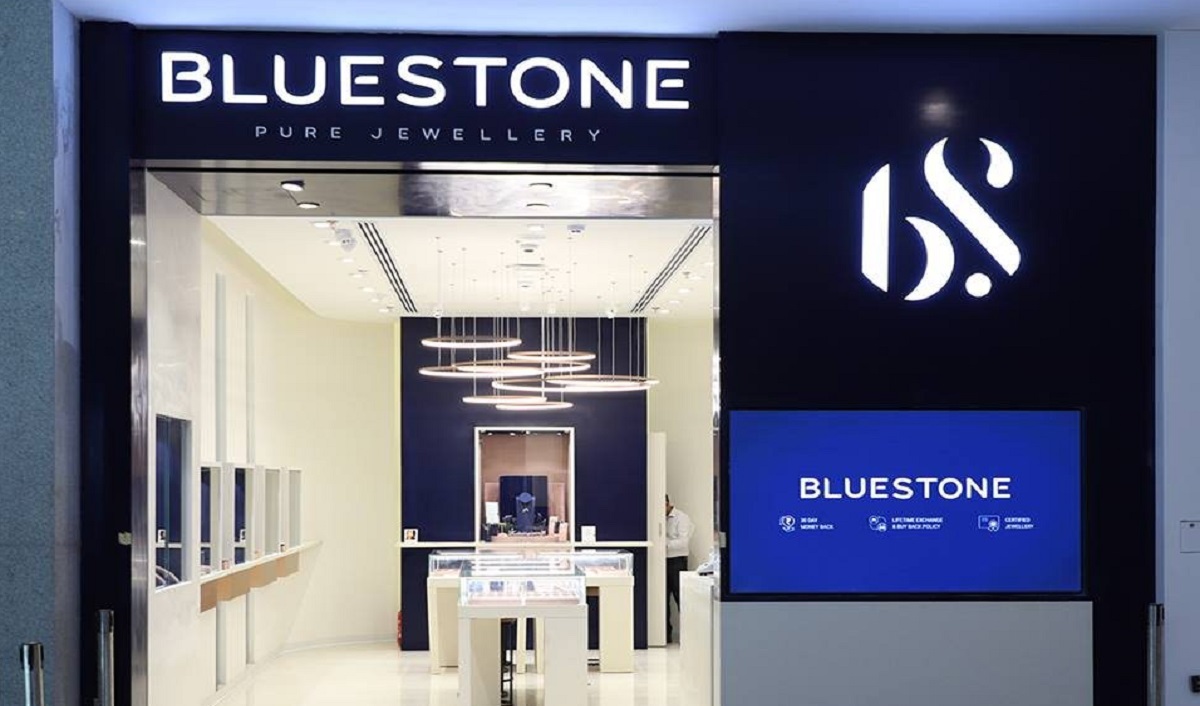
BlueStone managed to open 65 stores in FY26. The Researchers Less than half the target. And yet the company just posted its first full year of positive PAT. Both things are true simultaneously. That's what makes this story worth understanding beyond the headline.
The commodity that rewrote the plan
Gold prices surged to nearly ₹1.42 lakh per 10 gram (24K) in FY26, up from around ₹78,000 in 2024. The Researchers That's a near-doubling in 15 to 18 months. Not a cyclical wobble. A structural repricing of the raw material that constitutes the single largest cost input for every jeweller on the planet.
The World Gold Council's demand data makes the macro picture unambiguous: jewellery consumption weakened further in the face of record gold prices through 2025, even as investment demand — ETFs, bars, coins — hit multi-year highs. Inc42 Media The same asset that makes gold jewellery aspirational is, at extreme prices, the asset that makes consumers pause before buying it. Central banks loading up on bullion and retail jewellers watching footfall soften are two sides of the same trade.
For BlueStone specifically, the impact was threefold. First, consumer demand shifted toward lighter, lower-gram pieces, compressing revenue per transaction even as volumes held. Second, inventory turnover fell to 1.13x in FY26 from 1.34x in FY25 — not because of a new inventory push, but because of gold price revaluation on closing inventory. The Researchers The metal sitting in display cases was worth more on paper; it was moving through the system less often. Third, and most directly relevant to the expansion pause, new store economics got harder to underwrite.
Opening a jewellery store requires significant upfront inventory. At ₹78,000 per 10 grams, that working capital commitment is one number. At ₹1.42 lakh, it's a different conversation entirely — with a different minimum return threshold to justify the lease, the fit-out, and the staff.
What management actually said
"We need conviction from a demand perspective as to how it is going to react to such a sharp increase in gold price."
— BlueStone management, Q4 FY26 earnings call
That sentence is doing a lot of work. Strip out the earnings-call register and what it says is: we don't know how consumers will behave at these price levels, and we're not going to commit capital until we do. That is, candidly, the correct answer. The companies that got hurt in analogous commodity spikes — Chinese jewellers during the 2013 gold correction, Indian players during the 2020 price surge — were often the ones that kept opening stores into uncertain demand. Chinese gold jewellery demand fell 35% year-on-year in Q2 2024 alone as surging prices and slowing economic growth hit consumer sentiment simultaneously. MSN BlueStone's management appears to have studied that playbook.
The contrarian read, which most coverage is missing: the expansion miss may be the most disciplined capital allocation decision BlueStone made in FY26.
The profitability signal hidden in the miss
₹31.2 crore — BlueStone's net profit in Q4 FY26, against a loss of ₹51.3 crore in the same quarter last year.
FY26 became a landmark year as BlueStone achieved its first full year of positive PAT, with standalone adjusted EBITDA growing 277.3% year-on-year. Yahoo Finance This did not happen despite opening fewer stores. It happened partly because of it. Fewer new store openings meant lower working capital deployment at historically expensive commodity prices, fewer locations dragging on same-store economics during a demand-uncertain period, and more management bandwidth focused on squeezing efficiency from the existing base.
Same-store sales growth came in at 34% year-on-year in Q4 FY26. Yahoo Finance That number is not consistent with a company in distress. It's consistent with a company that chose depth over breadth at precisely the right moment.
Backing up: Accel India is BlueStone's largest institutional shareholder at 12.25% on a fully diluted basis, with Kalaari Capital at 5.81% and Peak XV Partners at 2.96%. The Arc These are not firms that panic over a quarter of missed store targets. The institutional read on BlueStone's FY26 execution appears to be net positive — the IPO listed in August 2025, and the company has been operating as a public entity while navigating the highest gold price environment in its history.
Expert quote
"The jewellery retail sector globally has been in a split-screen moment — investment demand for gold at record levels, consumer jewellery demand under pressure from the same price surge. The brands that will come out ahead are the ones that used this period to build unit economics discipline, not the ones that just kept opening doors. India's organised jewellery market is still early in its consolidation, and moments like this actually accelerate it — the smaller players get squeezed out, the disciplined ones gain share."
— Devansh Mehta, consumer sector analyst, Emkay Global
That consolidation dynamic is already visible. India's organised jewellery sector — still only about 35% of total jewellery retail, with the remainder in unorganised local players — compresses during commodity price spikes because the unorganised players have less hedging sophistication and thinner working capital buffers. BlueStone, CaratLane, Kalyan Jewellers, and Tanishq all benefit, structurally, from the pain that high gold prices inflict on the fragmented tier below them.
Skeptic's corner
290 stores planned. 65 opened. The question no one has answered cleanly: was the DRHP target ever realistic, or was it investor-document optimism baked into a pre-IPO filing that would have been revised regardless of gold prices?
BlueStone's management is calling the commodity surge "a short-term anomaly." But ROIC deteriorated because of the gold price environment The Researchers, and the company now expects a more measured expansion pace of around 20% annually Business Today — well short of the original trajectory. The revised FY27 target is implicitly an admission that 290 stores across two years was a number written for a different commodity regime. Whether that regime returns is genuinely unknown.
Key takeaways
Metric | FY25 | FY26 |
|---|---|---|
Stores added (plan vs actual) | — | 290 target → 65 opened |
Inventory turnover | 1.34x | 1.13x |
Q4 net profit | ₹–51.3 Cr (loss) | ₹+31.2 Cr |
Same-store sales growth (Q4) | — | 34% YoY |
Gold price (24K/10g) | ~₹78,000 | ~₹1.42 lakh |
Total store count (end FY26) | ~275 | 340 |
What to watch in FY27
Whether ROIC recovery materialises as management expects once gold price volatility stabilises — this is the core thesis they're asking investors to hold.
The FOCO-to-COCO store conversion programme; BlueStone has been moving franchisee-owned to company-owned formats, which carries higher capex but better margin control.
Competitive response from CaratLane and GIVA — both are expanding, and the question is whether BlueStone's pause cedes any meaningful territory in tier-2 cities.
Global gold price trajectory; any sustained correction toward $2,200–$2,400 per ounce would materially change the new-store ROI calculus that BlueStone's management is waiting on before accelerating.
The gap between 290 and 65 is real. So is the first profitable year. The founders and operators watching this should resist the instinct to file BlueStone's FY26 under "missed guidance." What actually happened is more interesting: a post-IPO company, in its first year as a public entity, was handed a 90% commodity price increase on its core raw material — and chose margin discipline over growth optics.
Gold, in this story, is both villain and alibi. The question is whether the growth plan was ever calibrated for a world where it costs twice as much to stock a display case. FY27 will answer that more honestly than any earnings call.