Eternal, Zomato's strategic entity, sets 49.5% limit on foreign investment, reflecting India's shifting regulatory and economic landscape.
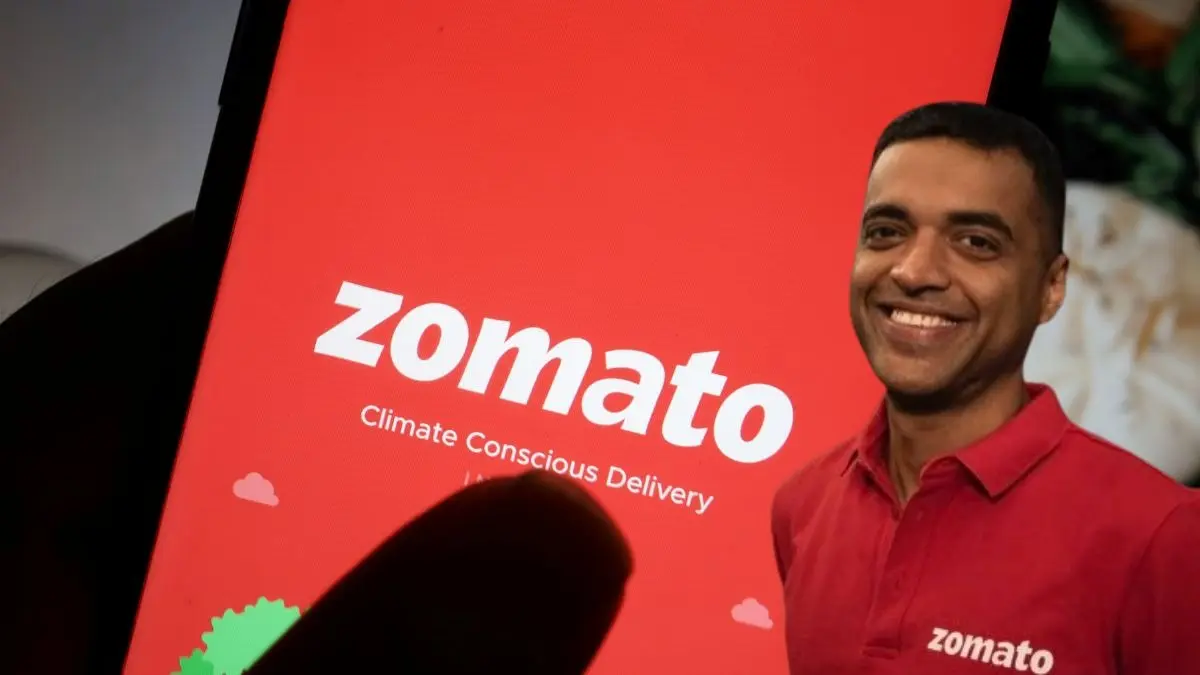
In a significant strategic manoeuvre reflective of India's evolving regulatory landscape, Eternal, the overarching strategic entity associated with the prominent food technology giant Zomato, has announced a definitive cap on foreign ownership at 49.5 percent. This decision marks a profound shift, signaling a recalibration of how India's leading digital enterprises intend to balance global capital aspirations with national regulatory imperatives, effectively drawing a new line in the sand for foreign investment in strategically sensitive sectors.
The move by Eternal, while specific to the Zomato ecosystem's strategic governance, reverberates across India’s vibrant startup scene and sends a clear signal to global investors. It underscores a growing emphasis on "Indian control" within key digital infrastructure, moving past an era where the pursuit of scale often overshadowed nuanced ownership considerations. This capping is not merely a technical adjustment; it represents a proactive embrace of a new paradigm for corporate governance and capital structuring in one of the world's fastest-growing digital economies.
The Era of Unfettered Capital: How Things Were
For over a decade, India's burgeoning digital economy was characterised by an insatiable appetite for global capital. From the early 2010s, a wave of entrepreneurial fervour, coupled with India's massive demographic dividend and increasing digital penetration, created fertile ground for startups. Companies like Flipkart, Paytm, Ola, and indeed, Zomato, emerged as trailblazers, each demonstrating unprecedented growth potential in a market ripe for disruption.
Zomato, in particular, exemplified this reliance on international funding. Its journey from a restaurant discovery platform to a dominant food delivery and dining-out service was significantly propelled by substantial investments from a diverse roster of global venture capitalists and institutional funds. Early-stage funding from Sequoia Capital, followed by substantial infusions from entities such as Ant Group, Tiger Global Management, Kora Management, and Fidelity Management & Research Company, provided the necessary fuel for aggressive expansion. This capital allowed Zomato to acquire competitors, build robust logistics networks, invest in cutting-edge technology, and subsidize consumer acquisition in a fiercely competitive market.
The regulatory environment during much of this period, while possessing specific sectoral caps, largely facilitated the inflow of foreign direct investment (FDI) into the technology and e-commerce sectors. The primary governmental focus was on attracting capital, fostering innovation, and generating employment. There was a broad understanding that foreign capital was a critical catalyst for India's digital transformation. The distinctions between marketplace models and inventory-based e-commerce, or between various types of digital services, were sometimes less stringently enforced or interpreted, allowing foreign investors to hold significant, often majority, stakes in promising Indian ventures. The overarching narrative was one of growth at all costs, with global capital being an indispensable partner in this ambitious endeavour.
This period saw foreign institutional investors (FIIs) and foreign portfolio investors (FPIs) pour billions of dollars into Indian equities, contributing significantly to the valuation surge of tech unicorns. For instance, cumulative FDI inflows into India consistently surpassed $50 billion annually in recent years, with a substantial portion directed towards services and digital sectors. Companies with foreign majority ownership were common, and this structure was often seen as a badge of global confidence rather than a regulatory concern. The objective for founders and investors alike was scale, market dominance, and ultimately, high-value exits or public listings, often leveraging the global capital markets.
Indian Tech Ecosystem: A Decade of Growth and Global Capital
2010-2020:Over $90 billion in venture capital and private equity flowed into Indian startups.
Zomato's Public Debut:One of India's most anticipated IPOs, demonstrating global investor confidence.
FDI Inflows (Digital Sector):Significant portion of India's annual FDI, averaging over $50 billion, directed towards technology and services.
The Calibration Point: Regulatory Realities and Strategic Shifts
The landscape began to evolve significantly in the latter half of the 2010s and early 2020s. A confluence of factors, including the maturation of India's digital economy, geopolitical shifts, and a renewed emphasis on national economic resilience, prompted a re-evaluation of foreign investment norms, particularly in sectors deemed strategic or critical. The Indian government's "Atmanirbhar Bharat" (Self-Reliant India) initiative, launched in 2020, crystallized this shift in policy philosophy.
For the e-commerce sector, the turning point was marked by amendments and clarifications to the Foreign Direct Investment policy, notably Press Note 3 of 2020 (and its antecedents), which targeted e-commerce marketplaces. These regulations aimed to create a level playing field, prevent anti-competitive practices, and, crucially, ensure that foreign-owned or foreign-controlled e-commerce entities did not exert undue influence over domestic sellers or engage in inventory-based models disguised as marketplaces. The emphasis moved firmly towards defining and enforcing "Indian control" in sectors that touch upon vast consumer data, logistics, and supply chains.
In this context, Eternal's decision to cap foreign ownership at 49.5 percent for its strategic holdings within the Zomato ecosystem emerges not as an isolated event, but as a direct, proactive response to this evolving regulatory framework. A foreign ownership threshold of below 50 percent is often a critical benchmark for an entity to be considered "Indian-owned and controlled" under various Indian laws and policy interpretations. This distinction can be vital for:
Compliance with FDI Rules: Ensuring adherence to sectoral caps that might exist for certain sub-segments of the business (e.g., payment services, specific logistics operations, or future ventures that may fall under more restrictive FDI categories).
Eligibility for Government Contracts/Schemes: Many government tenders or promotional schemes for technology and digital services prioritize or exclusively allow participation from "Indian-controlled" entities.
Strategic Autonomy: While foreign investors remain significant shareholders, retaining majority Indian ownership (even if through a holding entity) provides greater strategic control to domestic management and founders, insulating the entity from potential external pressures.
Future Diversification: As Zomato contemplates expanding into adjacent sectors, such as financial technology (e.g., payment aggregation, lending), or deeper into logistics and supply chain management, many of these areas have more stringent FDI caps or "Indian ownership" requirements. Proactively adjusting the ownership structure now de-risks future expansion plans.
This move highlights a shift from a reactive compliance posture to a proactive strategic one. Instead of waiting for potential regulatory challenges or interpretations that might impact its operations, Eternal is positioning the Zomato ecosystem for long-term stability and growth within the defined parameters of Indian regulatory policy. It signifies a mature phase in India's digital economy, where regulatory foresight becomes as critical as market capture.
The New Equilibrium: Implications and the Road Ahead
The decision by Eternal to cap foreign ownership at 49.5 percent heralds a new equilibrium for India's tech sector, with far-reaching implications for capital raising, investor sentiment, and corporate governance.
Impact on Capital Raising and Investor Sentiment
For Indian startups and listed technology companies, this cap could serve as a blueprint. While public markets remain open to foreign portfolio investment, the explicit capping of overall foreign ownership suggests that future large-scale private funding rounds, especially those involving strategic investors taking substantial stakes, may need to be structured differently. Companies might increasingly turn to domestic institutional investors, sovereign wealth funds, or alternative funding mechanisms to supplement growth capital, potentially diversifying away from an over-reliance on a few dominant global funds.
Global investors, particularly those accustomed to taking majority stakes in promising ventures, will need to adapt their strategies. While the Indian market remains undeniably attractive due to its sheer scale and growth potential, the prospect of restricted ownership might temper enthusiasm for some. However, for others, a clear regulatory framework, even with limits, can reduce uncertainty and provide a more stable investment environment compared to situations where regulatory interpretations are fluid and unpredictable. This might lead to a greater emphasis on minority investments and the cultivation of long-term partnerships rather than outright control.
Corporate Governance and Strategic Autonomy
The primary beneficiaries of this move are likely the Indian founders and management teams. By ensuring an Indian-controlled majority, Eternal solidifies strategic autonomy for the Zomato ecosystem. This means that critical decisions regarding product development, market strategy, data policy, and expansion will be predominantly driven by domestic leadership, aligning more closely with national interests and local market nuances. While foreign board representation and expertise will still be valued, the ultimate locus of control remains within India.
This shift aligns with a broader global trend where national governments are asserting greater control over critical digital infrastructure, data, and technology companies. From Europe's General Data Protection Regulation (GDPR) to China's stringent data security laws and restrictions on foreign ownership in key sectors, nations are increasingly prioritizing digital sovereignty. India's move, while specific to FDI, is part of this larger narrative, reflecting a maturing digital power's desire to safeguard its digital economy.
Precedent for Other Indian Startups
Eternal's proactive measure could set a significant precedent. Other Indian unicorns and high-growth startups operating in e-commerce, fintech, logistics, or other strategically important sectors may follow suit. Companies planning initial public offerings (IPOs) or anticipating future regulatory scrutiny might strategically restructure their ownership to ensure compliance and de-risk their long-term operational viability. This could reshape the entire funding and governance landscape for India's digital champions, fostering a new generation of "Indian-controlled" global enterprises.
The road ahead for the Zomato ecosystem, and for India's tech sector at large, under this new ownership structure involves navigating a delicate balance. It entails continuing to attract necessary capital and global expertise while firmly anchoring strategic direction and control within India. This approach suggests a belief that innovation and growth can thrive not despite, but perhaps even because of, a clearer delineation of national and foreign ownership interests.
Ultimately, Eternal’s decision marks a pivotal moment, symbolizing India’s journey from a nascent digital market heavily reliant on external capital to a confident, self-aware digital economy defining its own terms of engagement with the global investment community. It is a testament to a maturing ecosystem that values strategic independence as much as, if not more than, unfettered capital inflow.
Key Takeaways
Regulatory Compliance: Eternal's 49.5% foreign ownership cap ensures "Indian control" under evolving FDI norms, crucial for future compliance and strategic flexibility.
Strategic Autonomy: The move empowers domestic management and founders with greater control over critical decisions within the Zomato ecosystem.
Evolving Investment Landscape: Signals a shift for global investors towards minority stakes and potentially more reliance on domestic capital for Indian tech.
New Precedent: Could serve as a blueprint for other Indian startups to proactively manage ownership structures in sensitive digital sectors.
Global Context: Aligns with broader international trends of national governments asserting more control over digital infrastructure and data.
Frequently asked questions
What is Eternal's new foreign ownership limit?
Eternal, the strategic entity linked to Zomato, has announced a definitive cap on foreign ownership at 49.5 percent. This decision reflects India's evolving regulatory landscape concerning global capital in digital enterprises.
Why is Eternal capping foreign ownership?
The move is described as a significant strategic manoeuvre reflecting India's evolving regulatory landscape and a recalibration of how leading digital enterprises intend to balance global capital with domestic control.
Who is Eternal in relation to Zomato?
Eternal is identified as the overarching strategic entity associated with the prominent food technology giant Zomato.
What impact will this have on Zomato?
While directly related to Eternal, this decision signals a broader shift in governance and capital strategy for entities linked to Zomato, aligning with national regulatory trends and balancing global capital.
Is this change specific to Zomato or broader for India?
This decision by Eternal is presented as reflective of India's evolving regulatory landscape, suggesting it's part of a broader trend affecting leading digital enterprises in the country.
What is the significance of the 49.5% figure?
The specific percentage of 49.5% is just under the 50% threshold, often a critical point for control or classification, indicating a deliberate strategy to maintain a majority Indian ownership or control structure while still allowing significant foreign investment.