India's digital payments giant Paytm announces a significant profitability milestone, but experts warn of underlying challenges and a complex path ahead.
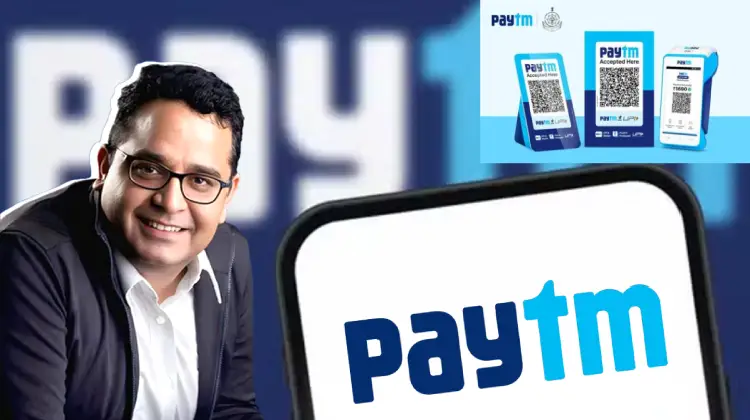
In the high-stakes arena of global fintech, few narratives have swung as wildly as that of One97 Communications Limited, the parent company of the Indian digital payments giant Paytm. For years, the company epitomized the growth-at-all-costs ethos prevalent in the startup world, accumulating significant losses in its relentless pursuit of market dominance. Then, in early 2023, a significant announcement electrified investors and analysts alike: Paytm had achieved operational profitability. This milestone, declared as positive adjusted EBITDA before ESOPs for the December 2022 quarter (Q3 FY23), was hailed as a turning point, a validation of its "super app" strategy, and a powerful signal that the company was finally on a path to sustainable financial health. The stock, which had languished since a disastrous 2021 IPO, saw a resurgence, reflecting renewed confidence in Paytm's ability to monetize its vast user base and extensive merchant network.
The conventional wisdom painted a picture of a fintech phoenix rising from the ashes of early losses. Paytm, leveraging its ubiquitous QR code system and comprehensive suite of digital financial services, appeared to be successfully transitioning from a pure-play payments provider to a diversified financial ecosystem. Its strategy of acquiring users through low-margin payments and then cross-selling higher-margin products like lending, insurance, and wealth management seemed to be bearing fruit. The company reported consistent growth in revenue, driven by increased merchant subscription fees, higher loan disbursements, and a broader adoption of its financial services offerings. Management's narrative emphasized a disciplined approach to cost management, a focus on profitable growth segments, and an unwavering commitment to regulatory compliance. This perceived turnaround offered a compelling case study for other high-growth, loss-making tech companies globally, suggesting that patient execution and strategic diversification could eventually lead to financial viability.
The Nuance of "Profitability": Beyond the Headline Metric
However, a closer examination reveals that this much-celebrated profitability milestone was not as robust as initially portrayed, coming with a significant array of caveats that have since been dramatically underscored by unfolding events. The first and most immediate qualification lies in the very definition of "profitability" itself. Paytm achieved positive EBITDA before ESOPs, a non-GAAP (Generally Accepted Accounting Principles) metric that excludes several crucial expenses. While useful for assessing operational efficiency, it paints an incomplete picture of a company's financial health.
Specifically, EBITDA (Earnings Before Interest, Taxes, Depreciation, and Amortization) before ESOPs omits the substantial costs associated with employee stock options, which are a real and dilutive expense for technology companies. More importantly, it excludes depreciation and amortization, which account for the wear and tear of assets and the expensing of intangible assets, respectively. Interest expenses, often significant for companies that rely on debt, are also excluded. Consequently, while Paytm reported an adjusted EBITDA before ESOPs of ₹31 crore in Q3 FY23 and an impressive ₹100 crore in Q4 FY23, its net profit after tax (PAT) continued to reflect substantial losses. For the full financial year 2023, Paytm reported a net loss of ₹1,776 crore. Even in the more recent Q3 FY24 (ending December 2023), the company posted a net loss of ₹222 crore, indicating that true bottom-line profitability remained a distant goal, despite the positive operational metric.
This distinction is critical for investors and analysts globally who understand that cash flow and ultimate net profit are the true arbiters of a company's long-term sustainability. A company can show operational efficiency but still bleed cash due to significant non-operational costs or investment requirements. The celebration of "operational profitability" effectively obscured the deeper financial challenges that persisted below the surface of the income statement.
Regulatory Onslaught: The Payments Bank Conundrum
The most devastating caveat, however, materialized in early 2024, fundamentally shattering the narrative of Paytm's stable path to profitability. On January 31, 2024, the Reserve Bank of India (RBI) issued a series of stringent directives against Paytm Payments Bank Limited (PPBL), a regulated entity in which One97 Communications holds a 49% stake and Vijay Shekhar Sharma, Paytm's founder, holds the majority. The RBI's actions were unprecedented in their severity, halting nearly all operations of PPBL, including further deposits, credit transactions, and top-ups into customer accounts, wallets, FASTags, and other instruments after March 15, 2024. The bank was also barred from providing any other banking services, such as UPI facility and fund transfers, after this date, effectively crippling its ability to function.
The implications of this regulatory hammer blow are profound and multi-faceted, striking at the very core of Paytm's business model. PPBL was not merely a subsidiary; it was an intricately woven component of Paytm's broader ecosystem. Many of Paytm's digital wallets, which once formed the bedrock of its payments business, were held with PPBL. Its merchant acquisition strategy heavily relied on PPBL's infrastructure for settlement and account services. Furthermore, PPBL played a critical role in facilitating Paytm's high-growth lending business, acting as a distribution partner for loans originated by third-party financial institutions. The regulatory actions have severed these vital links, forcing Paytm to undertake an immediate and massive operational overhaul.
The RBI's actions were reportedly predicated on persistent non-compliance and supervisory concerns, including issues related to Anti-Money Laundering (AML) processes and Know Your Customer (KYC) norms. This raises significant questions about Paytm's internal governance, risk management frameworks, and its ability to operate within a highly regulated financial services environment. The market reacted with immediate alarm, wiping out billions of dollars in Paytm's market capitalization, far outweighing the brief periods of euphoria following its profitability announcement.
Revenue Diversification Under Threat and Competitive Pressures
Paytm's strategic pivot from low-margin payments to higher-margin financial services was central to its profitability narrative. Its vast user base (over 300 million registered users) and extensive merchant network (over 35 million merchants) were seen as a funnel for cross-selling loans, insurance, and wealth management products. The regulatory restrictions on PPBL directly undermine this strategy. Without a regulated banking entity to facilitate transactions, manage accounts, and onboard customers seamlessly, Paytm's ability to distribute financial products is severely hampered.
The company is now scrambling to migrate its users and merchants to new banking partners and payment aggregators. This is an arduous and costly process, fraught with the risk of customer churn and operational disruptions. The Indian digital payments landscape is intensely competitive, with formidable players like Google Pay, PhonePe (Walmart-backed), and a multitude of established banks vying for market share. These competitors, often with deeper pockets and more stable regulatory relationships, stand to benefit from Paytm's predicament, potentially eroding its hard-won market share. The very payments business, which forms the foundation of its ecosystem, primarily runs on UPI (Unified Payments Interface), a government-backed infrastructure that offers razor-thin margins. The profitability was supposed to come from the value-added services built on top, which are now under existential threat.
The challenge extends to its lending business, a key driver of revenue growth. In Q3 FY24, Paytm reported loan disbursals worth ₹15,535 crore, a 56% year-on-year increase. While Paytm acts as a loan originator, partnering with banks and non-banking financial companies (NBFCs), its ability to facilitate these loans relied on the smooth functioning of its payments and account services, many of which were integrated with PPBL. Re-establishing these integrations with new partners is not only time-consuming but also creates uncertainty regarding future growth rates and partnership terms.
Paytm's Financial Snapshot (Q3 FY24 - Dec 2023)
Revenue from Operations: ₹2,850 crore (up 38% YoY)
EBITDA before ESOPs: ₹219 crore
Net Loss (PAT): ₹222 crore
Gross Merchandise Value (GMV): ₹4.7 trillion (up 46% YoY)
Loan Disbursals: ₹15,535 crore (up 56% YoY)
The Road Ahead: A Difficult Pivot
Paytm now faces an unprecedented crisis that transcends mere operational adjustments; it necessitates a fundamental re-evaluation of its business model and regulatory strategy. The company is tasked with a monumental migration of millions of users and merchants, a process that risks significant customer attrition and revenue leakage. It must rapidly forge new partnerships with banks for payment aggregation, wallet services, and loan distribution, all while navigating intense scrutiny from regulators and a wary market.
The incident also serves as a stark reminder of the unique regulatory risks faced by fintech companies, particularly those operating in emerging markets with rapidly evolving digital ecosystems. Regulators globally are increasingly scrutinizing the interplay between technology and finance, demanding higher standards of compliance, data privacy, and consumer protection. Paytm's experience underscores that even perceived profitability can be fleeting if the underlying foundations of regulatory compliance and trust are not robust.
While the initial profitability milestone in early 2023 was undoubtedly a significant psychological boost and a testament to Paytm's ability to streamline operations, it was always a precarious achievement. It masked deeper vulnerabilities related to its definition of profitability, its reliance on a captive regulated entity, and its governance practices. The RBI's actions have stripped away these illusions, revealing a long and arduous path ahead for Paytm. The company's future hinges on its ability to execute a rapid and comprehensive strategic pivot, rebuild trust with regulators and customers, and ultimately demonstrate true, sustainable profitability that can withstand the rigors of both market competition and regulatory oversight. The journey from a profitability milestone to genuine financial stability is proving far more complex and perilous than the initial headlines suggested.
Key Takeaways
Paytm's declared operational profitability (EBITDA before ESOPs) in early 2023 was a significant milestone, suggesting improved efficiency and a path to sustainable growth.
However, this metric excluded substantial costs like ESOPs, depreciation, and interest, meaning the company continued to incur significant net losses.
The severe regulatory actions by the Reserve Bank of India against Paytm Payments Bank have critically impacted Paytm's core business model, particularly its payments and lending services.
The intertwined nature of Paytm and its Payments Bank means the restrictions necessitate a massive operational overhaul, risking customer churn and revenue loss.
The crisis highlights the fragility of "operational profitability" when confronted with deep-seated regulatory compliance and governance issues, demanding a fundamental re-evaluation of Paytm's strategy and long-term viability.
Frequently asked questions
Is Paytm profitable?
Yes, Paytm (One97 Communications Limited) announced achieving operating profitability in early 2023, a significant milestone after years of sustained losses. This was a crucial step for the Indian digital payments giant.
What are the caveats to Paytm's profitability?
The caveats include potential one-time gains contributing to the profit, ongoing regulatory challenges, intense competition in the Indian fintech market, and the need for sustained, long-term profitability.
What is One97 Communications Limited?
One97 Communications Limited is the parent company of Paytm, India's leading digital payments and financial services platform. It operates a range of services including mobile payments, banking, and wealth management.
How did Paytm achieve profitability?
Paytm achieved profitability primarily through increased transaction volumes, improved monetization strategies, cost optimization, and a focus on higher-margin services. This reflects a shift from its earlier 'growth-at-all-costs' model.
What challenges does Paytm face going forward?
Paytm faces challenges such as navigating evolving regulatory landscapes, intensifying competition from other fintech players, maintaining user growth, and proving sustainable long-term profitability to investors.
Why is Paytm's profitability a significant milestone?
Paytm's profitability is significant because it marks a turning point for a major Indian startup known for its high burn rate, demonstrating a potential path to financial sustainability in the competitive digital payments sector.