The journey of disrupting an established industry is rarely smooth, yet few sectors demand the sheer capital, engineering prowess, and manufacturing discipline quite like automotive. For Lucid Group, the ambitious American luxury electric vehicle (EV) maker, its trajectory has been a compelling case study in this demanding reality. Heralded as a potential challenger to Tesla's premium dominance, Lucid’s narrative has consistently swung between audacious vision and the stark complexities of execution. The recent suspension of its 2026 production forecast, precipitated by a "seat issue," marks a significant turning point, reshaping its future outlook and offering profound lessons for founders and operators across capital-intensive industries.
The Zenith of Ambition: Before the Turn
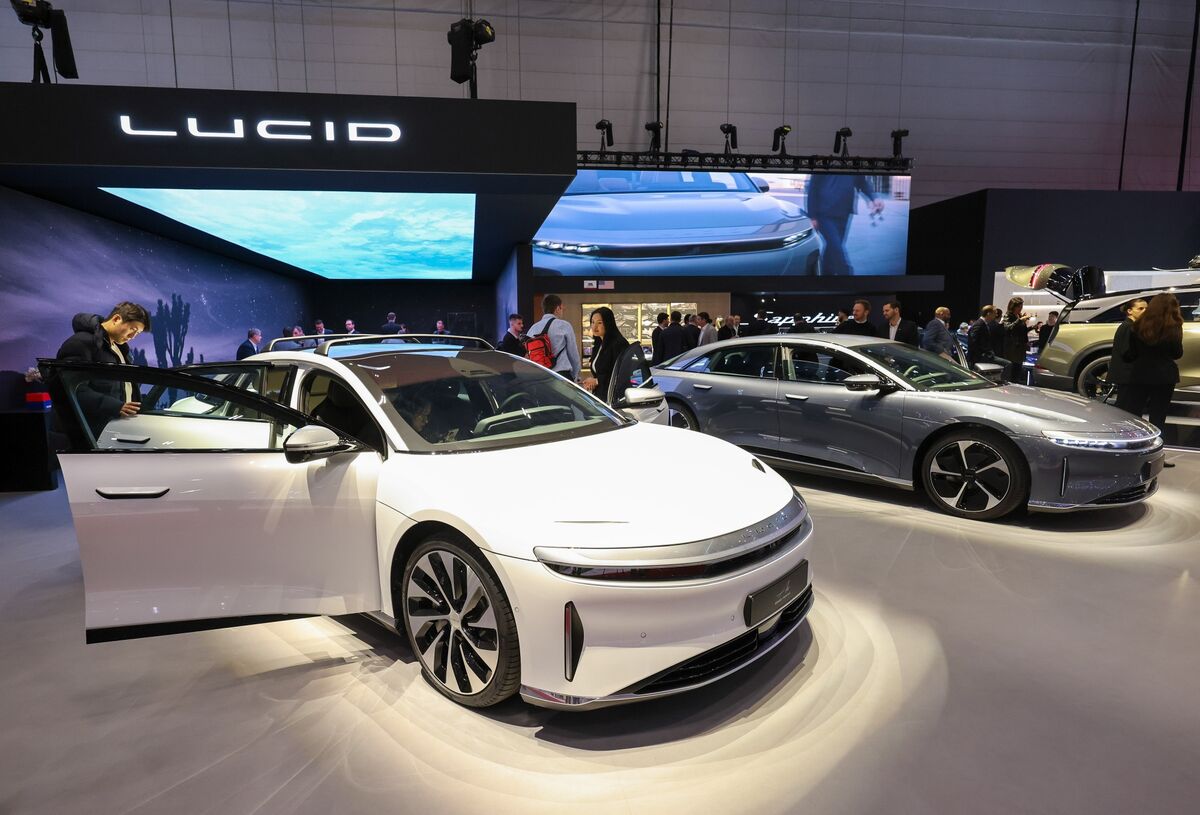
Lucid Group emerged onto the global stage with an almost mythic aura. Founded by former Tesla engineers, most notably Peter Rawlinson, the company positioned itself at the extreme high end of the EV market. Its flagship vehicle, the Lucid Air, promised groundbreaking range, blistering performance, and an interior aesthetic that rivaled the most opulent European sedans. The Air Dream Edition, with an EPA-estimated range exceeding 500 miles, set new benchmarks, instantly elevating Lucid's technical credibility.
This technological superiority, combined with a sleek design and a direct-to-consumer sales model reminiscent of early Tesla, fueled immense investor enthusiasm. The company's SPAC merger in 2021, valuing it at billions, brought in a substantial capital injection, prominently featuring the Saudi Arabian Public Investment Fund (PIF) as a cornerstone investor. This backing was not just financial; it was a geopolitical endorsement, signaling global aspirations and a long-term vision for manufacturing expansion, including a potential facility in Saudi Arabia.
Lucid’s initial strategic forecasts were equally ambitious. The 2026 target, while not always explicitly detailed in terms of unit numbers, implicitly represented a significant ramp-up, projecting profitability and substantial market penetration beyond its niche luxury segment. It was a beacon for investors, a tangible metric against which future success could be measured, suggesting a confident path towards mass production and sustainable growth. The market, hungry for the "next Tesla," largely bought into this vision, despite the inherent risks of automotive startups.
Navigating the Manufacturing Morass: Early Hurdles
Even before the recent seat issue, Lucid's path was not without significant turbulence. The transition from prototype to mass production proved to be an arduous undertaking, a familiar story for many automotive disruptors, including Tesla in its early Model 3 "production hell" days. Supply chain bottlenecks, exacerbated by global events, consistently hampered Lucid's ability to meet its own ambitious, and often revised, production targets. Quarterly earnings calls became exercises in managing expectations, with guidance frequently lowered and delivery figures often falling short of even the revised numbers.
The Arizona manufacturing plant (AMP-1), while a state-of-the-art facility, struggled to achieve economies of scale. The precision and complexity required for luxury vehicle production meant that minor issues could cascade into significant delays. Quality control, while paramount for a premium brand, added layers of scrutiny and rework. This continuous underperformance against targets led to significant cash burn, necessitating further capital raises and placing increasing pressure on the company's balance sheet, even with the PIF's deep pockets.
Investor confidence, while initially robust, began to fray with each missed target. The narrative shifted from "Tesla killer" to "can it even survive?" The high capital intensity of the automotive business demands not just vision, but relentless, flawless execution. For Lucid, the 2026 forecast remained a crucial anchor, a deferred promise of eventual scale that kept long-term investors engaged despite immediate struggles.
The Pivot Point: A Seat Becomes a Symptom
The news hit the markets with a jolt: Lucid Group announced the suspension of its 2026 production forecast. The immediate catalyst was attributed to a "seat issue." While the specifics of the issue were not immediately or fully disclosed, such a component-level problem in the automotive industry often signifies deeper systemic challenges. It could range from a regulatory compliance hurdle requiring redesign, to a manufacturing defect impacting safety or quality, or even a supply chain disruption for a critical sub-component.
Whatever its precise nature, a "seat issue" for a luxury automaker is more than just a minor inconvenience. Seats are integral to safety, comfort, and interior design. A recall, a redesign, or even a production halt due to a seat problem can be incredibly costly, both financially and reputationally. It forces engineers back to the drawing board, disrupts assembly lines, and can delay the introduction of new models, such as the eagerly anticipated Gravity SUV, which relies on the same foundational architecture and component sourcing.
The market's reaction was swift and negative. Lucid's stock price, already volatile, saw a significant downturn. Analysts quickly downgraded their outlooks, highlighting the increased uncertainty. The suspension of the 2026 forecast wasn't just about a seat; it was about the company's ability to accurately project its future, execute its manufacturing plan, and ultimately, achieve its long-term financial goals. It exposed the fragility of ambitious targets when confronted with the gritty realities of automotive industrialization.
The New Reality: What Now for Lucid and the Industry?
For Lucid, the suspension of the 2026 forecast necessitates a fundamental reassessment of its strategy and investor communications. The company must now focus intensely on realistic, achievable short-term goals, primarily around its current 2024 production guidance. Rebuilding trust will hinge on consistent execution, delivering on stated commitments, and demonstrating a clear path to resolving underlying manufacturing and quality control challenges. The financial backing of the Saudi PIF remains a critical lifeline, offering a runway that many other EV startups do not possess, but even this capital is not limitless in the face of sustained underperformance.
The incident also provides broader, invaluable lessons for founders and operators across the global tech and manufacturing landscape:
The Imperative of Manufacturing Discipline and Quality
This event underscores that for hardware-intensive ventures, particularly in automotive, manufacturing is not merely an operational detail; it is a core competency and a strategic differentiator. A single component issue, even one seemingly as mundane as a seat, can derail years of planning and billions in investment. For founders, this means prioritizing Design for Manufacturability (DFM) from the outset, investing heavily in quality assurance, and building robust supply chain resilience. The cost of a recall, redesign, or production halt far outweighs the upfront investment in rigorous engineering and quality control.
"The Lucid situation is a stark reminder that even with revolutionary technology and stunning design, the automotive industry fundamentally remains a manufacturing game. Precision, reliability, and scalability are non-negotiable. Startups often focus on the 'sexy' parts like battery tech or software, but neglect the industrial rigor required to build at scale. A seat issue, at its core, speaks to the immense challenge of bringing every single component, sourced globally, into perfect harmony for a premium product."Dr. Anya Sharma, Automotive Supply Chain & Operations Consultant
Forecasting and Investor Relations: The Perils of Over-Promise
Aggressive long-term forecasts can be a double-edged sword. While they ignite investor enthusiasm and attract capital, they also create immense pressure and set high expectations. When these targets prove unattainable, the resulting erosion of trust can be devastating. For founders, the lesson is to balance vision with pragmatism. Transparent communication, even when delivering unfavorable news, is crucial. It is better to under-promise and over-deliver than the reverse. Realistic guidance, backed by demonstrable milestones, fosters long-term credibility.
The Cost of Revision:Each time an automotive startup revises production forecasts downwards, it carries a significant financial and reputational cost. Investor confidence erodes, stock prices often fall, and the cost of future capital raises can increase, reflecting the perceived higher risk.
Capital Allocation and Cash Burn in Capital-Intensive Industries
The automotive industry demands astronomical capital expenditure. Building factories, tooling production lines, and scaling supply chains require billions. Lucid's continued cash burn, even with significant Saudi backing, highlights the relentless financial pressure. Founders in similar capital-intensive sectors must meticulously manage their burn rate, prioritize investments that directly de-risk production, and maintain a clear understanding of their cash runway. Every delay, every quality issue, translates directly into increased costs and a shorter financial leash.
Competitive Landscape and Market Dynamics
In the luxury EV segment, the competition is intensifying. Established players like Porsche with the Taycan, Mercedes-Benz with the EQS, and BMW with its i-series are rapidly expanding their electric offerings, leveraging decades of manufacturing expertise and brand loyalty. New entrants, like Lucid, must not only innovate but also execute flawlessly to carve out market share. Any stumble by a challenger can create opportunities for incumbents to solidify their positions, or for other nimble startups to gain ground.
The Road Ahead: Rebuilding Trust and Momentum
Lucid's path forward requires an unwavering focus on current production, meticulous quality control, and a renewed commitment to realistic, transparent guidance. The company must demonstrate its ability to scale the Lucid Air consistently and successfully launch the Gravity SUV, which is critical for expanding its market appeal and increasing unit volumes. Leveraging its technological advantages, especially in powertrain efficiency and battery management, will be key to sustaining its premium positioning.
The global EV market continues to evolve at a rapid pace, but the foundational principles of automotive manufacturing remain immutable. Lucid's journey serves as a powerful reminder that while visionary ideas can attract significant capital and attention, sustained success ultimately hinges on the gritty, complex, and often unforgiving realities of industrial execution. The "seat issue," while seemingly minor, catalyzed a much larger re-evaluation, forcing Lucid, and by extension, the entire industry, to confront the profound challenges of scaling innovation in a high-stakes environment.
KEY TAKEAWAYS
Execution Trumps Vision: In capital-intensive industries like automotive, flawless manufacturing execution and rigorous quality control are paramount, often more critical than initial product vision or technological breakthroughs.
Forecasting Credibility: Overly ambitious targets, when repeatedly missed, erode investor trust and market confidence. Realistic, achievable guidance is essential for long-term credibility.
Supply Chain Vulnerability: Even seemingly minor component issues can have cascading effects, halting production and impacting strategic forecasts, highlighting the need for robust supply chain resilience.
Cash Burn and Capital Discipline: Scaling in automotive demands immense capital. Meticulous cash management and strategic investment are critical to extending runway and navigating production challenges.
Lessons for All Founders: Lucid's experience underscores the universal challenges of scaling hardware, managing expectations, and maintaining operational excellence in any complex, high-growth venture.