Tesla's FSD regulatory battle highlights the complex interplay of innovation, safety, and fragmented global rules facing the AV industry.
Tesla's pursuit of European Union approval for its Full Self-Driving (FSD) system, currently mired in safety concerns, represents more than just a regulatory hurdle for a single company. It is a potent microcosm of the broader, complex challenges confronting the entire autonomous vehicle (AV) industry, reflecting the tension between technological innovation, fragmented global regulation, and the imperative of public safety and trust. For founders and operators in the tech ecosystem, this saga offers critical insights into the real-world obstacles of scaling transformative AI products across diverse jurisdictions.
The quest for truly autonomous vehicles has captivated the tech world for over a decade. Companies like Waymo, Cruise, and countless startups have poured billions into R&D, promising a future of safer, more efficient transportation. Yet, the road has proven far more arduous than initially predicted, with regulatory frameworks struggling to keep pace with rapid technological advancements.
Europe's Precautionary Principle Meets AI Ambition
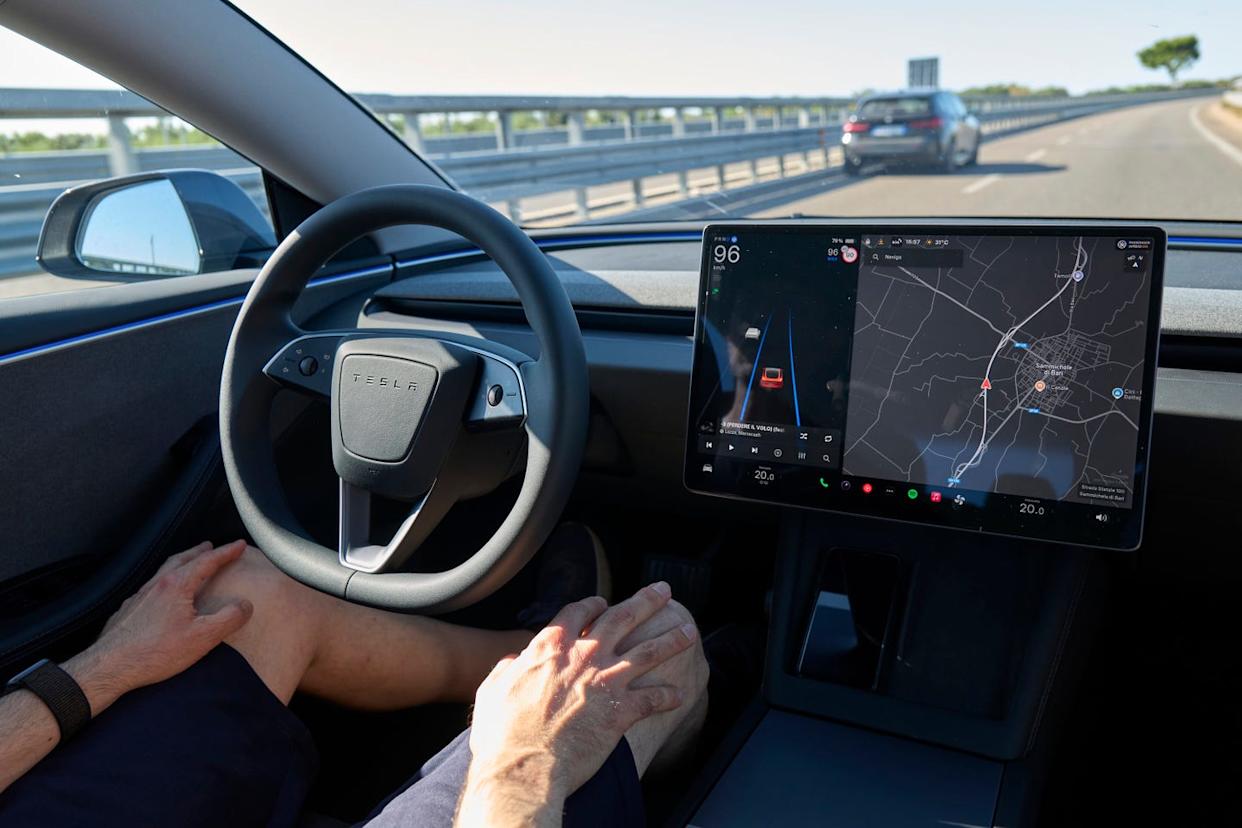
Europe has historically adopted a more cautious, precautionary approach to emerging technologies, exemplified by its robust data protection regulations like GDPR and the forthcoming AI Act. This philosophy extends keenly to vehicle safety and autonomous driving. Tesla's FSD, which operates as an advanced Level 2 driver-assistance system requiring constant human supervision despite its branding, faces significant scrutiny under the EU's stringent type-approval processes.
Unlike the US, where state-level regulations often dictate AV testing and deployment, the EU operates under a harmonised framework. The United Nations Economic Commission for Europe (UNECE) Regulation No. 157, for instance, sets standards for Automated Lane Keeping Systems (ALKS), which are classified as Level 3 autonomy. FSD's current capabilities and operational design fall into a grey area, offering more functionality than a typical L2 system but not meeting the L3 criteria of conditional autonomy where the vehicle can handle dynamic driving tasks under specific conditions.
The core of the EU's concern lies in liability and the system's operational design domain. If a system requires driver attention, as FSD currently does, the ultimate responsibility for an incident rests with the human. However, the sophisticated nature of FSD can create a 'mode confusion' for drivers, blurring the lines of responsibility and potentially increasing risk. Regulators demand unequivocal clarity on when the system is in control and when the driver must intervene, a standard FSD's current iteration struggles to meet universally.
The Labyrinth of Levels and Liabilities
The automotive industry largely adheres to the SAE International's J3016 standard for defining six levels of driving automation, from Level 0 (no automation) to Level 5 (full automation under all conditions). The chasm between Level 2 and Level 3 or 4 is not merely incremental; it represents a fundamental shift in responsibility from human to machine. Tesla's FSD, while highly capable for a Level 2 system, is not designed for unattended operation, a distinction that has frequently led to regulatory friction and public misunderstanding.
This technical ambiguity has profound implications for liability. In the event of an accident involving a Level 2 system, the driver is almost invariably held responsible. For higher levels of autonomy, liability increasingly shifts towards the manufacturer. This legal grey area is a significant deterrent for regulators and insurers alike, demanding robust safety validation and clear operational parameters before widespread deployment.
The challenges are not unique to Tesla. In the US, companies like Cruise, General Motors' autonomous unit, faced severe regulatory setbacks. Following a series of incidents in San Francisco, including one where a pedestrian was dragged by a Cruise robotaxi after being struck by another vehicle, the California Department of Motor Vehicles suspended Cruise's operating permit. This forced a complete re-evaluation of its testing and deployment strategy, highlighting the immense pressure on AV companies to demonstrate unimpeachable safety records.
A Fragmented Global Regulatory Landscape
The disparate approaches to AV regulation across major global markets create a complex, fragmented landscape for companies aiming for global scale. In the United States, AV regulation is a patchwork, with federal agencies like NHTSA providing guidance, but individual states often dictating testing and deployment rules. California, for instance, has some of the most rigorous testing requirements, while Arizona has historically adopted a more permissive stance.
China, by contrast, has pursued a more centralised, state-backed strategy to accelerate AV development. The government has designated specific zones for autonomous vehicle testing and operation, with companies like Baidu Apollo and Pony.ai making significant strides in deploying robotaxi services in cities like Beijing and Guangzhou. However, China also imposes strict data localisation and cybersecurity requirements, adding another layer of complexity for international players.
This regulatory divergence forces AV developers to tailor their technology, testing protocols, and legal frameworks to each specific market. What is permissible in Arizona may be illegal in Berlin or require extensive adaptation for deployment in Shanghai. This significantly increases R&D costs, extends time-to-market, and can stifle the economies of scale that often drive technological adoption.
Data, Trust, and Public Perception
Beyond technical and regulatory hurdles, the autonomous vehicle industry grapples with the critical issue of public trust. Incidents, even minor ones, involving AVs are often amplified, eroding consumer confidence. Tesla's FSD, which relies heavily on real-world data collected from its fleet for neural network training, also raises questions about data privacy, particularly in data-sensitive regions like Europe.
Transparency in safety reporting is paramount. Regulators and the public alike demand clear, verifiable data on system performance, disengagement rates, and incident causation. Without this transparency, the narrative can easily be shaped by anecdotes rather than statistical evidence, hindering wider acceptance.
"The greatest challenge for autonomous vehicle companies isn't just perfecting the technology, but perfecting the trust. Regulators, consumers, and even insurers need absolute clarity on system capabilities, limitations, and accountability. Any perceived ambiguity, whether in branding or operational design, can set back the entire industry by years, regardless of technical prowess."
Dr. Evelyn Reed, Professor of AI Ethics and Autonomous Systems Law at Imperial College London
Asia's Accelerated Path and Unique Challenges
While Europe grapples with caution and the US with fragmentation, Asia presents a dynamic and often accelerated environment for AV development. China remains at the forefront, with aggressive government backing and rapid deployment in controlled environments. Companies like Baidu have hundreds of robotaxis operating commercially, showcasing the potential for large-scale urban autonomy.
Southeast Asia, with its diverse urban landscapes and varying regulatory maturity, also presents unique opportunities and challenges. Singapore has been a pioneer, establishing dedicated testbeds and a progressive regulatory sandbox. Countries like Malaysia and Thailand are exploring pilot projects, often in partnership with international players. However, varying road infrastructure, complex traffic patterns, and differing consumer expectations mean that AV solutions developed for one market may require significant localisation for another.
India, with its massive population and unique traffic conditions, represents both an immense future market and an extreme test for AV technology. While full Level 4/5 autonomy is a distant prospect given infrastructure and driving culture, advanced driver-assistance systems (ADAS) are gaining traction, laying the groundwork for future advancements.
Implications for Founders and Operators
For founders and operators navigating the AV space, the Tesla FSD saga and the broader industry trends underscore several critical lessons. Firstly, regulatory compliance must be integrated into the product development lifecycle from day one, not treated as an afterthought. Engaging with regulators early and proactively demonstrating safety and ethical considerations is no longer optional.
Secondly, the capital intensity and extended timelines for achieving meaningful ROI in general-purpose AVs demand strategic patience and deep pockets. Many startups are now pivoting towards more constrained operational design domains, such as long-haul trucking, last-mile delivery in specific zones, or industrial automation, where the technical and regulatory challenges are more manageable and revenue generation can occur sooner.
Finally, building adaptable technology that can be customised for diverse regulatory, infrastructural, and cultural environments is crucial for global scalability. A 'one-size-fits-all' approach is increasingly untenable. The future of autonomous technology will likely be shaped by companies that master not only the algorithms but also the intricate dance between innovation, regulation, and public acceptance across a globally fragmented landscape.
Key Takeways
Regulatory Compliance is Paramount: Early and continuous engagement with regulators is essential for any high-risk AI or autonomous technology, particularly in Europe.
Understand Global Fragmentation: Autonomous tech companies must design for varying legal, safety, and data privacy standards across regions, avoiding a 'one-size-fits-all' strategy.
The Trust Deficit is Real: Building public confidence through transparent safety reporting and clear communication on system capabilities is as critical as technological advancement.
High Capital, Long Timelines: Founders should prepare for significant R&D investment and extended periods to market, potentially focusing on niche applications for earlier revenue.
SAE Levels Matter: Misrepresenting or blurring the lines between SAE autonomy levels creates confusion and regulatory resistance; clear communication is vital for adoption.
Frequently asked questions
What are the main challenges Tesla's FSD faces in the EU?
Tesla's Full Self-Driving (FSD) system faces significant challenges in the EU primarily due to safety concerns and the bloc's fragmented regulatory framework. Obtaining approval requires demonstrating compliance with varying national and EU-wide safety standards and legal requirements for autonomous operation.
How does EU regulation impact the AV industry?
EU regulation significantly impacts the AV industry by setting stringent safety and data privacy standards. The fragmented nature of national laws within the EU also creates complex hurdles for manufacturers seeking unified market access and deployment across member states.
What are autonomous vehicles (AVs)?
Autonomous vehicles, or AVs, are vehicles capable of sensing their environment and operating without human input. They use a variety of sensors, cameras, radar, and AI to navigate, plan routes, and make driving decisions, aiming to enhance safety and efficiency.
Why is FSD approval crucial for Tesla?
FSD approval is crucial for Tesla as it unlocks wider market access, validates its technological advancements, and strengthens its competitive position in the global automotive sector. Regulatory hurdles can slow expansion and adoption of its most advanced features.
What are the safety concerns surrounding FSD?
Safety concerns surrounding FSD primarily involve its capability to handle complex, unpredictable real-world driving scenarios without human intervention. Issues like unexpected braking, misinterpretations of surroundings, and the potential for accidents contribute to regulatory scrutiny and public apprehension.
What is the future outlook for autonomous vehicle technology?
The future outlook for autonomous vehicle technology, despite current regulatory hurdles, remains promising with continuous advancements in AI and sensor technology. Widespread adoption will likely depend on establishing robust safety protocols, clear global regulatory frameworks, and increased public trust.