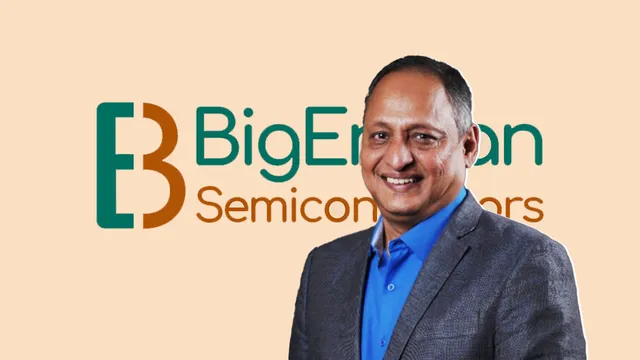
Dr. Anya Sharma has spent the last eight years of her life in what many would consider a crucible: the relentless pursuit of silicon perfection. From late nights debugging RTL to the nail-biting anticipation of first silicon back from the foundry, her journey as co-founder and CEO of BigEndian has been a masterclass in deep tech entrepreneurship. Her focus has been singular: to build a System-on-Chip (SoC) that fundamentally redefines efficiency for a specific, underserved compute challenge. Today, that dedication culminates in a significant milestone: BigEndian Raises $6 Mn To commercialise its first purpose-built SoC, a crucial step for a venture operating at the bleeding edge of hardware innovation.
This $6 million seed round, led by a consortium of deep tech VCs and strategic industry partners, isn't just another funding announcement. For BigEndian, it represents the critical bridge from advanced prototype to market-ready product. It’s the capital infusion necessary to scale production, build out a comprehensive software development kit (SDK), and forge the strategic partnerships essential for market penetration in a sector notorious for its high barriers to entry and long development cycles.
The Urgency of Custom Silicon
The global semiconductor industry, valued at over $500 billion, is at an inflection point. The slowing of Moore’s Law and the escalating demands of AI, IoT, and high-performance computing have spurred a renaissance in custom silicon. General-purpose CPUs and GPUs, while powerful, often fall short on specific power, performance, and cost metrics for specialized applications. This has created a fertile ground for startups like BigEndian, which dare to design from the ground up for particular workloads.
BigEndian's inaugural SoC, codenamed "Arbiter," targets the burgeoning market for real-time, ultra-low-power AI inference at the edge. Imagine autonomous industrial robots making instantaneous decisions on a factory floor, medical wearables performing complex diagnostics with days of battery life, or smart city infrastructure analyzing traffic patterns without constant cloud connectivity. These applications demand a level of optimized compute that traditional architectures struggle to provide without significant power envelopes or latency penalties.
Arbiter's architecture is a testament to domain-specific design. It integrates a highly parallelized neural processing unit (NPU) alongside proprietary dataflow engines and an ultra-efficient memory subsystem, all optimized for specific neural network topologies common in sensor fusion and predictive maintenance. Early benchmarks indicate a 10x improvement in energy efficiency per inference operation compared to leading edge-AI accelerators in its class, a compelling value proposition for industrial and consumer device manufacturers grappling with power constraints.
Navigating the Hardware Funding Landscape
Raising capital for hardware startups, particularly those developing custom silicon, has historically been a challenging endeavor. The capital expenditure, lengthy development timelines, and inherent risks associated with manufacturing have often deterred generalist venture capitalists. A typical SoC design can cost anywhere from $20 million for a simple chip on an older process node to hundreds of millions for advanced designs, before a single unit is sold.
BigEndian’s $6 million raise is therefore strategic. It’s not meant to cover the entire journey to profitability, but rather to de-risk the immediate commercialization phase. This includes securing initial wafer allocations with a foundry partner (likely a Tier-2 player or a specialized fab for their initial volumes, given the cost implications of Tier-1 fabs for startups), finalizing software toolchains, and building a core customer base. The investment signals a renewed appetite among VCs for foundational technology, driven by geopolitical imperatives around supply chain resilience and the strategic importance of AI accelerators.
"The capital required to bring a novel SoC to market is immense, making BigEndian's $6 million seed round a testament to the strength of their intellectual property and the clear market need they address. Investors today are looking for companies that don't just innovate at the software layer, but those that understand the fundamental physics of computation and can engineer entirely new paradigms from the transistor up. It's a high-stakes game, but the rewards for success are transformative, not just for the company but for entire industries."
Dr. Kenji Tanaka, Managing Partner at Quantum Leap Ventures, a deep tech investment firm.
The Labyrinth of Commercialization
Bringing an SoC from design to widespread adoption is a multifaceted challenge, extending far beyond the silicon itself. For BigEndian, the commercialization roadmap involves several critical workstreams:
Foundry Partnership and Supply Chain: Securing reliable, cost-effective manufacturing capacity is paramount. The global chip shortage of recent years highlighted the fragility of semiconductor supply chains. BigEndian will need to navigate capacity allocation, negotiate pricing, and manage yield rates, often requiring dedicated teams and significant upfront commitments. Their initial production will likely be on a mature node, perhaps 12nm or 16nm, balancing cost, performance, and risk.
Software Ecosystem Development: A powerful chip is inert without a robust software ecosystem. BigEndian must provide comprehensive SDKs, compilers, debuggers, and libraries that allow developers to easily program and optimize applications for Arbiter. This includes integration with popular AI frameworks like TensorFlow Lite and PyTorch Mobile, making it accessible to a broader developer community. The ease of software development is often a greater determinant of success than raw hardware performance for many customers.
Go-to-Market Strategy: BigEndian will likely pursue a multi-pronged approach. Direct sales to large enterprise customers in their target verticals (e.g., industrial automation giants, medical device manufacturers) will be crucial for early traction and validation. Strategic partnerships with system integrators and ODMs (Original Design Manufacturers) can broaden reach. Building a developer community and offering evaluation kits will also be vital to foster adoption and generate grassroots interest.
Talent Acquisition and Retention: The semiconductor industry faces a severe talent crunch. Experienced chip architects, verification engineers, embedded software developers, and compiler specialists are in high demand globally. BigEndian will need to attract and retain top-tier talent, offering not just competitive compensation but also the intellectual challenge of working on groundbreaking technology.
Strategic Implications for Founders and Operators
For founders and operators watching BigEndian’s trajectory, several key insights emerge:
The Power of Niche: BigEndian hasn't attempted to build a general-purpose processor. By focusing on a specific, high-value problem (ultra-low-power edge AI inference), they’ve been able to optimize their architecture precisely, delivering superior performance-per-watt that resonates with specific customer pain points. This focus enables a clearer value proposition and a more targeted go-to-market strategy.
Full-Stack Thinking: Hardware is no longer just about the chip. Successful deep tech hardware companies think in terms of a full-stack solution: silicon, firmware, software tools, and ecosystem. BigEndian's investment in its SDK is as critical as its investment in chip design. Founders must consider the entire user experience, from development to deployment.
Long-Term Vision, Incremental Funding: The journey from concept to revenue in silicon is measured in years, not months. BigEndian’s $6 million seed round is a testament to the need for staged funding. Founders in deep tech must articulate a clear, phased roadmap for de-risking and demonstrate tangible milestones for each funding tranche. This builds investor confidence and allows for strategic pivots without exhausting all capital.
Ecosystem Building is Paramount: No chip succeeds in isolation. BigEndian will need to cultivate a network of partners: foundries, IP providers, software vendors, system integrators, and ultimately, end customers. This collaborative approach is essential for scaling and establishing industry standards around their technology.
The Rise of Domain-Specific Architectures:
Global market for AI chips projected to exceed $100 billion by 2025.
Custom silicon development costs can range from $20M to over $500M depending on complexity and process node.
Average time-to-market for a new SoC is 3-5 years.
Energy efficiency gains from specialized accelerators often range from 5x to 100x compared to general-purpose CPUs for specific tasks.
The Broader Landscape: Geopolitics and Innovation
BigEndian's journey also unfolds against a backdrop of significant geopolitical shifts. Nations are increasingly prioritizing domestic semiconductor capabilities, driven by concerns over supply chain vulnerabilities and technological sovereignty. This environment, while complex, can also create opportunities for startups that align with national strategic objectives, potentially opening doors to government grants, R&D partnerships, and early adoption in critical infrastructure projects.
The success of companies like BigEndian will also serve as a barometer for the viability of the fabless model in an era of increasing manufacturing consolidation. While large players like NVIDIA and Apple have perfected this model, smaller startups face an uphill battle in securing priority access to advanced process nodes. This reinforces the need for clear differentiation and a compelling value proposition to justify foundry allocations.
Furthermore, the growing maturity of open-source hardware initiatives, particularly RISC-V, is lowering the entry barrier for custom silicon design at certain levels. While BigEndian's core IP is proprietary, leveraging open-source components for ancillary functions or development tools could accelerate their time-to-market and reduce development costs, a strategy many new entrants are adopting.
As BigEndian transitions from a design house to a commercial entity, their success hinges not just on the brilliance of their silicon, but on their ability to execute flawlessly across engineering, manufacturing, software development, and market penetration. The $6 million raise is the fuel for this critical next phase, a potent signal that the market is ready for highly specialized, energy-efficient compute at the edge.
KEY TAKEAWAYS
Niche Focus is Key: BigEndian's success stems from targeting a specific, high-value problem (ultra-low-power edge AI inference) rather than building a general-purpose chip.
Hardware Requires Full-Stack Thinking: Beyond the silicon, a robust software development kit (SDK), compilers, and ecosystem are critical for adoption and developer accessibility.
Staged Funding for Deep Tech: The $6 million seed round highlights the necessity of incremental funding to de-risk commercialization in capital-intensive hardware ventures.
Commercialization Challenges are Multifaceted: Securing foundry capacity, building a software ecosystem, talent acquisition, and strategic go-to-market plans are as crucial as the chip design itself.
Geopolitical Context Matters: The global shift towards semiconductor independence and supply chain resilience creates both challenges and opportunities for new silicon ventures.
Frequently asked questions
What did BigEndian raise $6 million for?
BigEndian raised $6 million to commercialize its first System-on-Chip (SoC). This funding will enable Dr. Anya Sharma and her team to bring their innovative silicon technology to market after years of dedicated development.
Who is the CEO of BigEndian?
Dr. Anya Sharma is the co-founder and CEO of BigEndian, leading the company's efforts in deep tech entrepreneurship.
What kind of technology does BigEndian develop?
BigEndian develops advanced System-on-Chip (SoC) technology, focusing on achieving silicon perfection for various applications.
How long has Dr. Anya Sharma worked on BigEndian's SoC?
Dr. Anya Sharma has dedicated eight years to the relentless pursuit of silicon perfection and building BigEndian's SoC.
What is a System-on-Chip (SoC)?
A System-on-Chip (SoC) is an integrated circuit that integrates all components of a computer or other electronic system into a single chip, offering efficiency and reduced size.
What does 'commercialise' mean in this context?
In this context, 'commercialise' means to bring BigEndian's developed System-on-Chip (SoC) technology to market, making it available for sale and use by customers.