The most honest thing Farid Ahsan said when he launched General Autonomy wasn't in a press release. It was buried in an X post: "We LOVE robots. Especially industrial ones — they help us 'make' things." No TAM charts. No mission statement dressed up as a vision. Just two IIT Kanpur graduates, formerly COO and CTO of Share Chat, announcing to the world that they'd rather spend the next decade fighting actuator tolerances than another engagement algorithm. That conviction is what makes the company's ₹32 Cr raise at a ₹280 Cr valuation — modest on the surface — worth reading past the headline.
Robotics Startup General Autonomy Raises ₹32 Cr in what is effectively a significant step-up from its $3 million (roughly ₹25 Cr) seed round closed in November 2023, backed by Elevation Capital and India Quotient — the same firms that bet early on Share Chat. The new round's valuation implies a roughly 3x markup in under two years. In a sector where Indian robotics startups collectively raised just $54 million across all of 2023 and $117 million in 2024, this isn't a blip. It's a directional signal.
The Pivot That Changed the Story
General Autonomy didn't raise this money on the strength of its original thesis. When Ahsan and Bhanu Pratap Singh incorporated the company in May 2023, the pitch was factory automation — AI-driven machines that make mass manufacturing "agile and distributed like software development." It was a credible idea for two people who'd built a platform used by hundreds of millions. It was also a crowded one.
By late 2025, the company had stepped into humanoid robotics with a prototype named Atom 01, positioning it as "India's first life-sized walking humanoid robot." The team is not aiming to sell a finished, single-purpose machine — instead, their goal is to create a hardware platform that lowers the barrier to entry for other developers and industries to build real-world applications. That pivot from factory-specific automation to a developer-first humanoid platform is architecturally significant. It repositions General Autonomy from a niche B2B automation vendor to potential infrastructure for India's emerging robotics ecosystem.
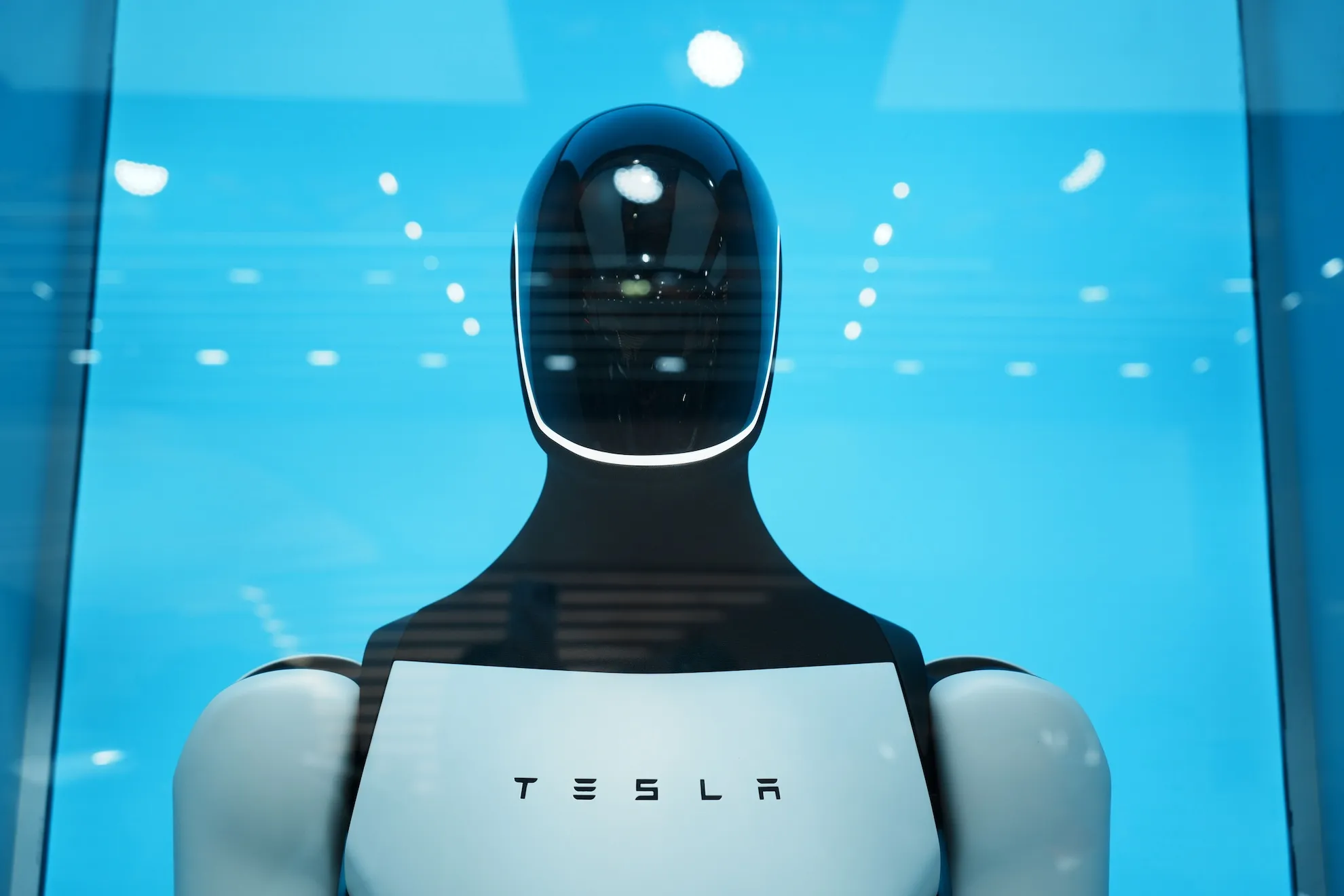
The cost angle is the linchpin. The founders state that the Atom 01 prototype was built from the ground up for under ₹20 lakh — approximately $24,000 USD. For context, Boston Dynamics' Spot costs $75,000 and its Atlas prototype is not commercially available at any price. Unitree's G1 humanoid, widely considered the most affordable serious competitor from China, retails at $16,000 — still well above what most Indian manufacturers would absorb as a pilot unit. General Autonomy is targeting a different threshold entirely.
Who's Actually Investing in This Bet — and Why
The investor continuity here is notable. India Quotient's Madhukar Sinha and Elevation Capital's Mayank Khanduja — both early backers of Share Chat — chose to follow the founders into an entirely different, substantially harder sector. That's not routine portfolio loyalty. It's a thesis: that founder-market fit sometimes transcends market.
India reached a record 9,120 robot installations in 2024, a 7% increase year-on-year, making it the sixth-largest installer of industrial robots worldwide. Automotive led with installations surging 15%. Those numbers look impressive until you compare them to China's 295,000 installations in the same year — 54% of global deployments. India is not an automation-saturated market. It is an automation-hungry one with a price sensitivity that most Western and Chinese robotics companies have never had to engineer for.
India's production advantage — a 73% lower humanoid cost versus US models — positions it as a credible manufacturing hub, according to Redseer's DeepTech India Report 2025. General Autonomy's deliberate under-₹20 lakh build cost for Atom 01 reads differently against that backdrop. It's not a constraint. It's a designed feature — the proof point for a go-to-market that could undercut every global competitor in emerging markets.
"The next wave of robotics investment won't be won in Silicon Valley or Shenzhen. It'll be won by whoever figures out how to deploy capable, trustworthy robots at a price that makes sense for factories in Pune, logistics hubs in Chennai, and SMEs across Southeast Asia. India has the engineering talent and the cost structure. What it's lacked is the right founding team for a generational hardware play. That's what's changed."
— A Bengaluru-based deep-tech investor who has backed multiple robotics companies in India and asked not to be named ahead of a portfolio announcement
The Global Benchmark Problem
Global robotics and physical AI startups raised a record $27.6 billion across 1,009 deals in 2025, more than double 2024. In that context, a ₹32 Cr raise barely registers. Figure AI, Apptronik, and Agility Robotics each raised north of $400 million in single rounds last year. Skild AI, a robotics foundation model company, closed nearly $1.4 billion in January 2026 at a valuation above $14 billion. General Autonomy is operating in a completely different weight class — and the founders clearly know it.
The strategic question isn't whether General Autonomy can out-fund its American or Chinese counterparts. It's whether the company can stake out a defensible position before the well-capitalized global players — who are increasingly eyeing emerging market deployments — arrive with localized pricing strategies. The window is probably measured in 18 to 24 months. The ₹32 Cr gives them enough runway to prove the Atom 01 platform has real-world utility, get developer adoption, and build the case for a substantially larger raise.
India's regulatory backdrop adds nuance. The Ministry of Electronics and Information Technology's draft National Strategy on Robotics aims to position India as a global robotics powerhouse by 2030, but policy timelines in India are optimistic by nature. The Production Linked Incentive (PLI) scheme for advanced manufacturing does create structural incentives for domestic hardware production — a potential tailwind for a company explicitly designed around Indian engineering economics.
There's a sharper version of this story: General Autonomy might be too early. Hardware is punishing, especially at the form factor of a full humanoid robot. The companies that have raised $400 million are still burning cash figuring out deployment at scale. What chance does a 14-person team in Koramangala have?
The honest answer is: a non-trivial one, specifically because of the cost constraint. The global humanoid market is converging toward a price war. Bank of America projects prices dropping from $35,000 in 2025 to $17,000 by 2030. General Autonomy built its prototype for $24,000 today, on a lean budget, without access to the supply chain advantages its Chinese competitors enjoy. That's either a sign of serious hardware discipline — or an early prototype that won't survive the rigors of commercial deployment. The ₹32 Cr round is what buys the answer.
What to Watch
Atom 01's developer adoption rate. The platform pitch only works if external developers actually build on it. The number of third-party applications within the next 12 months is the leading indicator that matters most.
Whether Elevation Capital leads the next round. India Quotient and Elevation following their seed money into this raise signals conviction. If they anchor the Series A as well, the thesis has survived the first reality check.
China's pricing moves. Unitree's G1 was already at $16,000 in 2025. If Chinese manufacturers push sub-$10,000 humanoid SKUs into the Indian market — which is technologically plausible given Chinese manufacturers' stated mass production plans — General Autonomy's cost advantage compresses fast.
Government contract timing. Indian defence and public-sector organisations are increasingly piloting robotics solutions. A single anchor customer in that category would transform the company's risk profile and signal government validation of domestic deep-tech.
Key Takeaways
The valuation math is a feature, not a bug. A ₹280 Cr valuation in a sector where global comps are routinely valued at $1B+ suggests General Autonomy isn't trying to win a press cycle. It's managing dilution carefully while proving a genuinely differentiated cost thesis.
The founder pivot is the most important data point. Moving from factory automation to a developer-first humanoid platform within two years of founding is either strategic clarity or scope creep. The Atom 01 prototype's cost architecture suggests the former.
India's robotics moment is real but the window is finite. India's robotics startup funding jumped from $28.8M in 2022 to $117M in 2024 — a 4x increase in two years. Capital is arriving. The question is whether domestic founders can build defensible positions before global capital flows toward acquiring rather than funding Indian players.
The developer ecosystem bet is unproven but structurally sound. Every major robotics platform company — from ROS to NVIDIA's Isaac — has succeeded by lowering the cost of building on top. If Atom 01 becomes the cheapest credible base layer for Indian robotics developers, the ecosystem value accrues to General Autonomy in ways that unit economics alone can't capture.