The landscape of global spacetech just shifted decisively, with India planting a firm flag in the commercial launch sector. Skyroot Aerospace, a Hyderabad-based startup, has successfully closed a $60 million Series B funding round, catapulting it into the exclusive club of unicorn companies. This landmark achievement not only values Skyroot at over $1 billion but also firmly establishes it as India’s first spacetech unicorn, signaling a profound maturation of the country’s private space industry.
This substantial capital injection was led by GIC, Singapore’s sovereign wealth fund, with participation from existing investors such as Mayank Agarwal, amongst others. The funding brings Skyroot’s total capital raised to approximately $95 million, a testament to growing investor confidence in its technology and market strategy. For founders and operators watching the deep tech space, this isn't merely another funding announcement; it's a validation of India's burgeoning capacity to innovate and commercialize in a sector traditionally dominated by government agencies and a handful of established global players.
The immediate impact of this $60 million infusion is clear: it will accelerate the development and production of Skyroot’s Vikram series of launch vehicles. The company aims to scale its manufacturing capabilities, invest further in advanced research and development, and prepare for its ambitious schedule of commercial orbital launches. This capital ensures Skyroot can transition from successful test flights to a reliable, revenue-generating launch service provider.
The Vikram Series: India's Private Launch Ambition
At the core of Skyroot's valuation lies the Vikram series, a family of privately developed small-lift launch vehicles designed to offer affordable and rapid access to space. The Vikram-I, the flagship rocket, is a three-stage vehicle capable of carrying up to 290 kg to a 500 km low-Earth orbit (LEO). Its design emphasizes modularity, quick turnaround times, and the use of cutting-edge materials and manufacturing processes.
Skyroot has pioneered several technological innovations critical to its cost-effectiveness and performance. Their Dhawal series of engines, for instance, are entirely 3D-printed, leveraging additive manufacturing to reduce part count, production time, and overall costs. This approach not only streamlines the supply chain but also allows for rapid iteration and design improvements, crucial in a fast-evolving industry.
The company has also demonstrated significant prowess in propulsion systems. In November 2022, Skyroot made history with its sub-orbital test flight of the Vikram-S rocket, carrying a payload from Chennai's Satish Dhawan Space Centre. This mission, named 'Prarambh' (The Beginning), successfully tested the Kalam-100 solid-propellant engine, providing invaluable flight data. Prior to this, Skyroot successfully tested Dhawan-1, India's first privately developed cryogenic rocket engine, further showcasing its comprehensive technological capabilities across various propulsion types.
Catalyzing India's Spacetech Revolution
Skyroot’s ascent is inseparable from the broader reforms sweeping through India’s space sector. Under Prime Minister Narendra Modi’s administration, the Indian government has actively promoted private participation in space, shifting from a historically state-controlled model. The establishment of IN-SPACe (Indian National Space Promotion and Authorization Centre) in 2020 was a pivotal moment, serving as a single-window agency to facilitate and regulate private sector activities, and to provide access to ISRO's facilities and expertise.
This policy shift has transformed ISRO from a monopoly operator into a vital enabler, fostering a vibrant ecosystem of startups. ISRO's decades of experience, its talent pool, and its infrastructure are now accessible to private players, creating an unprecedented synergy between public and private sectors. This collaborative environment significantly de-risks early-stage development for companies like Skyroot, allowing them to accelerate their technological roadmaps.
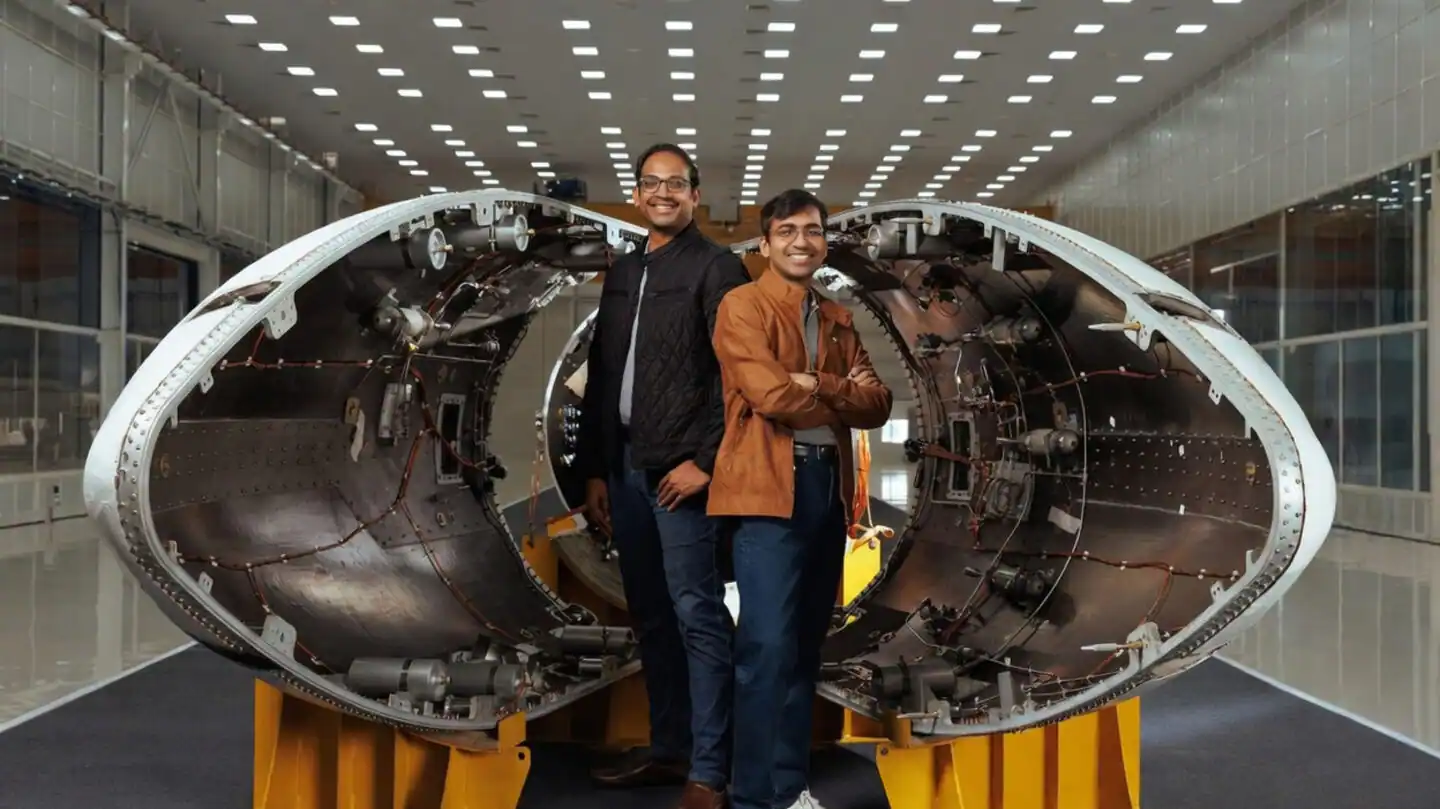
Beyond policy, India possesses an inherent advantage: a vast pool of highly skilled engineering talent, many with backgrounds or aspirations in aerospace. The cost-effectiveness of Indian engineering and manufacturing, long demonstrated by ISRO's frugal missions, is now being leveraged by these private ventures. Skyroot's founders, Pawan Kumar Chandana and Naga Bharath Daka, themselves ISRO alumni, exemplify this transfer of expertise and ambition from the public sector into the entrepreneurial realm.
While Skyroot leads the charge, it operates within a growing cohort of Indian spacetech startups. Companies like Agnikul Cosmos, focusing on highly customizable, on-demand launches with 3D-printed engines; Bellatrix Aerospace, developing in-orbit propulsion systems and small satellite buses; and Dhruva Space, building satellite platforms and services, all contribute to a dynamic ecosystem. Skyroot’s unicorn status provides a powerful proof point for the entire sector, signaling viability and opportunity to investors and talent alike.
A Global Perspective: Riding the Small Satellite Wave
The timing of Skyroot's rise aligns perfectly with a global surge in demand for small satellite launch services. The burgeoning small satellite market, driven by constellations for broadband internet (e.g., Starlink, OneWeb), Earth observation, IoT connectivity, and scientific research, requires frequent, flexible, and cost-effective access to orbit. Traditional heavy-lift launchers often mean long wait times, rideshare complexities, and suboptimal orbital insertions for smaller payloads.
Globally, the space economy is projected to exceed $1 trillion by 2040, up from roughly $400 billion today. A significant portion of this growth is attributed to the downstream applications enabled by vast constellations of small satellites. Companies like Rocket Lab, Relativity Space, and Firefly Aerospace in the US, and Orbex in the UK, are all vying for a slice of this expanding pie, demonstrating the intense competition and massive opportunity in the launch services market.
Skyroot's strategy of focusing on the small satellite market, coupled with its cost advantages and rapid development cycles, positions it strongly within this global context. The ability to offer dedicated launch services for payloads in the 200-500 kg class fills a critical gap, particularly for commercial operators who prioritize flexibility and timely deployment over sheer payload mass.
India’s re-emergence as a commercial space power, beyond its traditional role as a low-cost launch provider for international payloads via ISRO's PSLV, is a strategic move. By fostering indigenous private launch capabilities, India not only strengthens its technological sovereignty but also positions itself as a crucial player in the global space supply chain, offering competitive alternatives to established options.
The Unicorn Status: Validation and Vision
Achieving unicorn status is more than just a financial milestone; it is a powerful validation. For Skyroot, it signals to the world that its technology is robust, its market strategy is sound, and its growth trajectory is significant. This credibility is invaluable for attracting top-tier talent, securing future contracts, and forging strategic partnerships with satellite operators and space agencies worldwide.
For the broader Indian startup ecosystem, particularly in deep tech and hardware, Skyroot’s success is a beacon. It demonstrates that patient capital and ambitious engineering can indeed create globally competitive ventures, challenging the long-held perception that India's startup prowess is confined primarily to software and IT services. This achievement will undoubtedly inspire a new wave of entrepreneurs to tackle complex engineering problems.
"Skyroot's unicorn valuation marks a pivotal moment, not just for the company, but for the entire Indian private space sector. It validates years of foundational work by ISRO and the recent policy reforms, signaling to global investors that India is a serious contender for commercial space leadership. This isn't merely about capital, it's about confidence and capacity building on a global stage."Dr. S. K. Singh, Aerospace Industry Analyst and Former ISRO Scientist
The influx of institutional capital from a global investor like GIC underscores this international recognition. It suggests that global funds, once hesitant to invest in the capital-intensive and long-gestation deep tech sector in India, are now actively seeking opportunities, further stimulating the flow of both domestic and international investment into Indian spacetech.
Operationalizing the Future: Challenges and Opportunities
While the unicorn status celebrates past achievements and future potential, the true test for Skyroot lies in operationalizing its vision. The immediate next step is achieving a successful orbital launch with Vikram-I, a mission that will be watched closely by the global space community. Proving reliability and consistency across multiple launches is paramount for building customer trust and securing a sustainable revenue stream.
The challenges are significant. Scaling production of complex aerospace components, navigating stringent global launch regulations, managing the high costs of insurance, and maintaining a flawless safety record demand meticulous execution. The competitive landscape is also intense, requiring Skyroot to continuously innovate and differentiate its offerings to stand out against well-funded international players.
Looking beyond launch services, Skyroot also has opportunities to diversify. As the space economy evolves, in-orbit services, satellite manufacturing, and even space tourism could become viable avenues. Establishing a robust launch capability positions Skyroot uniquely to explore these adjacent markets, potentially transforming it into a more comprehensive space infrastructure provider over the long term.
India's Ascent in the Space Economy
Skyroot's journey from a startup founded by ISRO engineers to India's first spacetech unicorn encapsulates a remarkable transformation. It represents India's transition from a nation primarily focused on strategic and scientific space endeavors to a global commercial powerhouse capable of delivering advanced space solutions.
This achievement is expected to have a significant multiplier effect, fostering job creation in high-tech manufacturing and engineering, driving technological innovation across various industries, and enhancing India's prestige on the global stage. It firmly places India not just as a consumer of space technology but as a critical contributor and leader in the rapidly expanding global space economy.
Founders and operators everywhere should view Skyroot's success as a case study in leveraging national strategic assets, policy reform, and indigenous talent to create a globally competitive deep tech venture. It underscores the immense potential that lies in addressing critical infrastructure needs in the new space age, irrespective of geographical location, provided there is a clear vision, unwavering execution, and supportive ecosystem.
KEY TAKEAWAYS
India's Spacetech Maturation: Skyroot Aerospace's $60 million Series B round, led by GIC, makes it India's first spacetech unicorn, validating the country's private space sector as a global player.
Technological Prowess: Skyroot's Vikram series of rockets, featuring 3D-printed Dhawal engines and successful test flights like Vikram-S, demonstrate advanced engineering capabilities for affordable, rapid small satellite launches.
Policy-Driven Growth: Indian government reforms, particularly the establishment of IN-SPACe and ISRO's shift to an enabler role, have been critical in fostering a private space ecosystem.
Global Market Alignment: Skyroot's focus on the small satellite launch market positions it advantageously within the rapidly expanding global space economy, driven by demand for dedicated and flexible access to orbit.
Catalyst for Deep Tech: Skyroot's unicorn status serves as a powerful validation for India's deep tech startup ecosystem, attracting further talent and capital into complex engineering ventures beyond traditional software.
Frequently asked questions
What is Skyroot Aerospace?
Skyroot Aerospace is a Hyderabad-based startup specializing in commercial launch vehicles and space technology. It aims to make space access reliable and affordable for the global market.
How much funding did Skyroot Aerospace raise?
Skyroot Aerospace successfully closed a $60 million Series B funding round, which propelled its valuation past $1 billion.
What makes Skyroot Aerospace a unicorn?
The recent $60 million Series B funding round increased Skyroot's valuation to over $1 billion, granting it the coveted unicorn status.
Why is Skyroot's achievement significant for India?
It establishes India's firm presence in the global commercial spacetech sector, marking the nation's first spacetech unicorn and a major milestone for its space economy.
Where is Skyroot Aerospace based?
Skyroot Aerospace is based in Hyderabad, India.
What is the primary business of Skyroot Aerospace?
Skyroot Aerospace focuses on developing and launching commercial space vehicles and related technologies.