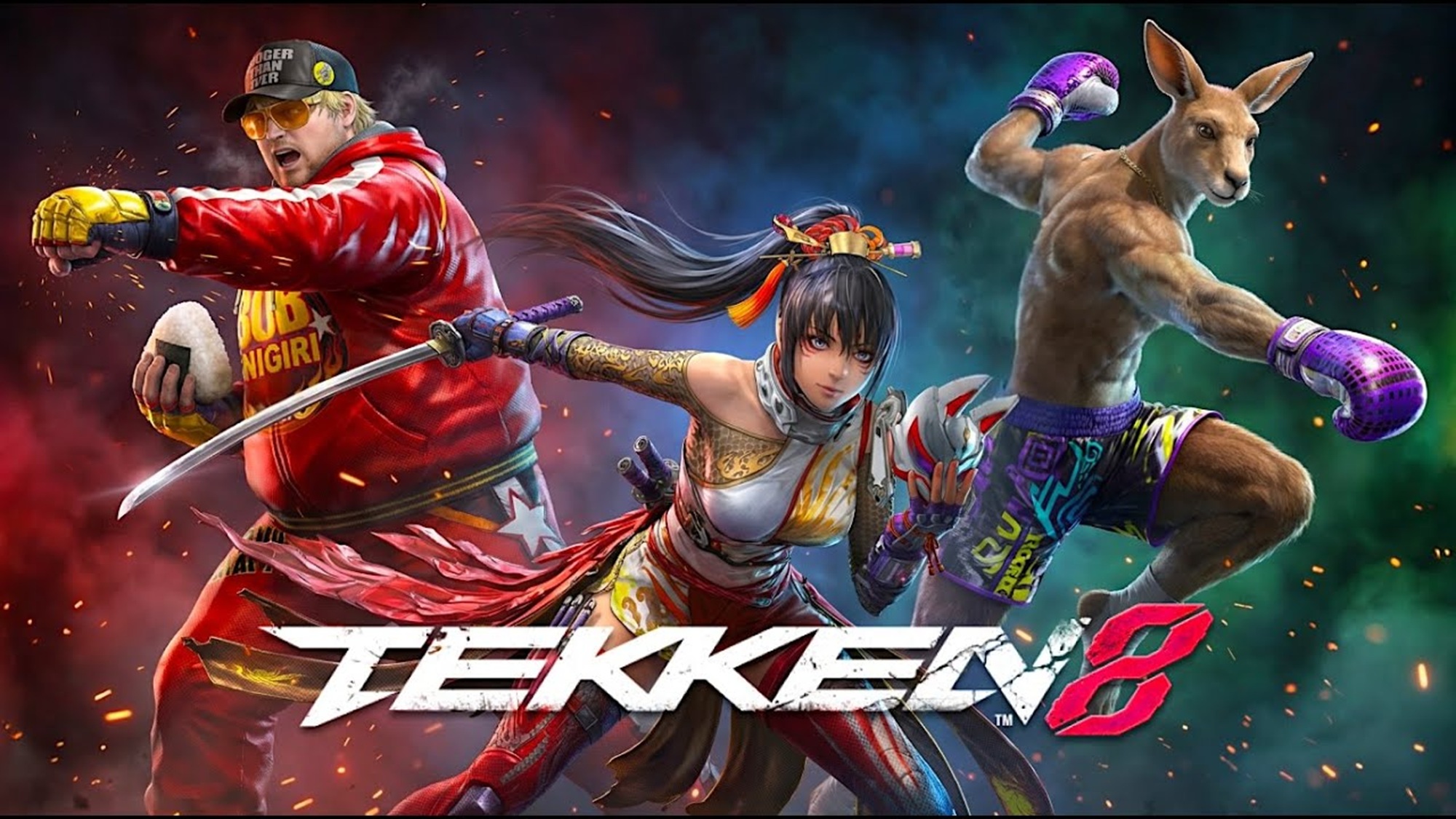
Bandai Namco used Evo Japan 2026 last week to confirm what Tekken fans had been circling on calendars since February: Kunimitsu, the first Season 3 character in Tekken 8, launches May 27 for early access holders and June 1 for everyone else. That's a five-day delta — a gap that sounds incidental but is, in fact, a finely calibrated revenue instrument. Understanding why tells you a lot about how the smartest product teams in gaming — and increasingly outside it — are thinking about post-launch monetization.
The machine underneath the announcement
Tekken 8 sold roughly 2 million copies within three weeks of its January 2024 launch, reaching around 3 million by February 2025. Those are solid numbers for a premium fighting game. They're also, by themselves, insufficient to justify Bandai Namco's ongoing investment in the title. The solution — not unique to Tekken, but executed here with unusual discipline — is the season pass structure. Statista
The Tekken 8 Season 3 Pass went on sale February 10, 2026, bundling four characters, a new battle stage, and an exclusive Aurora Outfit Pack, with purchasing the pass granting 120 hours of early access per character. That early access window isn't a perk. It's a pricing mechanism. Competitive players — the cohort most likely to spend — will pay a premium to avoid losing ranked matches to someone who's had a week of practice on a character they haven't touched yet. Bandai Namco has essentially gamified the act of buying in advance. Bandai Namco Entertainment
Tekken 8 has sold approximately 3 million copies worldwide as of early 2025, and fighting games rank among the genres most dependent on DLC for long-term revenue sustainability.
The season pass calendar extends well beyond Kunimitsu. Bob arrives in the July–September window, Roger Jr. follows in October–December 2026, and a fourth, still-unnamed character closes out the season sometime between January and March 2027 — with the reveal expected at Combo Breaker on May 24. That's a twelve-month content drip designed to keep the game in conversation at every major esports event on the calendar. No single announcement dominates; each one restarts the cycle. esports.gg
Why the esports peg matters more than it looks
Here's the non-obvious part: Bandai Namco isn't primarily using these tournaments to reach players. It's using them to reach content creators, streamers, and the ambient Twitch-watching audience that influences which games retain cultural gravity. The Tekken World Tour 2026 kicks off in May at Evo Japan and concludes at Thaiger Uppercut 2026, with Master+ events at Evo Japan, Evo Las Vegas, and Evo Nice. Every character reveal is timed to one of those tent-pole moments, guaranteeing a spike in organic coverage that no ad budget could replicate as efficiently. Bandai Namco Entertainment
This is a distribution strategy pretending to be an events strategy. Founders building software products with community flywheels should study it closely.
"Fighting games, strategy titles, and music games show the strongest reliance on DLC, as these genres naturally support new characters, scenarios, and songs over long periods." — Newzoo analysis of DLC revenue patterns, 2025
Newzoo's research across April 2020 through May 2025 found that DLC revenue share in fighting games climbs sharply through a game's first year and then stabilizes, with the genre showing the highest DLC dependency of any major category. For Bandai Namco, that means every percentage point of player retention translates directly into incremental season pass revenue. Kunimitsu isn't just a character. She's a retention mechanism. Games
The Season 2 problem Bandai Namco is quietly trying to fix
Let's be honest about something the press release won't say: Season 3 is partially a repair job.
Many players felt Tekken 8 went astray in Season 2. Complaints about the game's offense-heavy Heat mechanic predated the season, and then the developers intensified that style even further — changes that were quickly reversed but left a visible scar on the player base and the game's reputation. The Season 3 messaging is almost entirely built around the phrase "back to basics," which is marketing for: we heard you, we're sorry, please come back. esports.gg
The community's reaction to the Season 3 reveal has been described as cautiously optimistic — fans are generally positive on Kunimitsu and Bob, but mixed on Roger Jr., who some see as taking a roster slot away from more highly requested fighters like Miguel or Julia. That's a real tension. When you commit to a character release calendar eighteen months in advance, you're locking in creative decisions before you know how the audience will respond to what's already in the pipeline. Agility — something software teams increasingly treat as sacred — is exactly what this model sacrifices. esports.gg
The global dimension: who's actually buying
The fighting game resurgence of the early-to-mid 2020s wasn't evenly distributed. Japan and South Korea remain the genre's densest markets, with professional fighting game circuits carrying genuine mainstream cultural weight that doesn't translate directly to Western markets. In Southeast Asia, particularly the Philippines, Indonesia, and Thailand, arcade culture kept the Tekken IP alive through console down-cycles in ways that created unusually loyal fanbases primed for Tekken 8's launch.
Europe is a different story. The UK punches above its weight — UK physical sales for Tekken 8's launch weekend were nearly double Street Fighter 6's opening numbers, a striking result in a market where fighting games aren't typically a top-tier genre. That early engagement helps explain why Evo Nice is now a Master+ event on the 2026 world tour. esports.net
The wrinkle nobody talks about enough: in markets like Brazil and India, where broadband reliability and digital storefronts have historically been friction points for DLC adoption, season pass conversion rates likely trail significantly behind Japan, the US, and Western Europe. Bandai Namco doesn't publish those regional breakdowns, but any operator building a live service product for a global audience should be asking hard questions about what percentage of their installed base can actually convert on post-launch monetization — and designing their content cadence accordingly.
The contrarian read
Here's something worth sitting with: the entire Season 3 lineup — Kunimitsu, Bob, Roger Jr., and presumably a fourth legacy character — consists of returning fighters. No new faces.
That's a conservative creative bet dressed up as fan service. Legacy characters are cheaper to develop (existing lore, established move-set philosophy, pre-built community nostalgia), easier to market (built-in hype), and less likely to land badly with the core audience. They're also, arguably, a signal that Bandai Namco is prioritizing stability over ambition after the Season 2 turbulence. That's understandable from a risk management standpoint. But fighting games live and die on the quality of their roster additions over time, and a season of pure nostalgia plays can only carry so much weight. If Season 4 doesn't bring genuinely new characters, that's when the calculus changes.
What to watch
The fourth character reveal at Combo Breaker, May 24. If it's another returning legacy fighter, the "back to basics" framing starts looking more like creative conservatism than genuine course correction. If it's a guest character from outside gaming — the way Clive Rosfield from Final Fantasy XVI appeared in Season 1 — watch for the IP licensing conversation it opens about cross-franchise monetization as a mainstream strategy.
Player count stability through June. Tekken 8 currently averages around 29,000 concurrent players on Steam as of May 2026 — a respectable floor but well below the launch-week spike. Kunimitsu's arrival on May 27 will be the first real test of whether Season 3 can reactivate lapsed players at scale, or whether the "back to basics" promise is landing mostly with the already-committed core. Active Player
Whether the early access window expands. The current model gives pass holders 120 hours — five days — before general release. If Bandai Namco experiments with longer windows or tiered early access across seasons, that's a signal the mechanic is driving meaningful conversion. It's also the kind of subscription-adjacent move that gaming's broader shift toward services has been building toward for years.