Xbox's $1,000 Bet That Consoles Were Never the Problem
The person running Xbox right now has never shipped a game. She holds a second-degree black belt in taekwondo, came from Microsoft's CoreAI division, and only started playing video games after getting the job — under the gamertag AMRAHSAHSA, her own surname in reverse, as if she needed a reminder of how exposed she is.
That's the setup. Here's the contradiction: in 62 days, Asha Sharma has done more structural work to repair Xbox than Phil Spencer — who ran the division for twelve years — managed in his final two. And Project Helix, the next-generation console she's now formally confirmed, may be the most consequential hardware bet in Microsoft's gaming history. Not because of what it is. Because of what the company is willing to charge for it.
What Actually Happened
On day 14 of her tenure, Sharma announced Project Helix, the codename for Microsoft's in-development next-generation console. On day 35, she retired the controversial "This is an Xbox" ad campaign that had de-emphasized the centrality of playing Xbox games on an Xbox console. On day 60, she announced a Game Pass price cut and the removal of Call of Duty from its day-one service offerings.
Then, on April 23rd, the move that matters most to platform strategy: Sharma declared the end of "Microsoft Gaming" entirely, rebranding the division simply as "Xbox" — a name she described not as a product but as an ambition. The north star metric is now daily active players.
At GDC 2026, Jason Ronald — a Microsoft veteran who predates the original Xbox — delivered the developer summit keynote and confirmed that Project Helix is designed to "play your Xbox console and PC games, delivering leading performance." He also confirmed that alpha developer kits are slated to ship in 2027.
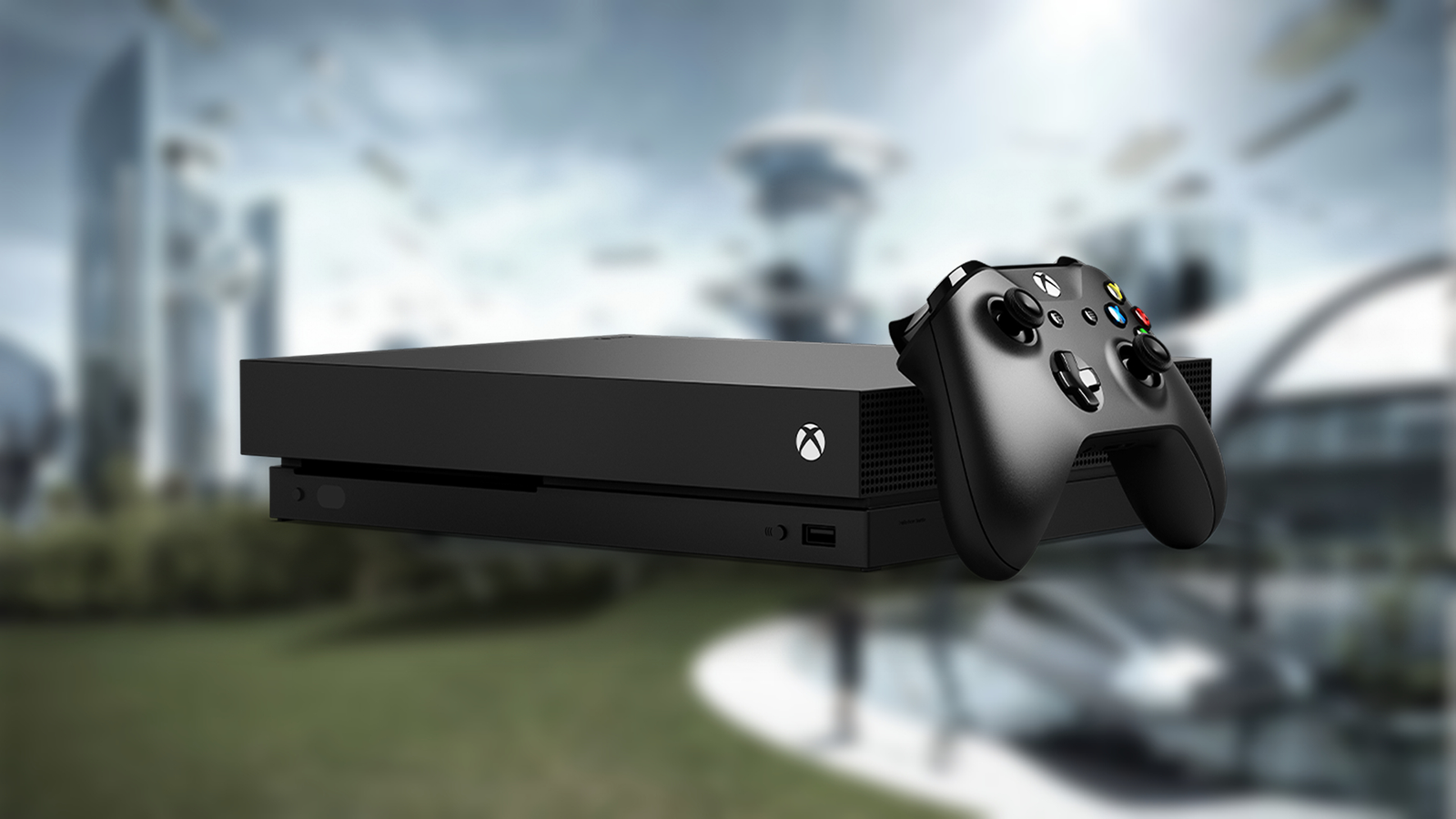
The hardware itself is genuinely unprecedented for a living room device. Project Helix is built around a custom AMD "Magnus" APU featuring 68 RDNA 5 compute units and 48GB of unified GDDR7 memory, running on a native "Xbox Mode" within Windows 11 — effectively making it a hybrid console-PC system from the ground up. Early estimates put the Magnus chip's rasterization performance at roughly 5–6x the Xbox Series X, with ray tracing gains as high as 20x, placing it in RTX 5080 territory for standard rendering.
The projected retail price — somewhere between $999 and $1,200 — is either a bold repositioning or a slow-motion market exit. Possibly both.
Why This Is Actually a Platform Play, Not a Console Launch
Here's what the hardware announcements obscure: Project Helix isn't primarily a box. It's a chip architecture.
The Magnus APU comes in multiple internal variants, labeled AT0 through AT4, each mapping to a different device in the broader Helix ecosystem — from xCloud server blades, to a premium home console, to a cheaper entry-level model, to laptop and portable configurations. This is structurally similar to what Apple built with Apple Silicon across MacBook, iPad, and iPhone.
The move to fold OEM partners — ASUS, MSI — into the Magnus ecosystem means the AMD Magnus APU will also be available in Windows machines from third-party manufacturers, effectively making "Project Helix" a software and silicon standard, not just a SKU. When Microsoft releases Xbox Mode for Windows 11 this April, every gaming PC becomes a Helix-adjacent device, years before the console ships.
This is the kind of platform lock-in move that Satya Nadella's Microsoft has practiced repeatedly: establish the standard first, sell the premium hardware second. Azure before Surface. Teams before Teams Rooms.
The gaming division is running the same playbook, and it has a name: Xbox Play Anywhere. The Xbox Play Anywhere catalog now spans more than 1,500 games, each a title that blurs the line between owning a console and owning a PC. The developers who build for Helix aren't building a console game. They're building for a platform that runs on living rooms, laptops, and cloud servers simultaneously.
The Global Dimension No One Is Discussing
Xbox holds just 23% global console market share, trailing PlayStation's 45% and facing a hemorrhage of hardware sales. Annual Xbox console sales dropped from roughly 7.5–9.8 million units in 2023 to an estimated 2 million units in 2025 — a 58% year-over-year decline. Hardware revenue fell 22–25% in FY2024 alone.
The regions that matter most for recovery aren't the ones Xbox is historically strong in. India's cloud gaming user base grew 155% year-over-year, fueled by 5G rollout and smartphone adoption. Southeast Asia saw 35% year-over-year player growth, led by the Philippines and Vietnam.
India's gaming market is projected to reach $5.02 billion in 2026 and nearly $10 billion by 2031, growing at a 14.52% CAGR — one of the fastest-expanding gaming economies globally. But here's the structural problem for Xbox: mobile platforms account for 79.29% of India's 2025 gaming revenue, while cloud and streaming are projected to grow at 14.89% CAGR through 2031. A $999 console is essentially irrelevant to that market.
What isn't irrelevant: a $7-per-month Game Pass subscription accessible on a Reliance Jio 5G smartphone. Xbox Cloud Gaming expanded to 30 countries, with India added in late 2024. The Helix architecture, with its AT0 server blade variant targeting xCloud infrastructure, is explicitly designed to make that subscription better — more games, running locally on more capable edge hardware.
The $999 box is for Seattle and Stockholm. The cloud backend is for Mumbai and Manila. Both are Project Helix.
Expert Take
"The console is a billboard. What Microsoft is actually selling is a services relationship — Game Pass, cloud gaming, the Play Anywhere ecosystem. Helix at $999 makes hardware a premium signal again, something the Series X lost when it raised prices and cratered sales. But the real bet is that a generation of players in South and Southeast Asia meets Xbox through a phone, not a TV cabinet."
— Venture capital analyst Matthew Ball, whose 2026 State of Gaming report is reportedly the intellectual backdrop for Sharma's internal memo
Sharma herself has echoed this framing directly. In her memo to staff, she wrote: "Players are frustrated. New feature drops on console have been less frequent. Our presence on PC isn't strong enough. Pricing is getting harder for people to keep up with." That reads less like a product roadmap and more like a brand therapy session — unusually direct for a division that spent years insisting everything was fine.
Who Wins, Who Loses
Winners:
AMD. The Magnus APU deal is multi-year and multi-device. Whether Helix sells 5 million units or 50 million, AMD's chip will be inside every tier of the ecosystem — from xCloud server racks to OEM gaming laptops. AMD's RDNA 5 and Zen 6 architectures are now de facto Xbox standards.
PC gamers globally. Xbox Mode on Windows 11 is genuinely useful infrastructure — a controller-first interface that reduces friction between game libraries. Developers building for Helix also build better-optimized PC releases by default.
Indie studios in growth markets. Sharma's emphasis on "open" platforms suggests third-party storefronts — Steam, Epic, GOG — may operate natively on Helix hardware. That expands the addressable market for every developer, including the growing indie scenes in India, Brazil, and Southeast Asia.
Losers:
Sony, specifically in the timing war. Sony is reportedly considering delaying the PlayStation 6 to 2028 due to ongoing memory and storage component shortages. If Helix ships in Holiday 2027, Microsoft gets a full year — possibly more — in next-generation hardware alone. Given Xbox's trajectory, that window matters.
Mid-tier game studios without a clear platform strategy. The ambiguity around exclusivity ("we'll share more as we learn and decide") leaves studios building 2027–2028 titles in genuine uncertainty about where to invest their optimization budgets.
Skeptic's Corner
None of this is proven. Xbox has executed dramatic strategic reversals before — from exclusives-first to multiplatform, from hardware-first to services-first — and each time, the "new era" framing didn't survive contact with the P&L. Sharma is 62 days in. She has never launched a console. The $999 price point, if it holds, puts Helix outside the reach of the mass market that Cloud Gaming is supposed to reach. And the Activision Blizzard acquisition that was supposed to transform Xbox's content advantage has so far yielded one genuine hit — Indiana Jones — and a Call of Duty franchise that was just pulled from day-one Game Pass.
The memo is good. The architecture is impressive. The question is whether Microsoft can execute across a 2027 launch window, a cost-constrained global consumer environment, and a competitive landscape that includes Nintendo's Switch 2, a delayed but inevitable PS6, and Valve's Steam ecosystem running natively on hardware that costs $300 less.
Key Takeaways
What to Watch — in order of strategic significance:
June Xbox Showcase. Sharma has committed to a major gaming showcase and the return of Fan Fest events. This is the first real test of whether the "Return of Xbox" has product substance behind the memo.
Game Pass subscription trajectory. At 37 million subscribers, Game Pass is flat. If the price cut doesn't add 5–8 million users in two quarters, the "fortify Game Pass" pillar collapses.
India and Southeast Asia cloud infrastructure. Watch for Azure edge node announcements in South and Southeast Asia — these are the invisible Helix investments that matter most for emerging market strategy.
Exclusivity decisions. Sharma said Xbox would "reevaluate our approach to exclusivity, windowing, and AI, and share more as we learn." That language is deliberate. The answer shapes whether Helix is a destination platform or a premium streaming terminal.
Developer kit distribution in 2027. Alpha kits to developers is the real launch signal. Watch which studios confirm Helix development — and more pointedly, which ones don't.
What's not yet known: final pricing, confirmed launch date, whether third-party storefronts will operate natively on Helix hardware, and what "affordable" actually means in Sharma's product lineup. The $999 figure comes from leakers and analyst estimates, not Microsoft. Treat it as directionally accurate, not confirmed.