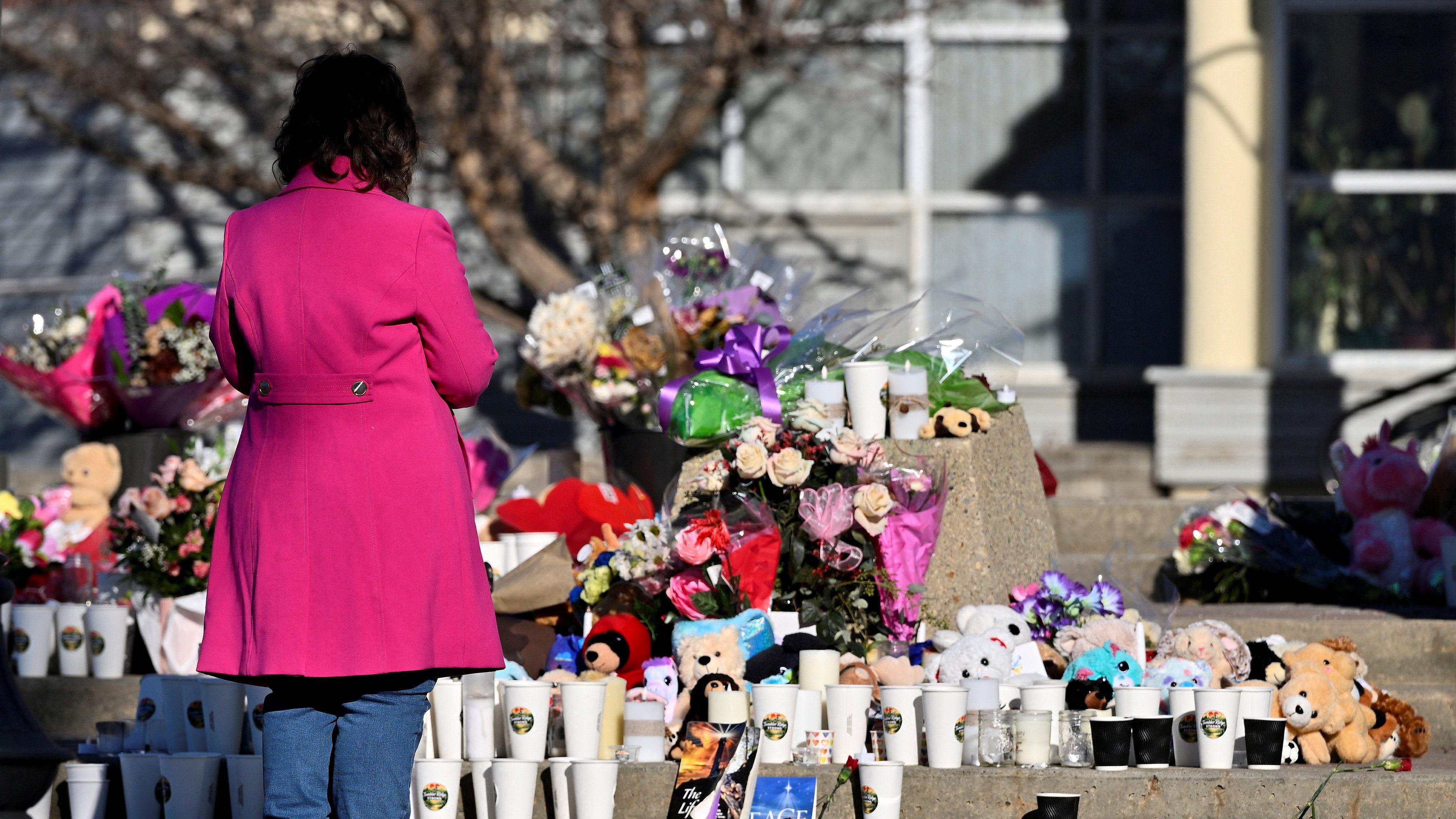
In late April 2026, a letter arrived in Tumbler Ridge, British Columbia. It came not by any official government channel but via the town's local newspaper, Tumbler RidgeLines, a small community publication that probably never expected to be publishing correspondence from the CEO of one of the world's most powerful technology companies. Sam Altman's letter to the residents — "I am deeply sorry that we did not alert law enforcement to the account that was banned in June" — is, in its own way, a historic document. It marks the first time a major AI firm has formally apologized to a community for harm its tools may have helped enable.
That should matter. But it doesn't feel like enough. And understanding why requires going back to the decisions OpenAI made not after the tragedy, but before it.
What OpenAI knew, and when
In June 2025, ChatGPT's automated monitoring systems flagged the account of Jesse Van Rootselaar, then 18, for describing scenarios involving gun violence. Staff at OpenAI debated whether or not to reach out to Canadian law enforcement over the behavior but ultimately did not, with an OpenAI spokesperson saying Van Rootselaar's activity did not meet the criteria for reporting. The account was banned. Nobody called the police.
Months later, Van Rootselaar allegedly killed eight people in Tumbler Ridge. After law enforcement identified her as the suspected shooter, the Wall Street Journal reported that OpenAI had flagged and banned her account nearly a year earlier, eventually reaching out to Canadian authorities only after the shooting.
The sequence matters enormously: the company's own safety systems worked as designed — they detected the threat, surfaced it to human reviewers, triggered an internal debate — and the humans in that chain made a judgment call. That call was wrong. OpenAI has since acknowledged as much, and has said it's overhauling the protocols that govern when accounts get referred to law enforcement, including establishing direct contacts with Canadian police.
Eight people are dead. That's the figure that doesn't shift regardless of what the updated policy document says.
The apology, and what it doesn't address
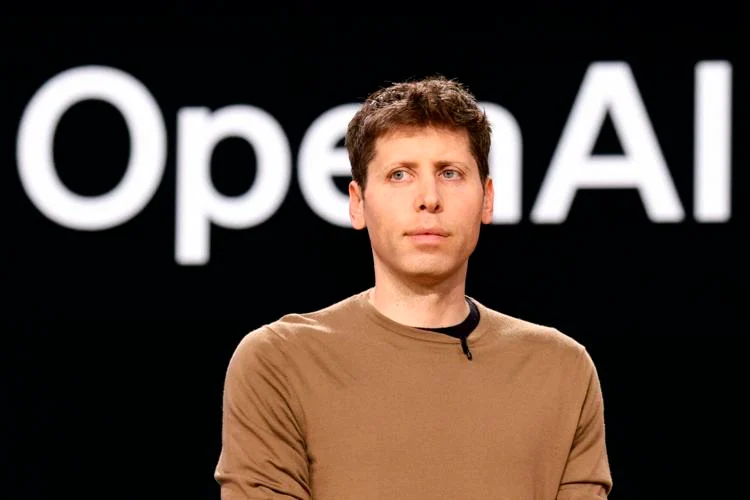
Altman's letter — agreed upon after conversations with Tumbler Ridge Mayor Darryl Krakowka and British Columbia Premier David Eby — reads as sincere rather than lawyered. "I cannot imagine anything worse in this world than losing a child," Altman wrote. "My heart remains with the victims, their families, all members of the community, and the province of British Columbia."
Eby wasn't satisfied. In a post on X, the BC Premier said Altman's apology was "necessary, and yet grossly insufficient for the devastation done to the families of Tumbler Ridge."
That tension — necessary but insufficient — is precisely the right frame for thinking about what OpenAI's response actually achieves. The apology does important symbolic work. It acknowledges institutional culpability in a way that most corporations, coached by lawyers, never do. But it doesn't answer the foundational question: what standard should govern when an AI company calls the police?
A decision no regulation required them to make
Here's what's genuinely underappreciated about the Tumbler Ridge case: OpenAI wasn't breaking any law when it chose not to contact Canadian authorities. As of early 2026, there are still no binding legal obligations and policy guidelines governing the development and operation of AI in Canada. Canada's Artificial Intelligence and Data Act, introduced as part of Bill C-27 in 2022, never made it into law — it died when Parliament dissolved in 2025.
This is the uncomfortable truth that the apology, however genuine, doesn't grapple with. OpenAI made a discretionary call — not a legally required one. The company's internal criteria for contacting law enforcement were set by OpenAI. Interpreted by OpenAI. Applied by OpenAI. And OpenAI got it wrong.
"This isn't a glitch — it's a choice. If AI can predict violence, shouldn't it be legally required to prevent it?" — Dr. Elena Vasquez, digital ethics professor, University of Toronto
That framing is provocative, but it's also a little too clean. Legal obligations to report threats raise their own thicket of problems: privacy erosion, discriminatory enforcement, the chilling effect on people using AI for legitimate mental health support. Legal experts have noted that broad reporting obligations on AI providers could encourage expanded surveillance of user interactions and undermine privacy protections. The line between a company that reports credible, specific threats of violence and one that has effectively deputized itself as a surveillance apparatus is blurrier than it looks.
OpenAI's problem is now everyone's problem
The Tumbler Ridge shooting isn't an isolated incident anymore. The State of Florida has launched a criminal investigation into OpenAI over accusations that ChatGPT advised the alleged gunman in a mass shooting at Florida State University — the suspect reportedly asked the chatbot what type of gun and ammunition to use before the attack. Two mass shooters, two investigations, one company.
Janet Haven, executive director of Data & Society, an independent research institute, argues that the question of when to notify authorities is actually secondary: the real issue is how AI chatbots interact with users in the first place. That's an important distinction. If the moderation pipeline is a reactive filter — catch the worst stuff, ban the account, move on — it'll keep generating these tragedies. The intervention has to be earlier, embedded in how the model engages with distressed or radicalizing users, not in a back-office team deciding whether to dial 911.
The contrarian take worth sitting with: the Tumbler Ridge case may actually be one of the less representative failures in AI safety. Van Rootselaar's instability wasn't only visible to OpenAI. She had also created a mass-shooting simulation game on Roblox, posted about guns on Reddit, and local police had been called to her family's home after an incident involving drug use. Multiple systems — not just ChatGPT — failed to connect the dots. Blaming OpenAI alone risks creating a convenient scapegoat for a much broader crisis of how societies handle early warning signs of violence.
Canada is watching — and so is the rest of the world
For Canadian policymakers, the Tumbler Ridge shooting has become a policy accelerant in a country that has been notably slow to act on AI governance. Unlike the EU's AI Act, Canada lacks binding rules on AI threat reporting — and this incident has accelerated efforts to harmonize standards with the OECD and the Council of Europe, potentially setting a North American precedent.
Public consultations led by Innovation, Science and Economic Development Canada have been seeking input on the country's AI regulatory environment, unfolding alongside the release of the International AI Safety Report 2026, led by Canadian AI pioneer Yoshua Bengio, amid heightened public attention to AI safety and digital platform responsibility. Quebec's Law 25, which imposes transparency obligations around automated decision-making, is already on the books. British Columbia has its own provincial frameworks in place. But none of these address the specific question of when a company that knows something has to say something.
The EU's AI Act does impose risk-based obligations on high-impact AI systems — but its provisions weren't designed with this kind of real-time threat detection scenario in mind either. The honest assessment is that no major jurisdiction had a legal framework that would have clearly required OpenAI to pick up the phone. That gap is now impossible to ignore.
What to watch:
Whether Canadian federal legislators translate the current policy consultations into binding threat-reporting standards for AI companies — and how they handle the inevitable tension with PIPEDA privacy protections when they do.
The Florida attorney general's criminal investigation into OpenAI over the FSU shooting, which could establish the first U.S. precedent on corporate AI liability in mass violence cases, with implications that would reach far beyond Florida's borders.
OpenAI's promised protocol overhaul, which includes more flexible criteria for law enforcement referrals and direct contacts with Canadian police — and whether any of that becomes public, auditable, and subject to external review rather than remaining an internal process the company can revise at will.
The residents of Tumbler Ridge didn't ask to become the central case study in a global debate about AI accountability. They were grieving. What they got — eventually, after the RCMP investigation reached its final stages, after a month of waiting following Altman's promise to Eby and Krakowka — was a letter in their local newspaper.
Sam Altman said the right things. The apology was necessary. But "necessary" and "sufficient" have never been further apart, and the industry's ability to answer the question of what comes next — what the actual standard should be, who should set it, and who enforces it when it fails — will define whether the Tumbler Ridge tragedy produces change or simply produces more apologies.