Revenue Growth Amid EV Competition
The 16% revenue rise comes as Tesla navigates an increasingly competitive EV landscape.
Price cuts in major markets, including China and North America, have pressured margins across the sector. Yet Tesla continues to benefit from scale efficiencies, battery cost optimization and recurring revenue from software features.
While EV deliveries remain the backbone of its business, Tesla’s long-term narrative is shifting toward AI-enabled products and automation.
The Humanoid Robot Vision
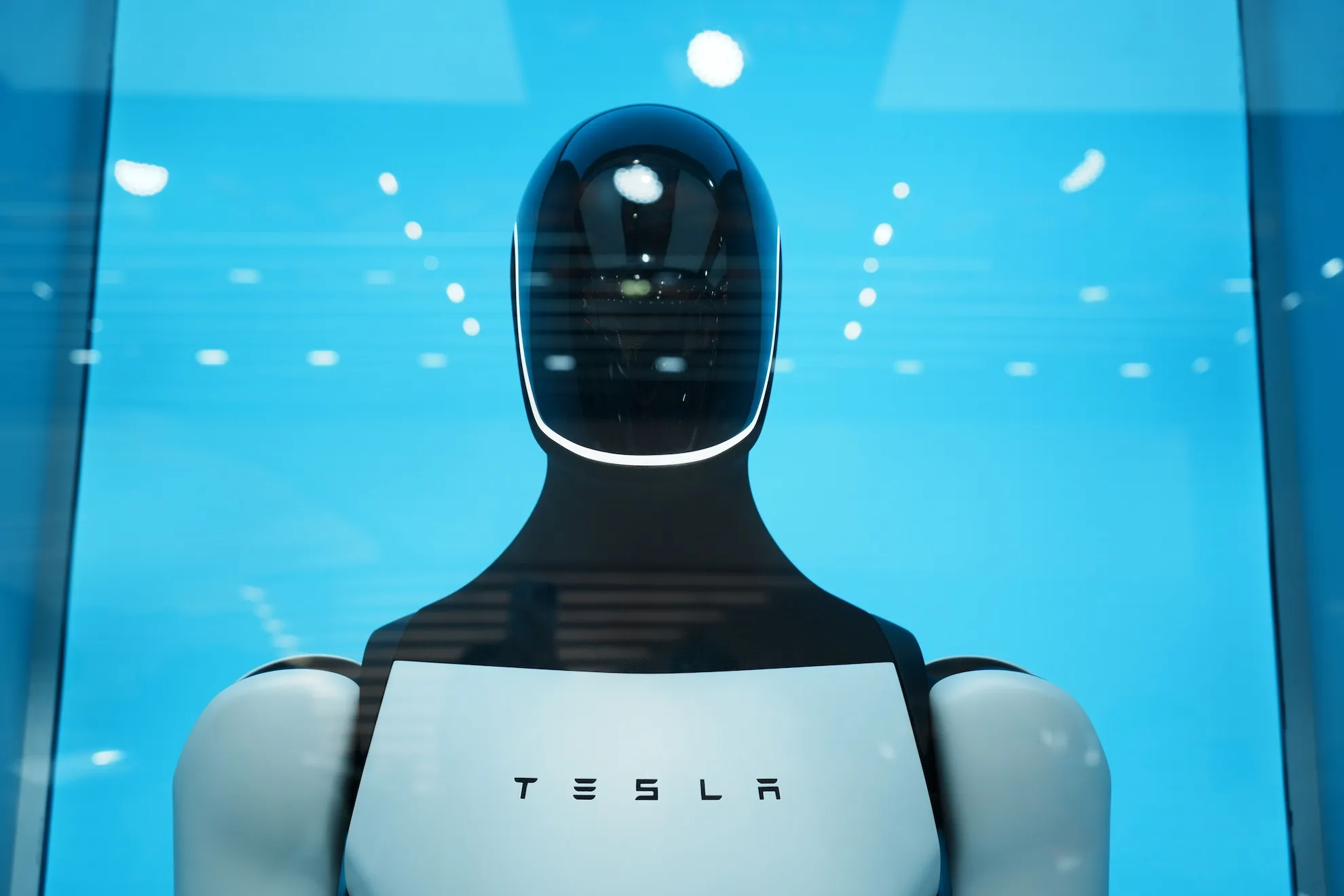
Tesla’s humanoid robot project, often referred to as Optimus, aims to deploy AI-powered robots capable of performing repetitive and labor-intensive tasks.
CEO Elon Musk has previously framed robotics as a potentially larger opportunity than vehicles over the long term.
The humanoid initiative leverages Tesla’s expertise in computer vision, neural networks and autonomous systems — technologies originally developed for self-driving capabilities.
While commercial deployment timelines remain cautious, the company has indicated internal factory use cases as initial proving grounds.
From Cars to Automation
Tesla’s robotics push reflects a broader industry trend: automakers expanding into AI infrastructure and physical automation.
If successful, humanoid robots could address labor shortages in manufacturing, logistics and service sectors.
However, scaling such systems presents substantial engineering and regulatory hurdles.
Battery life, dexterity, safety compliance and real-world reliability remain active development challenges.
Investor Perspective
Markets are closely watching whether Tesla can sustain growth amid intensifying EV price competition.
Diversification into robotics and AI offers a potential long-term growth vector, but near-term valuation remains tied to automotive performance and software monetization.
Revenue growth of 16% signals resilience — though profitability metrics will continue to shape investor sentiment.
What It Signals
Tesla’s latest quarter reinforces a dual narrative.
In the short term, it remains an EV manufacturer navigating a competitive market.
In the long term, it is positioning itself as an AI and robotics company.
The humanoid robot program may still be early-stage.
But its inclusion alongside earnings highlights signals strategic priority.