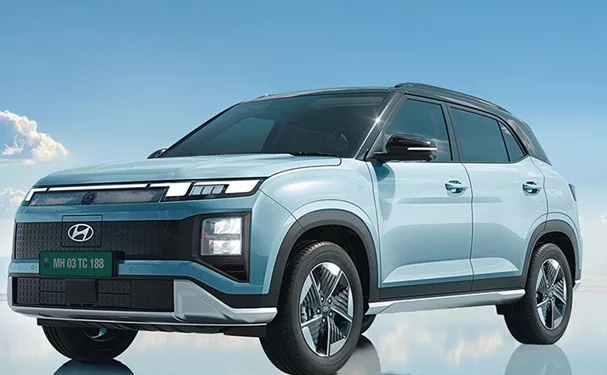
A Strategic Reset
Hyundai’s China sales have faced sustained pressure in recent years amid rising dominance of domestic EV champions.
The planned Ioniq launch signals a renewed push to compete in segments increasingly defined by software integration, battery efficiency and pricing agility.
The Ioniq sub-brand has served as Hyundai’s flagship EV platform globally. Deploying it more aggressively in China suggests the company is aligning its premium EV portfolio with local demand dynamics.
Competing in a Crowded Field
China’s EV ecosystem is led by domestic players such as BYD, alongside a mix of startups and international brands.
Price competition has intensified, compressing margins and raising entry barriers.
For Hyundai, competing effectively requires more than importing global models.
Localization — from design preferences to software features and battery partnerships — will be central to regaining relevance.
Technology and Branding
Chinese consumers increasingly prioritize:
Advanced driver assistance systems
Intelligent cockpit software
Fast charging capabilities
Competitive pricing
Hyundai’s strategy reset likely involves adapting product specifications and digital ecosystems to local expectations.
Brand repositioning may also play a role, as Korean automakers seek to differentiate on quality and global engineering credibility.
Broader Market Context
Foreign automakers have struggled to maintain market share in China’s EV segment.
Domestic manufacturers benefit from strong supply chain integration, local government support and rapid iteration cycles.
At the same time, China’s export ambitions are expanding, intensifying global competition.
Hyundai’s recalibration reflects recognition that success in China increasingly demands structural alignment with domestic market realities.
What It Signals
Launching a new Ioniq EV in China is not merely a product rollout.
It represents a broader strategic pivot.
For Hyundai, regaining traction in China is essential for long-term global competitiveness.
In the EV era, China is both battleground and benchmark.
Winning elsewhere increasingly requires proving relevance there.
Hyundai’s next phase in China will test whether global brands can adapt quickly enough to compete in the world’s most dynamic electric vehicle market.