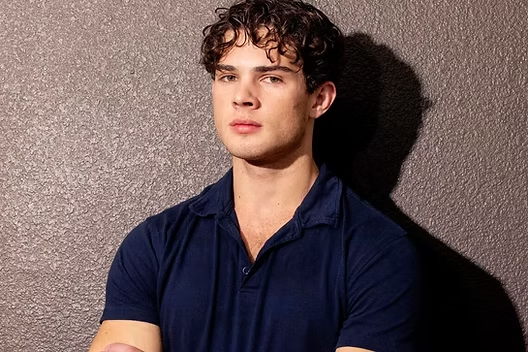
The arrest of prominent digital personality 'Influencer Clavicular' in Florida, stemming from an alligator shooting depicted in a widely circulated video, has sent a ripple of apprehension through the global tech ecosystem. While the legal ramifications for Clavicular are severe, involving felony animal cruelty charges under Florida Statute 828.12, the incident transcends a mere celebrity scandal. It exposes the critical vulnerabilities and evolving ethical quandaries at the heart of the creator economy, challenging founders, investors, platforms, and users alike to recalibrate their understanding of risk and responsibility in the pursuit of digital engagement.
Clavicular, known for extreme stunts and controversial lifestyle content, had amassed an audience exceeding 65 million across YouTube, TikTok, and Instagram, reportedly generating an annual income in the range of $10 to $15 million through brand deals, merchandise, and platform monetization. The video in question, since removed by major platforms but mirrored extensively, showed the influencer and associates allegedly luring and shooting an American alligator in what authorities identified as the Lake Cypress Conservation Area, adjacent to Everglades National Park. The charges include felony animal cruelty, illegal discharge of a firearm in a protected area, and hunting without a license, carrying potential penalties of up to five years imprisonment and significant fines.
The Founder's Dilemma: Platform Liability and Brand Safety
For founders building the infrastructure of the creator economy, Clavicular's downfall is a stark reminder of the precarious balance between fostering free expression and enforcing ethical conduct. "This isn't just about one creator's bad judgment, it's about the systemic risks embedded in platforms designed for viral scale," notes the CEO of a fast-growing creator-tools startup. Companies that enable content creation, distribution, and monetization are increasingly under scrutiny. The debate over platform liability, particularly in the wake of legislation like the EU's Digital Services Act, intensifies with each high-profile transgression.
Content moderation, once a back-office function, is now a front-and-center operational and reputational challenge. Automating detection of egregious content like animal cruelty is complex. AI models struggle with nuanced context, leading to either over-moderation or dangerous omissions. Human review at the scale of billions of daily uploads is cost-prohibitive and psychologically taxing. Founders grappling with these issues face an unenviable choice: invest heavily in imperfect moderation with significant operational overhead, or risk public outcry, brand boycotts, and regulatory intervention.
The incident also reverberates through the burgeoning influencer marketing industry, projected to exceed $30 billion in ad spend this year. Brands, particularly those with strong ESG (Environmental, Social, and Governance) commitments, are immediately distancing themselves. Apex Gaming Gear and Hydra Energy Drinks, two prominent fictional sponsors of Clavicular, have publicly terminated their contracts, citing violations of moral clauses. This swift action reflects a broader trend among major corporations to prioritize brand safety above all else, forcing influencer marketing platforms and agencies to implement more rigorous vetting processes and real-time content monitoring tools for their clients. The reputational spillover effect on platforms that host such content is non-trivial, potentially impacting their ability to attract premium advertisers.
The Investor's Lens: Risk, Valuation, and Due Diligence
Investors scrutinizing the creator economy, which analysts estimate to be a $250 billion market globally, are now factoring in a heightened layer of risk. The Clavicular case exemplifies how rapidly intangible assets, like a creator's audience and brand equity, can evaporate, directly impacting the valuation of platforms and ancillary services. Venture capitalists pouring capital into creator monetization tools, metaverse platforms, and AI-driven content engines are now asking tougher questions about long-term sustainability and regulatory exposure.
The incident underscores the need for more robust ESG frameworks within tech investments. While environmental and corporate governance factors have gained traction, the "social" aspect, encompassing ethical content, user safety, and creator responsibility, is becoming an unavoidable due diligence metric. An investor from a prominent Silicon Valley fund, speaking anonymously, stated, "We're reassessing our portfolio companies' content policies and crisis management protocols. A single creator's misconduct can wipe out years of brand building and investor confidence, not just for that creator, but for the entire ecosystem they operate within." This could lead to a preference for platforms with demonstrably strong content governance and proactive safety measures, potentially shifting capital away from "wild west" content models.
The User's Perspective: Erosion of Trust and Demand for Accountability
For the average user, the Clavicular scandal represents a further erosion of trust in the authenticity and ethical compass of the influencer world. While a segment of the audience might be desensitized to controversial content, the backlash against animal cruelty is often swift and universal. Users are not just consumers; they are also active participants who increasingly demand accountability from both creators and the platforms that amplify them.
The swift demonetization by YouTube, suspension by TikTok, and shadow-banning by Instagram, while reactive, were direct responses to user outrage and media pressure. This dynamic highlights the immense power of collective user sentiment in shaping platform policy and creator careers. The incident forces users to confront their own consumption habits: Do clicks and views for shock content inadvertently incentivize such behavior? There's a growing call for platforms to move beyond mere reactive content takedowns and invest in educational initiatives for creators, fostering a culture of responsibility rather than just enforcing rules after the fact.
The Analyst's Outlook: Regulatory Pressure and Industry Evolution
From an analytical standpoint, Clavicular's legal troubles are a harbinger of increased regulatory scrutiny on a global scale. Governments worldwide are already grappling with the complexities of digital content, from misinformation to child safety. An incident involving clear-cut criminal activity, especially when amplified by a massive online presence, provides potent ammunition for lawmakers seeking stricter controls.
"This isn't an isolated incident, it's a symptom of a broader maturation crisis in the creator economy. We're seeing a collision course between the unbridled pursuit of engagement and the societal expectation of ethical behavior. Regulators, emboldened by public outcry, will likely push for more stringent platform accountability, potentially imposing fines linked to content moderation failures or mandating proactive content monitoring. The industry can either self-regulate effectively or face an inevitable wave of external mandates that could stifle innovation."
Dr. Anya Sharma, Professor of Digital Ethics at the London School of Economics
The ripple effect extends beyond social media. The future of content creation, including AI-generated content and immersive experiences in the metaverse, will be heavily influenced by how the industry addresses these ethical challenges. If platforms cannot reliably police human-created content, the complexities of AI-generated deepfakes or harmful user-generated experiences in virtual worlds present an even more formidable challenge. This incident serves as a stress test for the entire digital content ecosystem, forcing a reevaluation of monetization models, content guidelines, and the very definition of responsible platform operation.
KEY TAKEAWAYS
Heightened Platform Accountability: The Clavicular case will accelerate calls for stricter content moderation, potentially leading to new regulatory frameworks and increased legal liability for platforms.
Enhanced Brand Safety Imperatives: Brands will demand more rigorous vetting and real-time content monitoring from influencer marketing agencies and platforms, prioritizing ethical alignment over sheer reach.
Investor Due Diligence Evolution: VCs and LPs will increasingly integrate robust ESG criteria, particularly the 'Social' aspect, into their evaluation of creator economy startups and social media platforms.
Erosion of User Trust: Incidents like this diminish user trust in influencers and platforms, driving demand for greater transparency, authenticity, and proactive ethical governance.
Industry Self-Regulation vs. External Mandates: The tech industry faces a critical juncture to either develop more effective self-regulatory mechanisms or prepare for inevitable, potentially innovation-stifling, external governmental intervention.