A Platform at an Inflection Point
LinkedIn’s growth story over the past decade has been steady rather than explosive.
Recruitment solutions remain its revenue backbone, supplemented by advertising and premium subscriptions. In recent years, the company has invested heavily in AI tools, including automated profile summaries, conversational job search features and content recommendations.
As generative AI reshapes how professionals search, write and apply for jobs, LinkedIn is positioning itself less as a static directory and more as an active intelligence layer over the labor market.
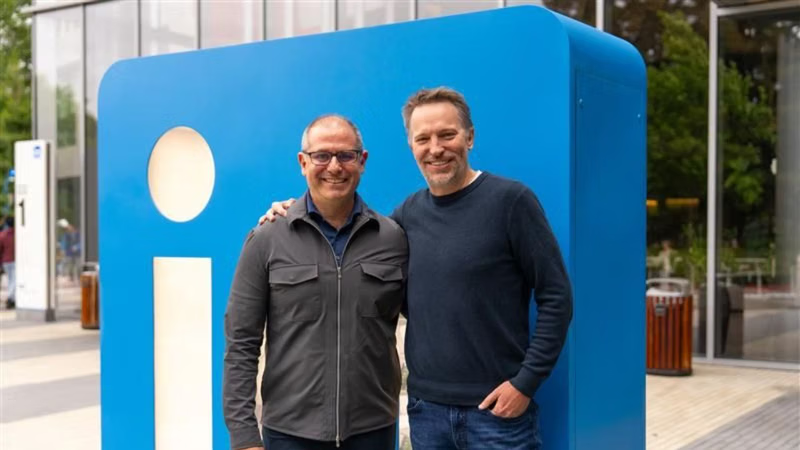
A leadership change now suggests the next phase may require different operational emphasis.
The Executive Turnover Pattern
CEO departures at large tech platforms are rarely dramatic.
They are often framed as natural transitions after milestones are achieved. Yet timing matters.
LinkedIn operates within Microsoft’s broader enterprise ecosystem, and its strategy must align with corporate AI ambitions spanning cloud, productivity software and workplace collaboration.
A new CEO could accelerate integration between LinkedIn’s data graph and Microsoft’s AI-powered tools.
The move may be less about farewell tributes and more about strategic alignment.
The Culture of Public Goodbyes
The headline’s irony — “please hold your tearful video tributes” — reflects a broader tech culture trend.
Executive exits increasingly play out on LinkedIn itself, complete with reflective posts, team acknowledgments and brand-affirming narratives.
Such public rituals reinforce corporate identity even as leadership changes.
But beneath the sentiment lies practical reality: platforms must adapt to evolving user behavior and regulatory scrutiny.
Competitive Pressures
LinkedIn faces competition from multiple directions.
Specialized job platforms challenge its recruiting dominance. Creator-focused networks compete for professional content engagement. AI-native job-matching startups aim to streamline hiring workflows.
Maintaining relevance requires continuous reinvention.
Leadership transitions often serve as reset points for that reinvention.
What Comes Next
The incoming leadership will likely focus on deepening AI integration, expanding monetization pathways and preserving LinkedIn’s role as a trusted professional space.
For Microsoft, LinkedIn remains strategically valuable — not just as a social platform, but as a data-rich layer informing enterprise products.
The CEO’s departure may prompt reflection, but operational continuity is the priority.
In Big Tech, leadership changes are rarely about sentiment.
They are about positioning for the next cycle.
And LinkedIn’s next chapter will be written less in farewell posts and more in product roadmaps.