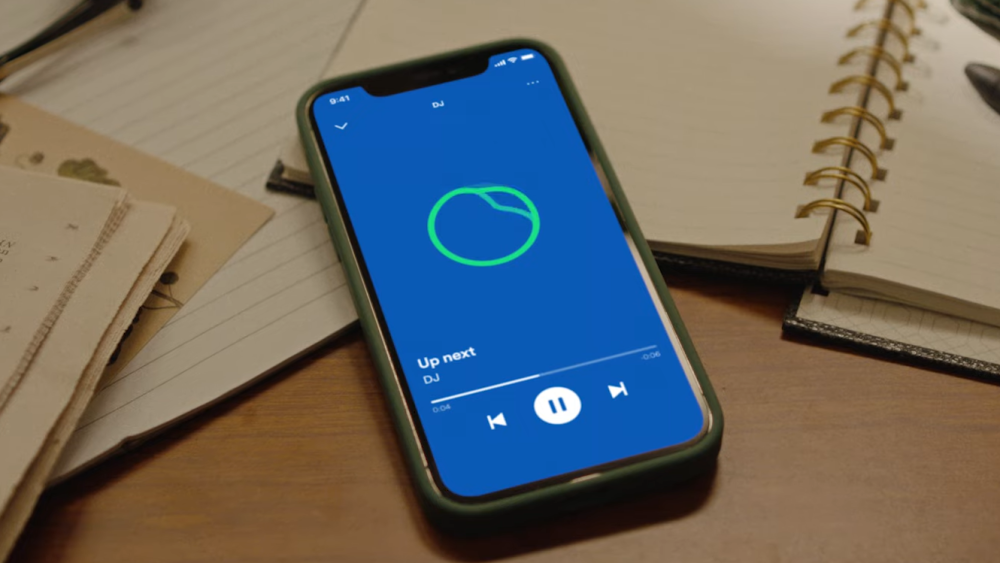
Spotify's AI-powered personal DJ is expanding its reach, adding support for a substantial number of new countries and languages. This strategic rollout, following its initial limited launch in markets like the US, Canada, UK, and Ireland, signifies a critical inflection point for the streaming giant and the broader audio industry. For founders and operators, this isn't merely a feature update; it's a blueprint for leveraging advanced AI to redefine user experience, engagement, and global market penetration in a fiercely competitive landscape.
The AI DJ, at its core, is an intelligent audio companion that curates personalized music playlists accompanied by spoken commentary. Unlike traditional algorithmic playlists, which passively deliver music, the DJ actively introduces tracks, explains why they've been selected, and offers contextual insights into artists or genres. It synthesizes a remarkably natural-sounding voice, initially modeled after Spotify's Head of Cultural Partnerships, Xavier "X" Jernigan, leveraging technology from OpenAI's text-to-speech capabilities. This blend of sophisticated AI recommendation engines with a human-like vocal interface creates an immersive, almost conversational listening experience.
Strategic Imperative for Global Expansion
The decision to scale the AI DJ globally is rooted in several strategic imperatives. First, it's about deepening engagement. Spotify's data consistently shows that highly personalized experiences lead to increased listening time and reduced churn. The AI DJ takes personalization to an unprecedented level, making each listening session feel unique and dynamic. In markets saturated with streaming options, superior engagement is the ultimate differentiator.
Second, global expansion unlocks vast new data reservoirs. The AI DJ learns from every interaction, every skip, every explicit like. By introducing it to diverse linguistic and cultural contexts, Spotify gains invaluable insights into global music consumption patterns, local genre nuances, and the effectiveness of its AI models across different demographics. This feedback loop is crucial for refining the AI's predictive capabilities and ensuring its recommendations resonate universally, not just within Western music paradigms.
Third, it reinforces Spotify's position as an innovation leader. While competitors like Apple Music and Amazon Music offer advanced personalization, none have deployed a conversational, AI-driven DJ at this scale. This move positions Spotify at the vanguard of AI integration in consumer tech, signaling its commitment to pushing the boundaries of audio discovery and interaction. For founders, this demonstrates the power of first-mover advantage in AI-driven product categories.
Technical and Linguistic Complexities
Scaling the AI DJ globally presents formidable technical and linguistic challenges. The underlying AI models must not only understand and recommend music across a myriad of genres and artists but also comprehend the cultural context and linguistic subtleties required for natural-sounding spoken commentary in dozens of new languages. This isn't just about direct translation; it's about idiomatic understanding, tone, and cultural appropriateness.
Consider the nuances of music taste and commentary in markets like Latin America, where genres like Reggaeton, Salsa, and Cumbia have deep cultural roots. An AI DJ addressing a listener in Brazil needs to understand the specificities of Sertanejo music, its regional variations, and how to discuss it in fluent Portuguese with an appropriate accent and conversational flow. Similarly, in Europe, an AI DJ operating in Germany must seamlessly transition between discussing local German artists and international hits, all while maintaining a consistent and engaging persona in German.
The text-to-speech engine, while powerful, requires extensive training data for each new language to achieve the high fidelity and natural cadence users expect. This involves not only recording and synthesizing new voice models but also developing sophisticated natural language processing (NLP) models capable of generating dynamic, contextually relevant scripts for the DJ in each supported language. The computational overhead for real-time, personalized audio generation for millions of users simultaneously, across multiple languages, is immense, demanding a highly scalable and robust cloud infrastructure.
Market Dynamics and Regional Impact
The global rollout strategically targets high-growth streaming markets. In regions like Southeast Asia, with rapidly expanding middle classes and high smartphone penetration, Spotify is vying for dominance against local players and other international giants. An AI DJ capable of speaking Bahasa Indonesia, Thai, or Vietnamese, and recommending local pop, traditional music, and international hits, becomes a powerful tool for user acquisition and retention.
Europe, with its rich tapestry of languages and diverse musical heritage, stands to benefit significantly. Imagine an AI DJ introducing a new French indie artist to a listener in Paris, then smoothly transitioning to a trending track from Italy, all while maintaining a conversational flow in impeccable French. This localized, personalized experience transcends simple playlist curation; it becomes a cultural bridge.
“Spotify’s global AI DJ expansion is more than just a product update; it’s a strategic assertion of leadership in the personalized audio economy. By leveraging advanced AI to deliver hyper-localized and conversational experiences, they are not just competing on content but on intelligence. This move forces every other player in the audio space to re-evaluate their AI roadmap and consider how human-like interaction will become the baseline expectation for future content consumption. It's a clear signal that the future of streaming is deeply conversational and contextually aware.”
Dr. Anya Sharma, Lead Analyst, Digital Transformation Institute
Beyond Music: The Future of Conversational Audio
The AI DJ is a foundational step towards a much broader vision for conversational AI in audio. For founders and operators, the implications extend beyond music streaming. This technology could eventually underpin interactive podcasts, personalized news briefings, or even AI-driven audiobooks that adapt to a listener's mood or learning style. Spotify is effectively building a sophisticated AI conversational agent optimized for audio, a competency that has vast potential applications across the digital content ecosystem.
Consider the potential for interactive advertising: an AI DJ could seamlessly integrate contextually relevant ads into its commentary, making them feel less intrusive and more like part of the personalized experience. Or imagine an AI DJ that learns your workout routine and curates music dynamically based on your heart rate data from a wearable. The current iteration is just the beginning of a truly adaptive audio operating system.
However, challenges remain. The "uncanny valley" effect, where AI voices can sometimes feel artificial or off-putting, needs continuous refinement. Ensuring the AI's commentary remains genuinely insightful and not repetitive will be crucial for long-term user satisfaction. Furthermore, ethical considerations around AI bias, data privacy, and the potential impact on human curation roles must be addressed transparently as the technology matures.
Competitive Landscape and Industry Ripple Effects
This expansion will undoubtedly put pressure on competitors. Apple Music, with its vast subscriber base and deep integration into the Apple ecosystem, will need to respond with enhanced AI capabilities beyond its existing personalized radio stations. YouTube Music, leveraging Google's formidable AI research, also presents a strong challenger, particularly given its massive video catalog and user-generated content. Amazon Music, integrated with Alexa, has a natural advantage in voice interaction, but its personalization engine for music may need to accelerate to match Spotify's conversational depth.
For smaller players and startups in the audio tech space, this move highlights the escalating importance of AI expertise. Niche streaming services or audio content creators will need to find innovative ways to integrate AI, either by specializing in highly specific content niches or by developing unique AI-driven interaction models that Spotify might not prioritize immediately. The barrier to entry for building truly personalized, conversational audio experiences is rising.
Ultimately, Spotify’s global rollout of its AI DJ is a bold statement about the future of digital audio. It signals a shift from passive consumption to active, personalized interaction, driven by increasingly sophisticated artificial intelligence. For anyone building in the tech space, it serves as a powerful case study in how to leverage cutting-edge AI to create deeply engaging, globally scalable products that redefine user expectations.
KEY TAKEAWAYS
Deepened User Engagement: The AI DJ's personalized, conversational experience is a significant driver for increasing listening time and reducing churn, crucial metrics for any subscription-based service.
Global Data & AI Refinement: Expanding to diverse markets provides invaluable data for training and refining AI models, ensuring recommendations and commentary are culturally and linguistically relevant worldwide.
Competitive Differentiation: Spotify establishes itself as a leader in AI-driven audio, raising the bar for competitors and demonstrating the strategic advantage of first-mover innovation in personalized content.
Scalable Technical Infrastructure: The rollout underscores the immense technical challenge and investment required for real-time, multilingual, AI-generated audio at a global scale.
Blueprint for Conversational Content: The AI DJ serves as a foundational example for future applications of conversational AI across various audio content forms, from podcasts to interactive news.