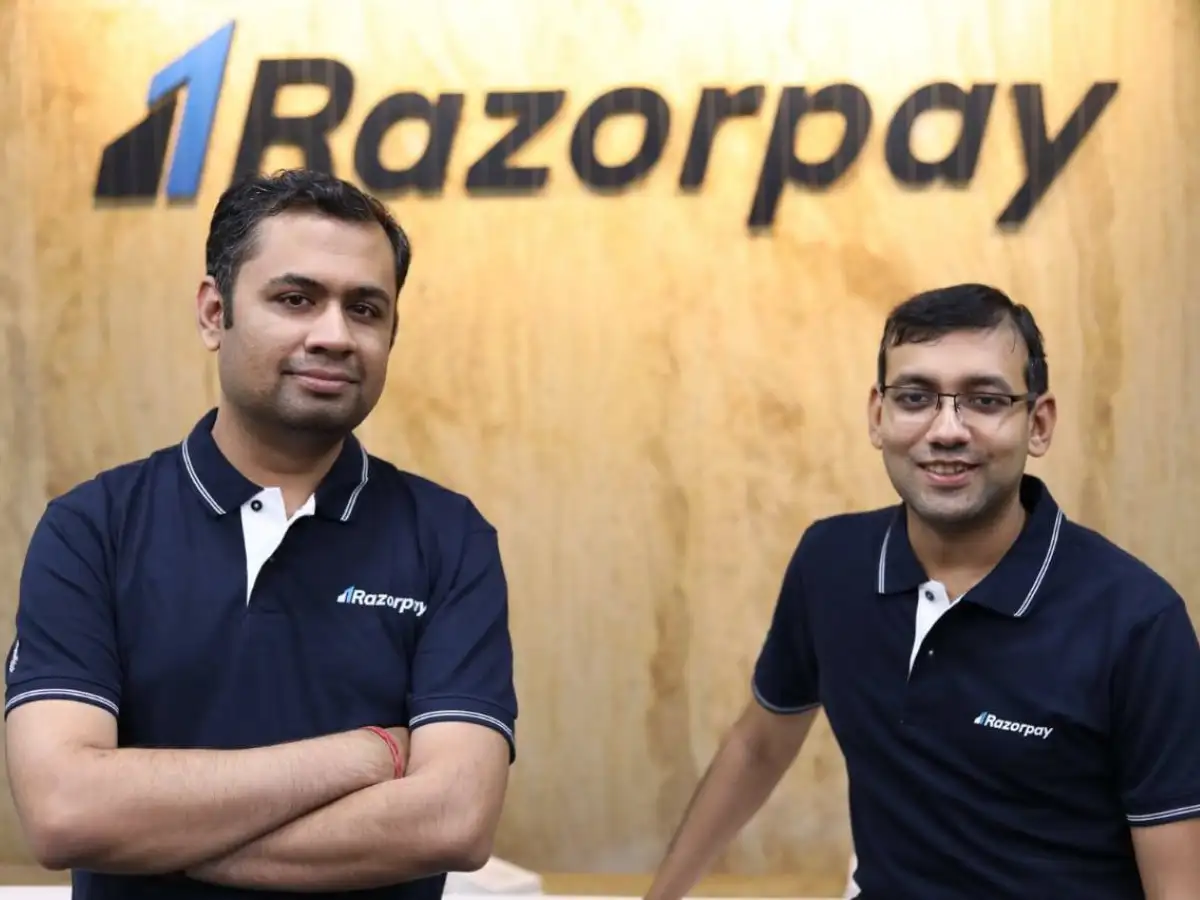
In the high-stakes theatre of global fintech, few narratives captivate investors and operators quite like the journey of a company on the cusp of an Initial Public Offering. Razorpay, a torchbearer of India's digital payment revolution, finds itself at such a juncture. Recent signals suggest a strategic recalibration, specifically a scaling back of its ambitious foray into offline payments, a move that, at first glance, appears counterintuitive and challenges conventional wisdom.
The prevailing view holds that for a fintech giant operating in a market like India, where cash remains king for a significant portion of transactions, a robust offline presence is not merely an option but a strategic imperative. The sheer volume of transactions conducted at kirana stores, street vendors, and small businesses represents an enormous, largely untapped opportunity. Expanding into this physical realm is often seen as the logical next step for any payment processor aiming for holistic market dominance and a multi-billion dollar valuation. Why, then, would Razorpay, a company renowned for its aggressive market capture and innovative spirit, seemingly retreat from such a lucrative frontier?
Challenging the Offline Imperative
The conventional argument for an aggressive offline push is compelling. India's digital economy, while booming, still sees a substantial majority of its transaction value flow through traditional channels. Capturing even a fraction of this cash economy promises exponential growth. Companies like Paytm and PhonePe have demonstrated the power of deep penetration into the offline merchant ecosystem with their ubiquitous QR codes and soundbox devices. For Razorpay, a company primarily known for its online payment gateway prowess, extending its reach to the physical point of sale seemed a natural evolution to become a truly full-stack payment provider, capable of serving merchants across all touchpoints.
However, this conventional wisdom often overlooks the brutal realities of operating in the offline payment space, particularly in a market as diverse and cost-sensitive as India. The narrative of "massive opportunity" frequently glosses over the "massive expenditure" required to capitalize on it. Building out and maintaining an offline network is an entirely different operational beast compared to scaling a cloud-based online payment gateway. It involves significant capital expenditure on hardware, logistics for deployment, a large field sales and support force, and ongoing maintenance. The unit economics are inherently challenging.
The gross margins in offline acquiring, especially for micro-merchants, are notoriously thin. Transaction fees for QR-based payments, driven by UPI’s zero-MDR policy for certain categories, are often non-existent or minimal. Even for POS terminal deployments, the interchange and scheme fees leave little room for profit after accounting for hardware costs, network connectivity, and operational overheads. For a company like Razorpay, which has built its reputation on offering sophisticated, value-added services to online businesses, competing in a race to the bottom on transaction fees for basic offline payments can be a significant drain on resources and a drag on profitability.
The Profitability Pivot and IPO Scrutiny
Razorpay's strategic recalibration is less a retreat from opportunity and more a calculated pivot towards sustainable profitability, a paramount concern for any company eyeing a successful IPO. Global venture capital markets have shifted dramatically. The era of "growth at all costs" has largely given way to a demand for clear paths to profitability and strong unit economics. Investors are no longer content with inflated revenue numbers if they come tethered to unsustainable burn rates.
For a company seeking a public listing, demonstrating disciplined capital allocation and a focused strategy is crucial. Burning significant cash on a low-margin, high-burn offline expansion might satisfy the narrative of market dominance but could severely impact its valuation multiples. Instead, doubling down on its core strengths – its highly scalable online payment gateway, neo-banking services, payroll solutions, and lending products – allows Razorpay to present a cleaner, more attractive financial profile to public market investors.
“The strategic pullback from aggressive offline expansion by Razorpay is a clear signal of the evolving maturity in the fintech landscape. It’s no longer just about acquiring users or merchants at any cost. Companies are under immense pressure to demonstrate a clear path to profitability and sustainable unit economics, especially pre-IPO. The offline market, while vast, demands a different operational muscle and often yields significantly lower margins than online services. Razorpay is wisely focusing on where it can generate the most value and defend its competitive moat, rather than engaging in a pure land-grab that might dilute its financial strength.”
— Anya Sharma, Senior Analyst, Digital Payments Research Group
Regulatory Landscape and Competitive Intensity
The Indian regulatory environment also plays a role. The Reserve Bank of India (RBI) is actively shaping the digital payments ecosystem, often with a strong emphasis on financial inclusion but also on the stability and long-term viability of payment service providers. The continuous evolution of policies, data localization norms, and compliance requirements adds another layer of complexity and cost to operating an extensive physical network. Staying agile and compliant across a vast geographical spread requires substantial investment in legal and operational infrastructure.
Moreover, the offline payments segment in India is ferociously competitive. Beyond Paytm and PhonePe, traditional banks have significantly ramped up their merchant acquiring efforts, often leveraging their existing branch networks and customer relationships. BharatPe has also carved out a significant niche with its merchant-focused lending and QR solutions. This intense competition means that market entry and expansion are expensive, and differentiation is difficult when the core offering is a basic QR code or POS terminal. Razorpay's unique value proposition has always been its developer-friendly APIs, robust platform, and comprehensive suite of financial tools for online businesses – an edge that is harder to replicate in the commoditized offline space.
A Refined Approach: Omnichannel and Software-Led
This does not mean Razorpay is abandoning the offline market entirely. Rather, the scaling back likely signifies a more refined, targeted approach. Instead of a broad-based, hardware-heavy deployment strategy, Razorpay is likely to focus on solutions that leverage its existing strengths and cater to higher-value merchant segments. This could involve an emphasis on omnichannel solutions for retail businesses that have both an online and offline presence, where Razorpay can provide a unified payment and reconciliation experience. Solutions that bridge the gap between online invoicing and offline collections, or B2B payment solutions that facilitate transactions in physical contexts but are managed digitally, fit this refined strategy.
The future of Razorpay's offline play will likely be software-led, minimizing reliance on proprietary hardware and maximizing integration with its robust online platform. This means focusing on value-added services around payments, rather than just processing transactions. Imagine a merchant management system that integrates inventory, sales, and payments across all channels, with Razorpay powering the backend. This is a far more defensible and profitable strategy than simply deploying thousands of POS machines or QR stickers.
India's digital payment ecosystem has seen remarkable growth, with UPI transactions alone exceeding 10 billion in a single month. Despite this, a significant portion of retail payments still occur in cash, highlighting the enduring allure of the offline market for fintechs. The challenge lies in converting this volume into sustainable revenue streams.
Implications for Founders and Operators
Razorpay's decision offers a critical lesson for founders and operators globally. The pursuit of growth must be balanced with a clear-eyed assessment of profitability, scalability, and competitive advantage. Expanding into every conceivable market segment, simply because it’s ‘large,’ is often a recipe for diluted focus and capital inefficiency. Strategic pruning, even of seemingly attractive opportunities, can be a sign of maturity and fiscal discipline.
For fintechs, this shift underscores the importance of unit economics, especially as venture funding becomes more constrained. It highlights the stark difference between the capital requirements and operational complexities of hardware-reliant models versus software-centric platforms. Companies must critically evaluate whether an expansion aligns with their core competencies and generates sustainable, defensible revenue streams that will satisfy public market investors.
The move also suggests a broader trend in fintech: the maturation of the industry from an initial land-grab phase to one focused on profitable growth, embedded finance, and vertical specialization. Companies are realizing that being a jack-of-all-trades often means being a master of none, particularly when facing intense competition and regulatory scrutiny.
Conclusion
Razorpay's strategic scaling back of its offline payment initiatives, particularly ahead of an anticipated IPO, should not be misconstrued as a failure or a retreat. Instead, it represents a sophisticated, analytical pivot. It is a testament to the company's evolving understanding of its core strengths, the realities of market economics, and the imperative for profitability in a discerning public market environment. By focusing its resources on high-margin, scalable online and value-added services, Razorpay is not just preparing for an IPO; it is positioning itself for long-term, sustainable leadership in the fiercely competitive global fintech arena. This strategic refinement underscores the critical importance for all founders and operators to continuously scrutinize their growth vectors against the backdrop of capital efficiency and market defensibility.
KEY TAKEAWAYS
Razorpay's decision to scale back offline payments is a strategic pivot towards profitability, not a retreat from opportunity.
The conventional wisdom regarding the "massive" offline market often overlooks the high operational costs and low margins in this segment.
Pre-IPO scrutiny demands clear unit economics and a focused strategy; burning cash on low-margin segments can hinder valuation.
The Indian offline payment market is intensely competitive and faces evolving regulatory challenges, making broad-based expansion difficult.
Razorpay is likely to adopt a more refined, software-led, omnichannel approach to offline, leveraging its core online strengths.
Frequently asked questions
Why is Razorpay scaling back offline payments?
Razorpay is strategically scaling back its offline payments ventures to refocus its resources and optimize its growth trajectory ahead of its anticipated Initial Public Offering. This recalibration is a common move for companies preparing for a public listing.
What is Razorpay's primary focus now?
Razorpay's primary focus is likely shifting back towards its core strengths in online digital payments and expanding its fintech ecosystem, ensuring a streamlined approach for its upcoming IPO.
Will Razorpay still offer offline payment solutions?
The article suggests a scaling back, not necessarily a complete halt, indicating a reduced emphasis or a more targeted approach to offline services rather than a full discontinuation.
What is an IPO?
An IPO, or Initial Public Offering, is when a private company first offers shares of its stock to the public, becoming a publicly traded company. It allows companies to raise capital from public investors.
How does this affect Razorpay's IPO plans?
This strategic recalibration is likely intended to streamline operations and present a clearer, more focused growth story to potential investors, enhancing its appeal and valuation ahead of its IPO.
What is the future of fintech in India?
The future of fintech in India remains robust, driven by increasing digital adoption, government initiatives, and a burgeoning middle class, with companies like Razorpay continuing to innovate and lead the sector.