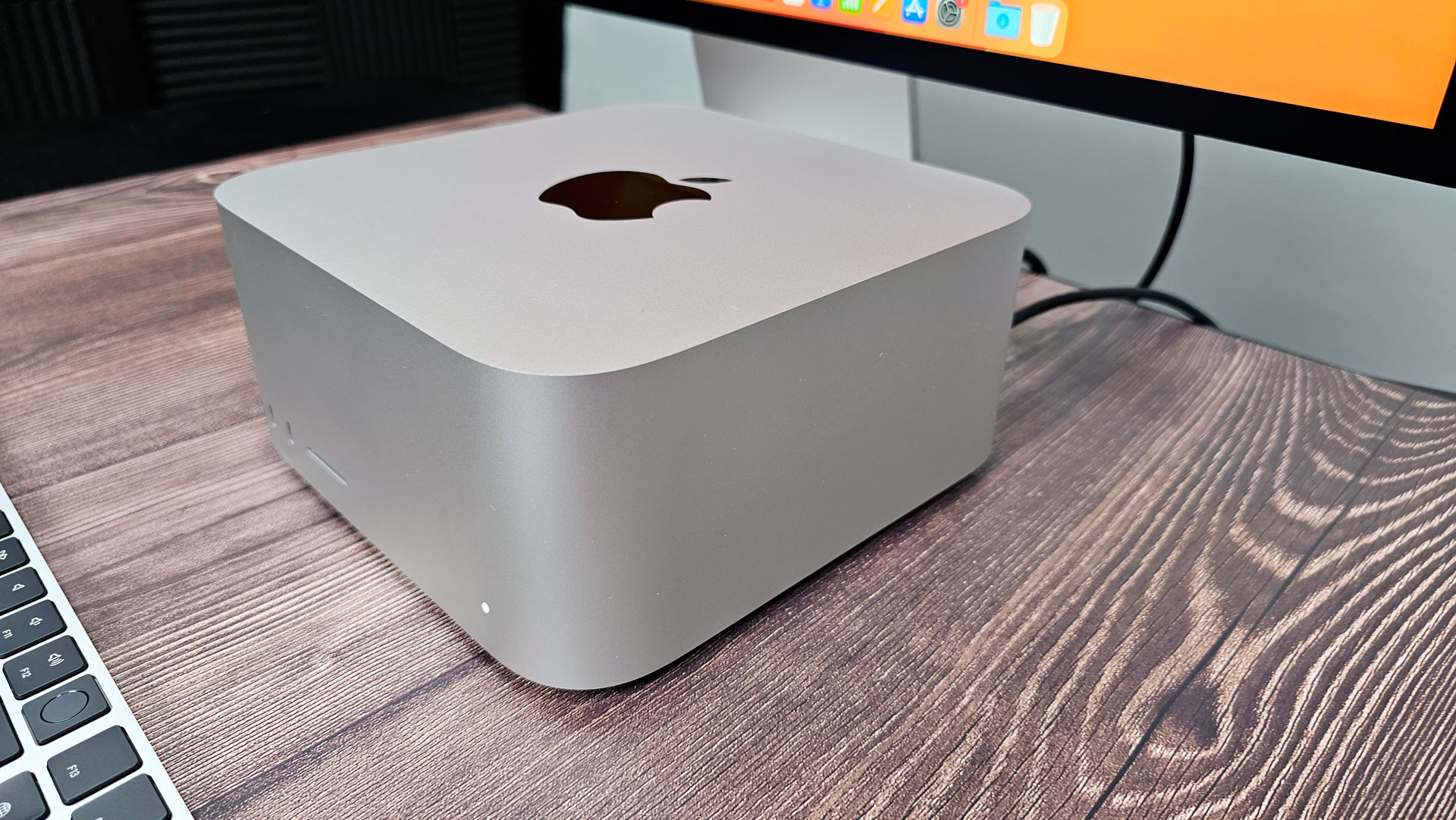
The "buy" button is gone. If you were looking to outfit your engineering team with the high-memory Mac Studios required to run the latest local LLMs, you’re likely staring at a "Currently Unavailable" grey box or a delivery estimate that stretches deep into the third quarter of 2026. On Thursday’s Q2 earnings call, Apple CEO Tim Cook didn't mince words: Apple says supply constraints for Mac mini and Mac Studio will persist for several months, driven by a demand curve that even the world’s most sophisticated supply chain didn't see coming.
The culprit isn't just a lack of aluminum or a port strike. It is a fundamental shift in how we use computers. In 2026, the Mac mini is no longer the "entry-level" box for students; it has become the preferred edge-computing node for "agentic AI" tools like OpenClaw. These machines are being bought in bulk—not by individuals, but by operators building decentralized AI swarms that thrive on Apple’s high-bandwidth unified memory. Apple underestimated the speed of this adoption, and now, the silicon pipes are clogged.
The TSMC Bottleneck and the 2nm Race
While the world’s attention is often on the iPhone, the real war is being fought on the wafers of Taiwan Semiconductor Manufacturing Company (TSMC). Apple has reportedly reserved more than half of TSMC’s 2nm production capacity for the 2026-2027 cycle, yet even this predatory booking isn't enough. Cook clarified during the call that the primary constraint is the availability of advanced semiconductor nodes for the M4 Pro and M4 Ultra SoCs, not a lack of DRAM.
This is a global chess match. In the United States, the CHIPS Act has yet to bring significant advanced-node volume online, leaving Apple vulnerable to the geopolitical volatility of the Taiwan Strait. Meanwhile, in China—where Cook noted the Mac mini remains the top-selling desktop—local players like Huawei and Loongson are aggressively pushing their own AI-specialized silicon, further tightening the global supply of raw materials like neon gas and high-purity photoresist.
Why "Agentic AI" Broke the Forecast
The surge in demand is specifically targeting high-memory configurations. For a founder, the math is simple: Why pay $40,000 in annual AWS inference costs when a $4,000 Mac Studio with 256GB of unified memory can run a quantised Llama-4 model locally with zero latency?
This "ordering frenzy" for 128GB and 256GB RAM options has completely depleted the buffer stock. Apple says supply constraints for Mac mini and Mac Studio are particularly acute in these professional tiers, which were previously a niche segment. Today, if you’re an operator in the London or Berlin tech hubs, these machines are considered "essential infrastructure," comparable to office space or internet bandwidth.
"Apple is a victim of its own architectural success. By building a unified memory architecture that is uniquely suited for local AI inference, they’ve accidentally created a product that the market wants to buy in 100-unit blocks rather than single units. The Mac mini isn't a desktop anymore; it's a server blade." — Carolina Milanesi, President & Principal Analyst at Creative Strategies
The GEO Perspective: The India-Vietnam Pivot
The geography of Apple’s manufacturing is also in the midst of a violent transition. While India has surged to host over 40 key suppliers in 2026—outpacing Vietnam—the focus in the subcontinent remains heavily skewed toward iPhone production.
Vietnam, which has emerged as the specialist base for iPads and Mac desktops, is currently struggling with infrastructure gaps and energy reliability. This regional specialization means that when a logistics bottleneck hits the Southeast Asian corridor, the Mac desktops bear the brunt of the delay. For global founders, this means sourcing hardware in 2026 requires more than a credit card; it requires a procurement strategy that accounts for regional manufacturing clusters.
Takeaways for Founders
Audit Your Procurement: If your 2026 roadmap depends on local AI inference, do not wait for the June WWDC announcements. Secure your existing M4 stock now through authorized enterprise resellers who may have unallocated inventory.
The Unified Memory Trap: While PC alternatives from Dell or HP are plentiful, they lack the high-bandwidth unified memory that makes the Mac Studio so effective for AI. Switching platforms mid-stream will likely result in a 30-40% drop in inference performance.
Look to the Secondary Market: With lead times hitting 12-16 weeks, the refurbished market for M2 and M3 Ultra machines is seeing a price floor that hasn't existed in years. These are viable stopgaps for development environments.
Shift to Hybrid Cloud: Until Apple says supply constraints for Mac mini and Mac Studio have eased (likely late Q4), budget for higher API costs from providers like Groq or Together AI to offload development workloads.
The Perspective Piece: The Death of the "Just-in-Time" DesktopWe’ve spent twenty years being spoiled by "order Monday, arrive Wednesday" logistics. That era is officially over for professional-grade silicon. Founders who treat hardware procurement as an afterthought are finding themselves at a competitive disadvantage, unable to ship local AI features because their dev team is sharing a single "AI Mac" like a communal toothbrush. In 2026, hardware is the new software—it’s the fundamental constraint on your ability to iterate.
The Road to Balance
How does this end? Apple is banking on TSMC ramping up its N3P and N2 processes toward the end of the year, but the competition is fierce. Nvidia and Amazon are also breathing down TSMC’s neck, and Apple’s "first-mover" advantage is being tested by the sheer volume of the AI boom.
As we track the latest semiconductor lead times, it is clear that the Mac is no longer an isolated consumer product. It is a node in a global, high-stakes AI race. For now, if you have a Mac Studio on your desk, treat it like gold. Because, as Apple says supply constraints for Mac mini and Mac Studio are here to stay for the foreseeable future, it’s the most valuable piece of real estate in your office.
![Apple reports Q2 2026 earnings: $111.2 billion in revenue, up 17% [Charts]](https://startupnews-media-2026.s3.us-east-1.amazonaws.com/startupnews-in/uploads/2026/05/manual-1777704093949-pjwq8qf0b.jpeg?X-Amz-Algorithm=AWS4-HMAC-SHA256&X-Amz-Content-Sha256=UNSIGNED-PAYLOAD&X-Amz-Credential=AKIAZQ3DRHCSCL44VIMT%2F20260502%2Fus-east-1%2Fs3%2Faws4_request&X-Amz-Date=20260502T122553Z&X-Amz-Expires=604800&X-Amz-Signature=075054c96ce8be364b08fb5ea85c9d8ba62394381fd5a7bf779a9239f7726a46&X-Amz-SignedHeaders=host&x-amz-checksum-mode=ENABLED&x-id=GetObject)