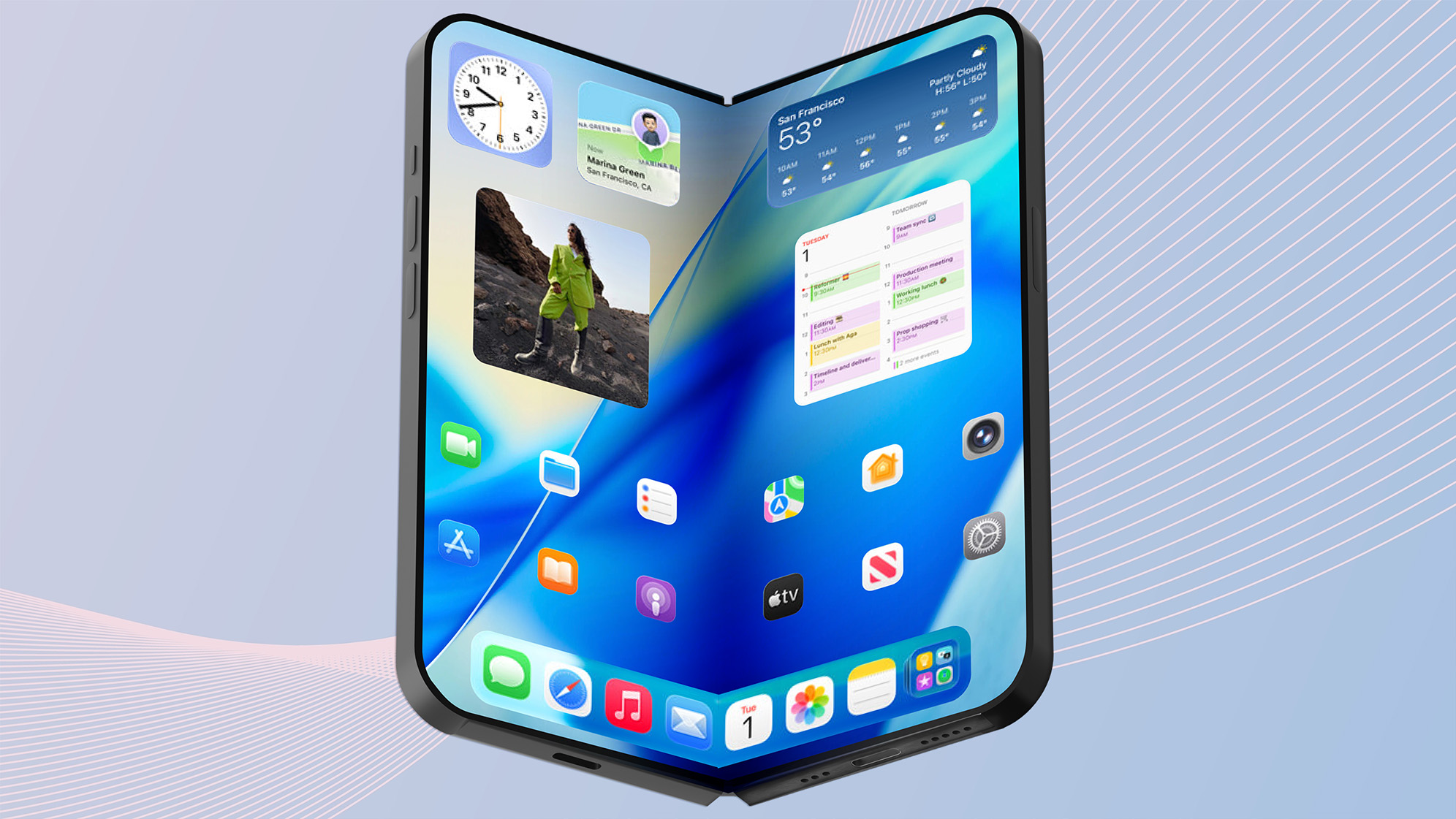
Everyone in the tech press picked a name for Apple's first foldable phone, and they picked the same one: the iPhone Fold. It was logical. Descriptive. Borrowed straight from the Samsung playbook. For months, analysts, leakers, and journalists used it as shorthand for what was shaping up to be Apple's most significant hardware launch since the original iPhone.
Apple, it seems, didn't agree.
Multiple sources have now corroborated that Apple will bypass the "Fold" label entirely in favour of "Ultra" branding for its foldable iPhone. The shift isn't cosmetic. It's a strategic signal about how Apple intends to position not just this one device, but an entirely new product tier — one that sits above Pro, above Pro Max, and above anything the company has offered before.
The name that started a rumour cycle
The branding story began in early April, when Weibo leaker Digital Chat Station — who has over three million followers and an established track record with Apple supply chain information — posted that Apple's wide-format foldable would carry the "iPhone Ultra" name, not "iPhone Fold." That alone would have been notable. What followed made it more interesting: Chinese manufacturers reportedly began considering "Ultra" branding for their own upcoming foldables, aiming to go head-to-head with Apple across the board on form factor.
Then Bloomberg's Mark Gurman weighed in, hinting at the same Ultra direction. Then Macworld said its own sources confirmed it. By late April, the convergence was hard to ignore.
According to Macworld's reporting, Apple plans to position the iPhone Ultra as its highest-end iPhone option, expanding the Ultra brand across multiple product lines — including a foldable iPhone, an OLED touchscreen MacBook Ultra, and potentially an iPad Ultra.
What "Ultra" actually means at Apple
It's worth understanding what the Ultra label has meant in Apple's history before projecting what it'll mean on a phone. The Apple Watch Ultra, launched in 2022, wasn't just a bigger Watch — it was a category signal. Titanium build, extreme battery life, designed for mountaineers and divers. It said: this isn't for everyone, and that's the point.
The M-series Ultra chips follow the same logic. The M2 Ultra and M3 Ultra are essentially two high-end chips fused together via Apple's die interconnect technology. They don't fit in a laptop. They go in the Mac Pro and Mac Studio — machines that most people will never own.
So what does Ultra mean for an iPhone? A device priced above $2,000, according to current estimates — making it, if confirmed, Apple's most expensive smartphone ever by a significant margin. The foldable is said to measure just 4.5mm thin when unfolded, use a titanium-aluminum hybrid frame, and forgo Face ID in favour of a side-button Touch ID sensor, similar to recent iPad models, to accommodate the slim folding mechanism.
The iPhone Ultra would not replace or compete within the iPhone 18 family, but would instead create a parallel premium category — similar to how the iPhone Air is already positioned separately from the Pro lineup.
That's Apple's bet: two different premium markets, two different reasons to spend. The Pro buyer wants the best cameras, the best performance. The Ultra buyer wants the most remarkable form factor. Both pay a premium. Neither cannibalises the other — at least in theory.
A foldable that doesn't want to be compared to Samsung
Here's the contrarian case worth making: calling this device the iPhone Ultra might be Apple's most important decision about it, and not for the reasons the branding enthusiasts think.
Several reports now suggest Apple may have deliberately avoided "Fold" because it sounds too close to Samsung's Galaxy Z Fold line — a product that has existed since 2019, that has steadily improved, and that still hasn't broken through to mass-market adoption. The Galaxy Z Fold 7 is expected this year too. The last thing Apple wants is to enter a comparison table it didn't set the terms for.
By calling it the iPhone Ultra, Apple doesn't just name the device. It names the category. "Ultra" frames the conversation around premium positioning, not around folding glass. That's a meaningful distinction in how consumers, press, and analysts will evaluate it — especially in its first year, when it'll inevitably be judged against Samsung's more mature hardware on metrics like crease visibility, hinge durability, and software optimization for large-format displays.
The cynical read: Ultra is rebranding away from a direct fight Apple isn't sure it can win on specs alone. The optimistic read: it's the kind of category creation Apple does better than anyone.
The wider Ultra push — and what it means globally
This isn't just about one phone. Apple CEO John Ternus has reportedly made expansion of the Ultra tier a top priority, with Bloomberg's Gurman noting that "AirPods Ultra" — rumoured to include built-in cameras — could also be on the way, and that an iPad Ultra with a foldable display remains a longer-term possibility.
For global markets, the implications are uneven. In the United States and Western Europe, where average selling prices for flagship phones already regularly exceed $1,200, a $2,000+ iPhone Ultra is aggressive but not unthinkable — especially among early adopters and enterprise buyers. Initial shipments are expected to be capped at three to five million units in 2026, with Apple taking a deliberately cautious approach to gauge market reaction before scaling to an estimated 20 million units or more in 2027.
In India, where Apple has made significant retail and manufacturing inroads over the past three years — with iPhone assembly now happening at Foxconn's Tamil Nadu plant — a ₹1.7 lakh-plus device faces a much steeper climb. India's premium smartphone segment (phones above ₹50,000) represents roughly 8–9% of total smartphone shipments, and Apple has been its dominant force. But the Ultra would sit in a category barely anyone in that market has bought before. Samsung's foldables, priced similarly, remain negligible in India's mix. Apple entering won't automatically change that — but it'll change how aspirational the Ultra brand reads across the country, which matters for the broader halo effect on iPhone 18 sales.
In China, where Huawei's Mate X series has proved that domestic buyers will pay for foldable form factors, Apple's arrival as a direct competitor is a different kind of story. Chinese manufacturers already appear to be reacting, with reports of them adopting "Ultra" nomenclature partly in anticipation of what Apple is doing.
The production reality
Foxconn has already begun trial production on the foldable iPhone, with Apple planning to move to mass production in July — assuming no complications emerge during the earlier testing phase. According to Bloomberg, a September 2026 announcement remains the target, alongside the iPhone 18 Pro and iPhone 18 Pro Max — though the foldable may ship to customers weeks later, potentially in October or November, due to the complexity of foldable display manufacturing.
The MacBook Ultra — which would introduce an OLED touchscreen and sit above the MacBook Pro in both features and price — was also planned for late 2026, but has reportedly been pushed to early 2027 due to a RAM supply shortage.
Three things worth watching as this story develops
Whether Apple confirms the "Ultra" name at WWDC 2026 in June, where iOS 27 will be previewed with rumoured optimisations for large-format and foldable displays. If Ultra-specific software gestures surface in iOS 27, the branding question answers itself.
Samsung's Galaxy Z Fold 7 reveal timing. If Samsung moves its announcement closer to Apple's September event, there's a good chance it's responding to competitive pressure — and watching how Samsung frames its own product in that context will tell us a lot about how the industry reads Apple's entry.
Pricing confirmation. A $2,000 floor is the current best estimate, but iPhone launch prices have surprised in both directions before. If Apple prices this above $2,500 at the high end, the Ultra positioning becomes a self-fulfilling prophecy — and the addressable market for year one shrinks accordingly.
The name's not confirmed. The price isn't locked. The crease problem may or may not be solved. But what Apple is clearly doing — whether this launches as the iPhone Ultra, the iPhone Fold, or something nobody's guessing yet — is building a new ceiling for what a smartphone can cost, and trying to make buyers feel like that ceiling is worth reaching for.
That's the real project. The name is just the first move.