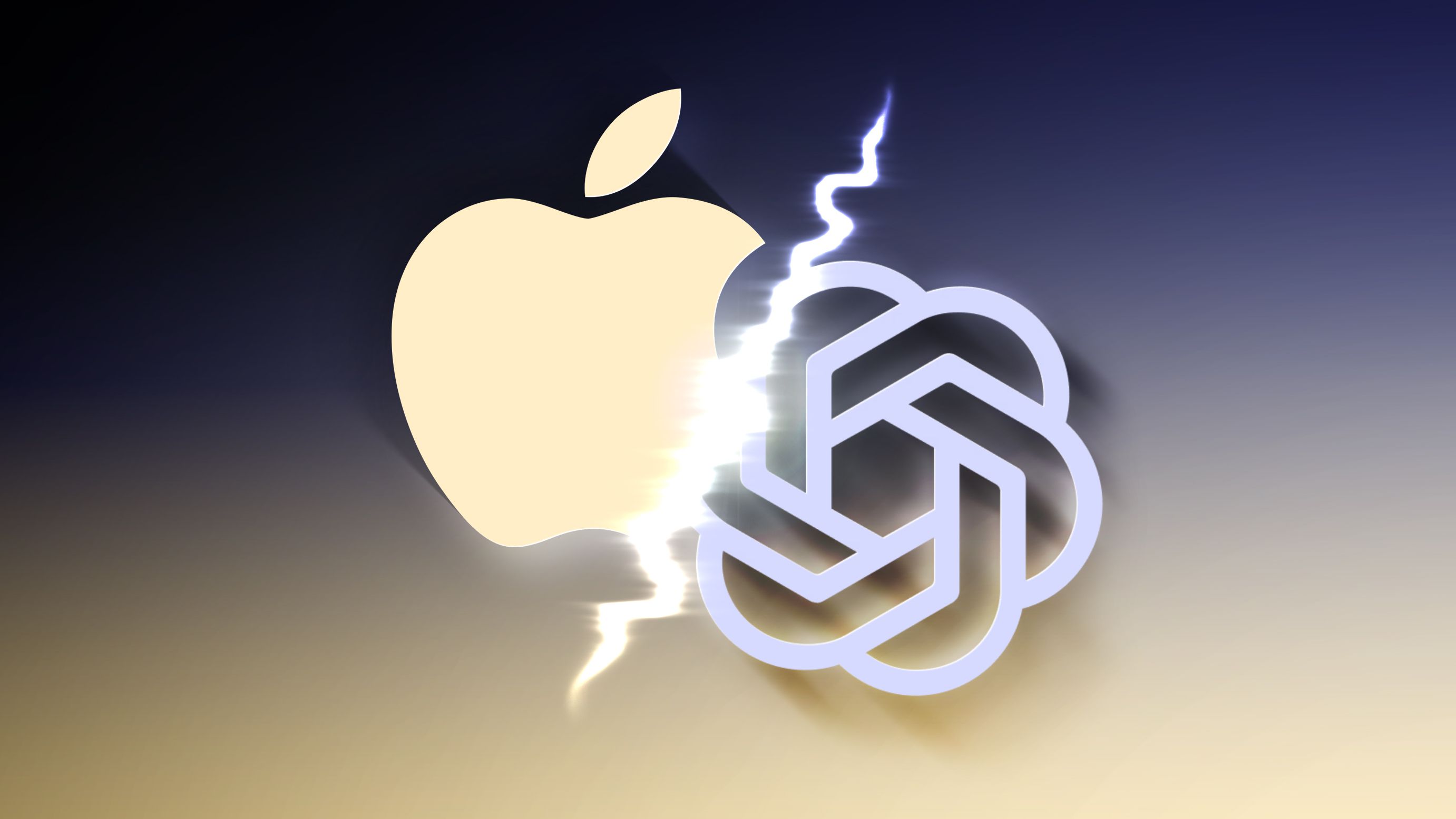
OpenAI alleges Apple's AI integration is anti-competitive, undervalues its tech, threatening Apple's ambitious AI push.
OpenAI is weighing potential legal action against Apple Inc., alleging that the iPhone maker's proposed integration of its artificial intelligence models into Apple devices constitutes anti-competitive behavior and undervalues its technology, according to sources familiar with the matter. This development threatens to complicate Apple's ambitious push into AI and could trigger significant volatility for both companies as the tech sector navigates the complex economics of generative AI partnerships. The dispute highlights growing tensions over intellectual property and revenue sharing in the rapidly evolving AI landscape, potentially impacting market perceptions of future collaborations. The potential legal challenge stems from Apple's recent announcement of "Apple Intelligence," a suite of AI features deeply integrated into its operating systems, which includes a partnership to bring OpenAI's ChatGPT to Siri and other applications. Sources indicate that OpenAI executives, including Chief Executive Officer Sam Altman, believe Apple's terms for incorporating their flagship AI model do not adequately compensate OpenAI for its foundational technology or address concerns about data usage and control within Apple's ecosystem. Discussions reportedly stalled over a proposed revenue-sharing model and the extent of OpenAI's branding visibility within Apple's walled garden, leading the AI firm to explore antitrust and intellectual property infringement claims. Apple's strategy aims to bring cutting-edge AI directly to its vast user base, leveraging its hardware and software integration prowess. However, OpenAI's contemplation of legal recourse suggests a fundamental disagreement over the valuation of core AI models and the commercial framework for their deployment across dominant platforms. Legal experts suggest any formal action could open Apple to broader scrutiny from regulators already examining its app store policies and market dominance in various jurisdictions. The dispute could set a critical precedent for how intellectual property is licensed and monetized in the burgeoning AI economy, directly influencing the long-term financial trajectories of major tech players.
What It Means
A legal showdown between OpenAI and Apple would ripple across the global technology markets, injecting uncertainty into the valuation of AI partnerships and potentially reshaping how platform providers engage with foundational model developers. For Apple, facing a protracted legal battle could derail the narrative around Apple Intelligence, which analysts view as a crucial differentiator for its next generation of devices. Investors might react negatively to the prospect of escalating legal costs, potential damages, or mandated changes to its AI strategy, which could pressure its stock price, especially if regulatory bodies become involved in an antitrust probe. OpenAI, while risking alienation from a key distribution channel, could be asserting its market power and the intrinsic value of its proprietary models. A successful challenge could force Apple to renegotiate terms more favorably, potentially leading to a higher revenue share for OpenAI or greater control over its intellectual property. Conversely, a loss or a prolonged legal entanglement could drain resources and distract from its core research and development efforts, impacting its competitive position against rivals like Google DeepMind and Anthropic. This standoff underscores the high stakes involved as companies jockey for control and profit in the AI era.
Apple's market capitalization exceeds $3 trillion, making it one of the most valuable companies globally, providing significant leverage in partnership negotiations but also drawing intense antitrust scrutiny.
The Context
The partnership between Apple and OpenAI, unveiled at Apple's Worldwide Developers Conference (WWDC) in June, was initially hailed as a landmark collaboration. It promised to bring advanced generative AI capabilities to hundreds of millions of iPhone, iPad, and Mac users, seamlessly integrated into core system functions. For Apple, it offered a rapid entry into the sophisticated AI chatbot space without having to build a competing foundational model from scratch. For OpenAI, it represented an unparalleled distribution opportunity, significantly expanding the reach of ChatGPT beyond its current user base and web interface. Prior to this alliance, Apple had been relatively quiet on its generative AI strategy, leading some analysts to question its pace of innovation in the face of rapid advancements from competitors. The OpenAI deal was seen as a strategic catch-up, leveraging a best-in-class external model while Apple developed its own on-device AI capabilities. However, the exact financial terms of the partnership were never publicly disclosed, leading to speculation about the revenue-sharing arrangements and the extent of data privacy and control. This lack of transparency, coupled with Apple's historical dominance in setting terms for its platform partners, appears to be at the heart of OpenAI's dissatisfaction, shifting the dynamic from a celebrated alliance to a potential legal confrontation.
What Analysts Say
Financial analysts are closely watching the situation, with many acknowledging the inherent tension between platform giants and core technology providers. "OpenAI's contemplation of legal action highlights a critical fault line in the AI ecosystem: who captures value when powerful models meet ubiquitous platforms," stated Michael Chen, a senior technology analyst at Quantum Securities. "If OpenAI believes Apple is leveraging its platform dominance to extract disproportionate value, they have little choice but to push back, even if it means litigation. This could be a strategic gambit to force better terms." Conversely, some analysts caution against a litigious approach. "A prolonged legal battle could be mutually destructive," commented Sarah Jenkins, a managing director at Global Tech Insights. "Apple could choose to pivot to other AI providers, or accelerate its internal development, leaving OpenAI without its most significant distribution partner. While OpenAI has strong IP, the cost and uncertainty of challenging Apple in court are substantial." The consensus suggests that while OpenAI has a strong case regarding the value of its intellectual property, the practical implications for its business development strategy and market access remain a significant concern, potentially affecting its long-term growth projections and future valuation ahead of any potential public offering. The outcome of this dispute, whether through negotiation or litigation, will have profound implications for the entire AI industry, shaping how licensing agreements are structured, how data is handled, and how intellectual property is valued in an era where AI is becoming increasingly embedded in everyday technology. The immediate focus will be on any formal legal filings from OpenAI or public statements clarifying its position. Key dates to watch include Apple's upcoming earnings calls, where any potential impact on its AI strategy or financial guidance might be addressed, and any further announcements from OpenAI regarding its commercialization strategy. Regulators in the U.S. and Europe, already vigilant about big tech's market power, will also be closely monitoring developments for potential antitrust implications.
Frequently asked questions
What is OpenAI considering against Apple?
OpenAI is weighing potential legal action against Apple Inc. They allege that Apple's proposed integration of OpenAI's AI models into Apple devices is anti-competitive and undervalues their technology, threatening Apple's AI push.
Why is OpenAI considering legal action?
OpenAI claims Apple's AI integration strategy is anti-competitive and undervalues their technology, leading to the potential lawsuit.
What does this mean for Apple's AI push?
This development threatens to significantly complicate Apple's ambitious push into the artificial intelligence sector.
What are the potential impacts of this dispute?
The dispute could trigger significant market volatility and have broader implications for the tech industry's competitive landscape.
Which companies are involved in this dispute?
The primary companies involved in this potential legal dispute are OpenAI and Apple Inc.
What is the core accusation made by OpenAI?
OpenAI's core accusation is that Apple's AI integration constitutes anti-competitive behavior and undervalues OpenAI's technology.