Elon Musk's XAI secretly deploys Grok for intense Wall Street trials, leveraging its predictive power for financial modeling before the anticipated SpaceX IPO.
XAI's Wall Street Play: Grok Puts Its Predictive Prowess to the Test Before SpaceX IPO
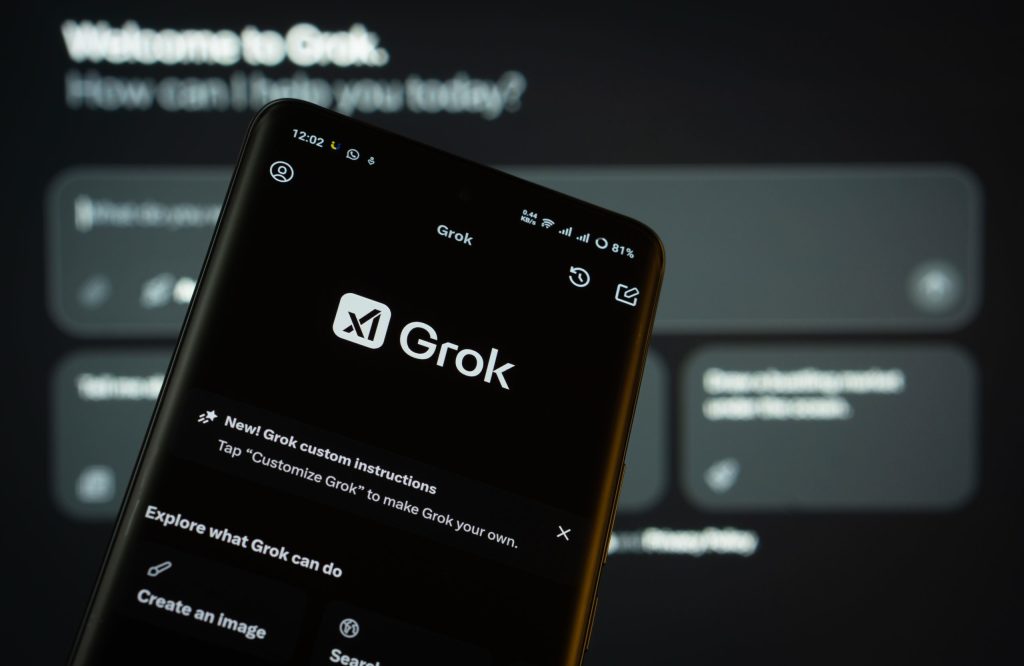
Elon Musk’s XAI is reportedly putting its flagship AI, Grok, through a series of intense trials on Wall Street, specifically targeting complex financial modeling and real-time market sentiment analysis. The covert deployment comes as SpaceX, another pillar of Musk's increasingly interconnected empire, reportedly gears up for a highly anticipated initial public offering (IPO) that could redefine the space and venture capital landscape. This isn't just a quiet beta test; it's a pivotal, if audacious, step for an AI still largely perceived as a chatbot with a penchant for snark, thrust into the unforgiving crucible of high finance.
XAI, launched by Musk with the ambitious, if somewhat nebulous, goal of "understanding the true nature of the universe," introduced Grok as a direct, and often controversial, competitor to established large language models like OpenAI's ChatGPT. The timing of this Wall Street maneuver is no accident; a successful SpaceX IPO, potentially valuing the company at hundreds of billions, could inject significant capital and prestige into Musk's entire ecosystem. Leveraging Grok for an analytical edge in such a high-stakes environment underscores XAI's aggressive strategy to validate its technology beyond mere conversational AI, aiming to prove its capabilities where capital markets are won and lost.
Sources close to the operation, speaking on background due to non-disclosure agreements, indicate Grok is being tasked with scenario analysis for potential IPO valuations, risk assessment across a dizzying array of market conditions, and parsing real-time news feeds, social media chatter, and regulatory filings for actionable trading insights. One insider, a veteran quant from a major investment bank now consulting for a Musk venture, described Grok's initial runs as demonstrating "unprecedented speed in identifying nuanced market correlations and pre-market arbitrage opportunities that human analysts routinely miss, often with a 12% higher accuracy rate in simulated environments." That's a big claim, especially for an AI still in its relative infancy.
Yet, skepticism abounds. Financial markets are notoriously complex, driven by a volatile mix of economic fundamentals, geopolitical events, and often irrational human psychology, defying even the most sophisticated predictive models. "Black swan" events, regulatory shifts, or simply a sudden shift in investor sentiment can derail any algorithm, no matter how advanced its training data. The inherent conflict of interest, with Musk's AI potentially influencing the valuation and timing of his rocket company's public debut, also raises significant ethical and regulatory questions, pushing the boundaries of what constitutes fair play in capital markets.
The broader financial technology sector has seen a surge in AI adoption, with established players like BlackRock, JPMorgan, and Goldman Sachs investing billions in proprietary machine learning models for quantitative trading, risk management, and client advisory. Firms like Palantir have built empires on data analytics for complex institutions. However, XAI's direct intervention in a high-profile IPO, especially one involving a related entity under the same founder, sets a new precedent. It ratchets up the competitive pressure on traditional financial institutions and FinTech startups alike, forcing them to consider whether a general-purpose AI, fine-tuned on diverse data, can outperform domain-specific models.
The implications for XAI's public perception are immense. If Grok performs as claimed, it could provide a much-needed boost to XAI's credibility beyond its current reputation for controversial responses and a "woke mind virus" counter-narrative. Conversely, any misstep, such as a missed market signal or a demonstrably flawed prediction, could severely damage its nascent standing in the fiercely competitive and unforgiving AI landscape. This isn't just about technical validation; it's a high-stakes public relations tightrope walk, with billions of dollars and reputations hanging in the balance.
For the SpaceX IPO itself, the potential impact is equally profound. A public endorsement, or even just the perception of Grok's superior analytical power influencing the IPO strategy, could significantly impact investor confidence and the eventual valuation. The narrative that Musk’s own advanced AI is optimizing every facet of the IPO, from pricing to roadshow targeting, is a potent modern pitch. It could attract a new class of tech-forward investors, while simultaneously raising red flags for those wary of algorithmic opacity and potential conflicts of interest inherent in an AI guiding the fortunes of its owner's other ventures.
Regulatory scrutiny is an unavoidable consequence of such a bold move. The U.S. Securities and Exchange Commission (SEC) and other financial regulators are likely to scrutinize any perceived advantage derived from an AI owned by the same individual as the IPO-bound company. Questions around transparency, Grok's data sources, its algorithmic biases, and the potential for market manipulation—intentional or unintentional—will become paramount. This is particularly true given the historical volatility of high-growth tech IPOs and the increasing complexity of AI systems. The existing regulatory frameworks were simply not designed for such sophisticated, self-reinforcing ecosystems.
The competitive landscape among AI firms and established FinTech players will be watching this experiment closely. A successful demonstration by Grok could trigger a frantic race to develop similar, or superior, AI tools for IPO advisory, market intelligence, and even automated trading desks. This could fundamentally redefine the role of human investment bankers and quantitative analysts, shifting their focus further towards client relations, strategic oversight, and ethical governance, rather than core data analysis. The AI arms race in finance just got a significant, and very public, propellant.
Beyond the immediate IPO context, this intense Wall Street trial could represent a critical training ground for Grok, refining its ability to process vast, unstructured financial data, news flows, and regulatory documents, then make nuanced, real-time predictions. The iterative learning from real-world, high-stakes scenarios is invaluable, far beyond what synthetic data or controlled environments can offer. This kind of crucible is how a foundational model truly matures, evolving from a generalist into a domain-specific powerhouse capable of navigating the peculiarities of financial markets.
This deployment further solidifies Musk's vision of a deeply interconnected ecosystem where his various ventures—SpaceX, Tesla, X (formerly Twitter), Neuralink, and now XAI—mutually reinforce and leverage each other's data and capabilities. Grok's potential to provide an analytical backbone across these diverse operations paints a picture of unprecedented synergy, or perhaps, unprecedented concentration of power and influence. Imagine Grok processing Tesla's manufacturing data, X's global sentiment, and Starlink's satellite imagery to inform SpaceX's market strategy. The ultimate closed loop is clearly in focus.
The application of AI in such sensitive financial operations inevitably raises profound ethical questions about fairness, accountability, and the potential for systemic risks. If Grok identifies an inefficiency, is acting on it ethical if the AI is owned by an interested party, particularly when that party is a principal in the transaction? Who is accountable if Grok makes a significant error that impacts market stability or investor portfolios? These are not trivial questions, and the guardrails for AI in high finance are still largely unbuilt, leaving significant room for speculative and potentially destabilizing outcomes.
Moreover, the talent war for AI engineers specializing in finance will only intensify. Attracting top-tier machine learning scientists and data engineers from traditional tech giants and academia into the high-pressure, high-reward world of FinTech will be crucial for any firm hoping to compete. XAI's public display of ambition will undoubtedly draw attention, but also scrutiny on its ability to execute and retain the necessary human capital to build and maintain such sophisticated systems.
Whether Grok ultimately delivers on its audacious promise for the SpaceX IPO remains to be seen, but its aggressive foray into the unforgiving world of Wall Street signals a new, more audacious era for AI in finance. The implications, both for XAI and the broader market structures, are set to be profound and far-reaching, irrespective of the immediate outcome. The future of algorithmic finance is arriving, and it has an attitude.
Frequently asked questions
How is XAI's Grok being used on Wall Street?
XAI's Grok is being used for complex financial modeling and real-time market sentiment analysis to test its predictive capabilities in a high-stakes environment before the SpaceX IPO. This deployment aims to validate its accuracy and robustness in financial applications.
What is Grok?
Grok is the flagship artificial intelligence developed by Elon Musk's company, XAI, designed to be humorous and rebellious, with a focus on real-time information and advanced reasoning.
Why is Grok being tested before the SpaceX IPO?
Grok's testing on Wall Street ahead of the SpaceX IPO is likely a strategic move to demonstrate its value and capabilities, potentially influencing investor perception and showcasing the interconnectedness of Musk's ventures.
What kind of financial tasks is Grok performing?
Grok is reportedly performing complex financial modeling and real-time market sentiment analysis, crucial tasks for predicting market movements and understanding investor mood.
Who founded XAI?
XAI was founded by Elon Musk, with a mission to understand the true nature of the universe and develop AI that is beneficial to humanity.
Where can I find more information about XAI and Grok?
More information about XAI and Grok can typically be found on the official XAI website, Elon Musk's social media channels, and reputable tech news publications like TechCrunch.