OpenAI co-founder Andrej Karpathy moves to rival Anthropic, intensifying the high-stakes race for next-gen AI dominance and reshaping the industry landscape.
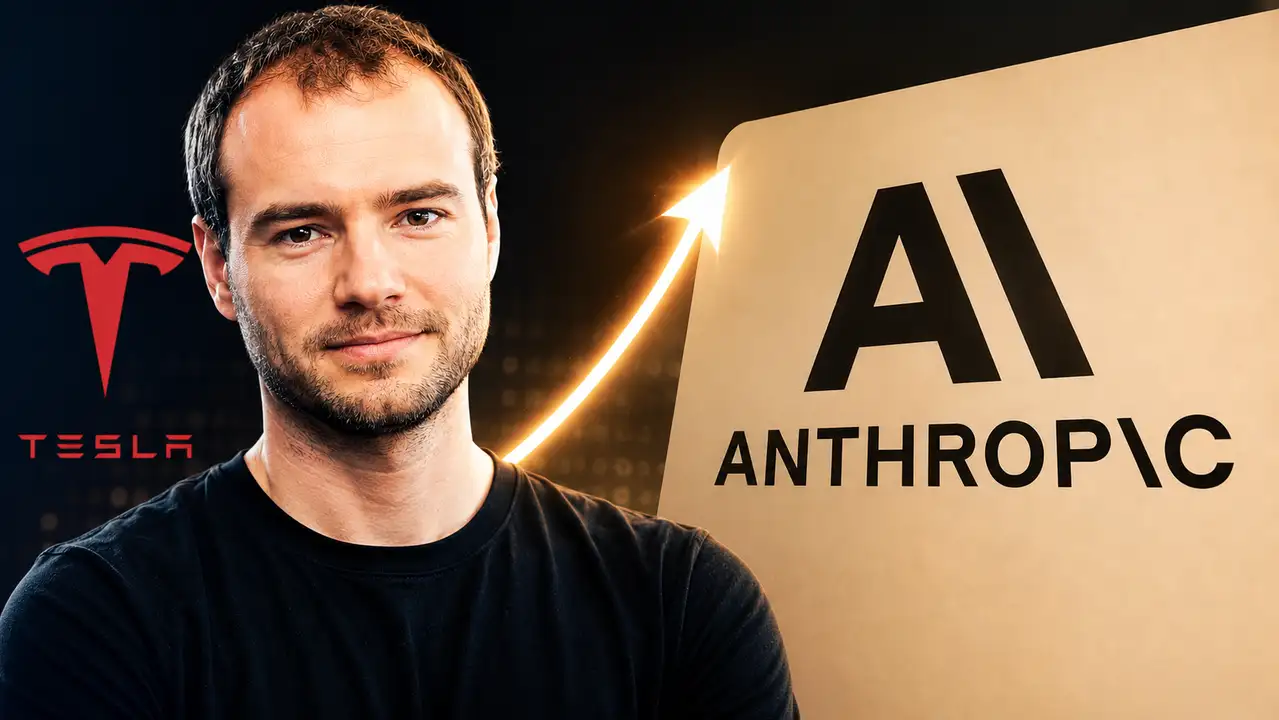
The high-stakes race to build the next generation of artificial intelligence just got another major shake-up. Andrej Karpathy, a prominent AI researcher who helped found OpenAI and previously led AI efforts at Tesla, has officially joined Anthropic, one of OpenAI's fiercest competitors. This move is a significant win for Anthropic and signals a strategic shift in how the leading AI labs are approaching the monumental task of training their most advanced models, potentially impacting the AI tools and services that regular people will interact with every day.
Here's what happened: Karpathy made the announcement himself on X on Tuesday, stating, "I've joined Anthropic. I think the next few years at the frontier of LLMs will be especially formative. I am very excited to join the team here and get back to R&D." This re-entry into a frontline AI lab marks a pivotal moment for a researcher known for his deep practical expertise in large language models.
Karpathy is diving straight into the core of Anthropic's operations, joining the pre-training team under lead Nick Joseph. Pre-training is the foundational, and often most expensive, stage of building an advanced AI model like Anthropic's Claude. It involves massive, compute-intensive training runs that instill the model with its core knowledge and capabilities. Think of it as the schooling phase where the AI learns the vast amount of information it needs to understand and generate human-like text.
An Anthropic spokesperson confirmed that Karpathy's immediate focus will be to build a team dedicated to using Claude itself to accelerate pre-training research. This is a crucial detail: rather than simply throwing more raw computing power at the problem, Anthropic is betting on "AI-assisted research" to stay competitive with giants like OpenAI and Google.
In a related development, Anthropic has also bolstered its defenses by bringing in Chris Rohlf to its frontier red team. Rohlf, a veteran in the cybersecurity industry with over two decades of experience, will stress-test Anthropic's advanced AI models against severe threats. He previously worked at Yahoo's esteemed cybersecurity team, "The Paranoids," and spent six years at Meta before joining Anthropic. Rohlf shared his enthusiasm on X, saying, "We have a real opportunity in front of us to dramatically improve cyber security with AI. I can't think of a better company or team to join at this critical moment in time."
Why This Matters So Much
Andrej Karpathy is one of those rare talents who can truly bridge the gap between the theoretical understanding of large language models and the practical, large-scale engineering required to train them. His career trajectory highlights this unique blend of skills. He was a co-founder of OpenAI, playing a foundational role in the company that kickstarted the current AI boom. He then spent time leading AI development at Tesla, specifically on its Full Self-Driving (FSD) and Autopilot programs, before returning to OpenAI for a year.
After his second stint at OpenAI, Karpathy ventured out to start Eureka Labs, a startup focused on applying AI assistants to education. While he has expressed deep passion for education, and plans to resume his work on it in time, his return to a frontier AI lab suggests a compelling opportunity for hands-on research and development. His online course, "Neural Networks: Zero to Hero," and YouTube lectures on LLMs and AI further cement his reputation as both an innovator and an educator in the field.
Anthropic's decision to bring Karpathy on board, particularly to accelerate pre-training research using AI itself, is a direct challenge to the conventional wisdom that pure compute power is the only path to advanced AI. Pre-training models like Claude can be extremely expensive due to the immense computational resources required. If Karpathy's team can significantly improve the efficiency of this process using AI-assisted methods, it could give Anthropic a crucial edge in the race to develop more powerful and capable AI models, potentially making AI development more accessible and less resource-intensive in the long run.
The Stakes and What Happens Next
The AI landscape is intensely competitive, with OpenAI, Anthropic, and Google constantly vying for talent and technological breakthroughs. Karpathy's arrival at Anthropic strengthens its research capabilities significantly, particularly in the foundational area of model training. His mandate to use Claude to accelerate pre-training research is a bold move, aiming to essentially have AI help build better AI faster. This could lead to more rapid development cycles for new AI models and features, ultimately bringing more advanced tools to market sooner for consumers and businesses.
Meanwhile, the addition of Chris Rohlf to the red team underscores the growing recognition that safety and security are paramount as AI models become more powerful. These frontier models, while incredibly capable, also present new risks, from generating harmful content to being exploited in cybersecurity attacks. Rohlf's expertise will be critical in proactively identifying and mitigating these threats, ensuring that advanced AI systems are robust and trustworthy before they are widely deployed. This focus on "red-teaming" is a crucial step in building responsible AI and maintaining public trust in these rapidly evolving technologies.
The convergence of top-tier talent like Karpathy and Rohlf joining Anthropic suggests a strategic, two-pronged approach: pushing the boundaries of AI capability while simultaneously strengthening its safety and security. For everyday users, this could translate into more sophisticated, yet more secure, AI assistants, content creation tools, and problem-solving applications. The coming years, as Karpathy noted, will indeed be formative for large language models, and these key hires signal Anthropic's aggressive intent to shape that future.
Frequently asked questions
Who is Andrej Karpathy joining at Anthropic?
Andrej Karpathy, a co-founder of OpenAI and former head of AI at Tesla, is joining Anthropic's pre-training team. His move is seen as a significant win for Anthropic in the competitive race to develop advanced artificial intelligence.
What is Anthropic known for?
Anthropic is known as a leading AI research company and a direct competitor to OpenAI, focusing on building reliable, interpretable, and steerable AI systems, including their Claude large language model.
What was Karpathy's role at OpenAI?
Andrej Karpathy was one of the founding members of OpenAI and played a crucial role in its early development, contributing significantly to its research and technical direction.
How does this move impact the AI industry?
Karpathy's move to Anthropic intensifies the competition among leading AI labs, potentially accelerating innovation and shifting the balance of talent and expertise in the high-stakes race for next-generation AI.
What is a 'pre-training team' in AI?
A pre-training team focuses on developing and optimizing the foundational models of AI, particularly large language models, by training them on vast datasets before fine-tuning for specific applications.
Why is Andrej Karpathy considered a prominent AI researcher?
Andrej Karpathy is highly regarded for his contributions to deep learning, his foundational work at OpenAI, and his leadership in AI at Tesla, making him an influential figure in the field of artificial intelligence.