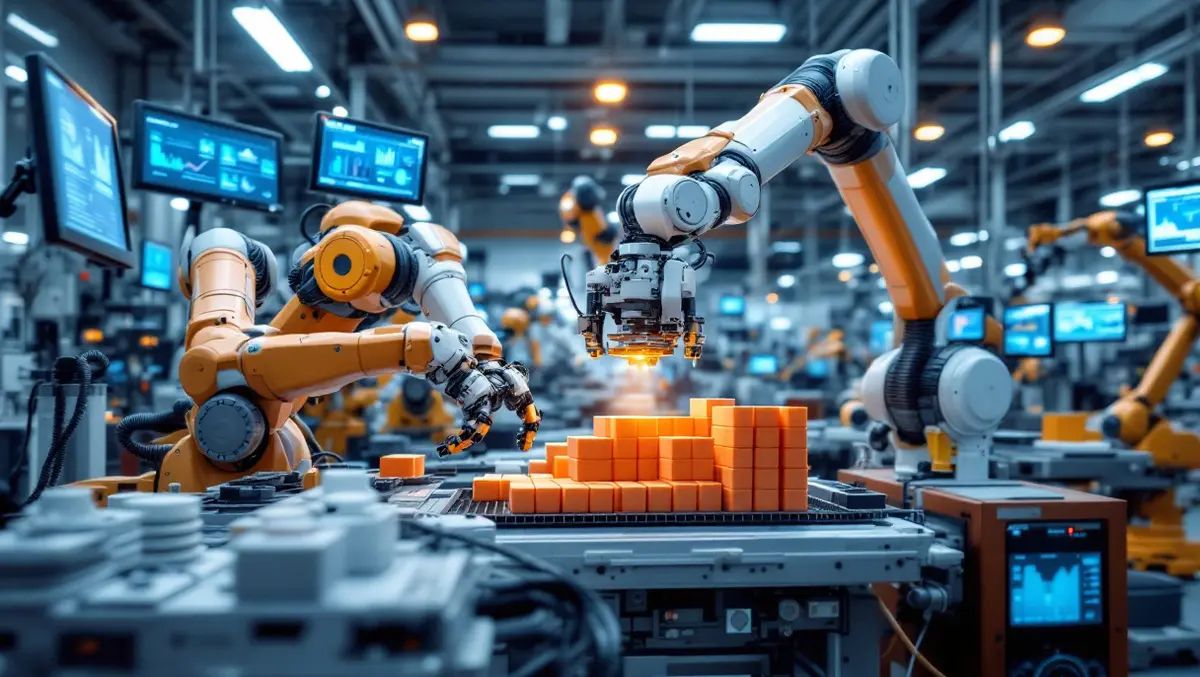
India’s manufacturing ecosystem has entered a transformative era where Industrial Artificial Intelligence (AI) has officially transitioned from isolated, experimental pilots into scaled, shopfloor-level deployment. A seminal research report released by deep-tech focused YourNest Venture Capital, in collaboration with management consulting firm Praxis Global Alliance, reveals that while 90% of Indian manufacturing enterprises are already actively experimenting with machine learning and AI, institutional capital investment is only beginning to match this enterprise enthusiasm.
The comprehensive joint report positions Industrial AI as one of the most under-penetrated yet high-potential investment opportunities within India’s expanding DeepTech ecosystem. Driven by structural shifts on the factory floor, total venture funding into the sector is projected to experience a massive ten-fold (10X) surge, escalating from a modest base to $1.5 billion by 2030.
The Industrial Productivity Stack: Driving Core Shopfloor Action
The rapid velocity of this transition across Indian factories is fueled by what the report labels the "Productivity Stack" effect. Rather than delivering superficial or discretionary upgrades, Industrial AI delivers highly quantifiable, bottom-line impact across the entire manufacturing value chain.
By integrating deeply with internet of things (IoT) sensors, edge computing devices, and legacy enterprise resource planning (ERP) systems, AI-led solutions are introducing a permanent structural uplift in raw asset utilization and regional cost competitiveness.
The measurable, real-world operational efficiencies highlighted on the Indian shopfloor include:
Intelligent Asset Optimization: Reductions of 30% to 50% in unplanned equipment downtime via predictive maintenance algorithms that anticipate mechanical anomalies before catastrophic failure occurs.
Enhanced Operational Efficiency: Decreases of 10% to 40% in core factory conversion costs, driven by automated resource scheduling, precise energy optimization, and real-time scrap reduction.
Uplift in Output Quality: Measurable yield improvements of 5% to 15% alongside systemic throughput increases of up to 30%, minimizing human error in strenuous inspection environments.
Capacity Creation Without Capex: A Macroeconomic Catalyst
Let's look at this through a broader macroeconomic lens titled the "Output Uplift." The core premise is that Industrial AI acts as an artificial capacity creator for regional production networks.
By strategically squeezing maximum efficiency from existing hardware, machinery, and production lines, Industrial AI is projected to unlock an incremental $150 billion in manufacturing output for India by 2030.
Crucially, this multi-billion-dollar capacity expansion can be achieved without requiring proportional physical real estate expansion, heavy greenfield capital expenditure (capex), or long-gestation factory construction. This software-driven capacity creation positions advanced digital technologies as a critical pillar for India’s self-reliance (Atmanirbhar Bharat) campaigns and strengthens its position as a resilient alternative hub in global supply chains.
The Investor Perspective: High ROCE and Deal Size Acceleration
While total venture capital funding directed toward Indian Industrial AI sat at a conservative $150 million in 2024, institutional capital commitment is intensifying rapidly. Highlighting this shift toward high-conviction, scale-oriented growth, the report notes that average deal sizes in the sector increased nearly fourfold to approximately $8 million between 2021 and 2025.
Industrial AI stands out as an exceptionally high Return on Capital Employed (ROCE) lever for the industrial sector. Boasting payback cycles as short as 12 to 18 months, the financial case for enterprise-wide implementation has become highly compelling for manufacturing Chief Financial Officers (CFOs) and venture capital firms alike.
"In India, enterprise adoption of industrial AI has significantly outpaced capital deployment at this pivotal moment. The end-customer is sending out a clear signal that is being picked up by agile startups who are developing powerful products to make shopfloors more efficient and profitable." — Sunil K Goyal, Managing Director & Fund Manager, YourNest Venture Capital
Goyal added, "We ourselves are seeing increased traction with our early bets in Industrial AI where quantifiable ROI is lowering downtime, increasing throughput, and optimizing costs. In spite of this, financing is still disproportionately low given the magnitude of the potential. This gap makes it highly attractive for far-sighted investors to get involved now in creating IP-led, high-impact DeepTech businesses."
Building Structural Defensibility via DeepTech Integration
Unlike generic Software-as-a-Service (SaaS) applications or customer-relationship management tools, Industrial AI solutions enjoy unique, built-in corporate defensibility.
High Entry Barriers: Because these algorithms must be deeply embedded into complex, physical manufacturing workflows, heavy machinery, and proprietary industrial protocols, they cannot be easily displaced or replicated.
Contextual Data Moats: AI models train on hyper-specific machine data generated over years of operation, creating data moats that make the software highly sticky for the enterprise.
Overcoming System Friction: While foundational challenges such as integrating with decades-old legacy machines and varying levels of data readiness persist, Indian manufacturers are aggressively resolving these roadblocks as part of their larger, post-pandemic digital transformation strategies.
Summing up the ground reality of the sector during the official launch, Ram Soni, Partner, NextGen Industrials at Praxis Global Alliance, emphasized the long-term stakes for the country:
"India’s manufacturing sector is entering a decisive decade. The factories that win will be those that move entirely beyond initial pilots, embedding AI as a shopfloor-first capability with clear, measurable impact on Overall Equipment Effectiveness (OEE), downtime, yield, and energy. This report captures the ground truth of where that transformation stands today: what is working, what is not, and what manufacturers, founders, and investors must do next to unlock the full potential of intelligent manufacturing in India."
Conclusion: Driving the Next Phase of Global Competitiveness
The combined findings from YourNest and Praxis Global Alliance clarify that India's Industrial AI sector has officially reached a commercial tipping point. As domestic enterprises deeply embed algorithmic intelligence into their primary operations and institutional investors act to bridge the remaining structural funding gap, Industrial AI will play a central role in redefining the scale, efficiency, and global competitiveness of Indian manufacturing.