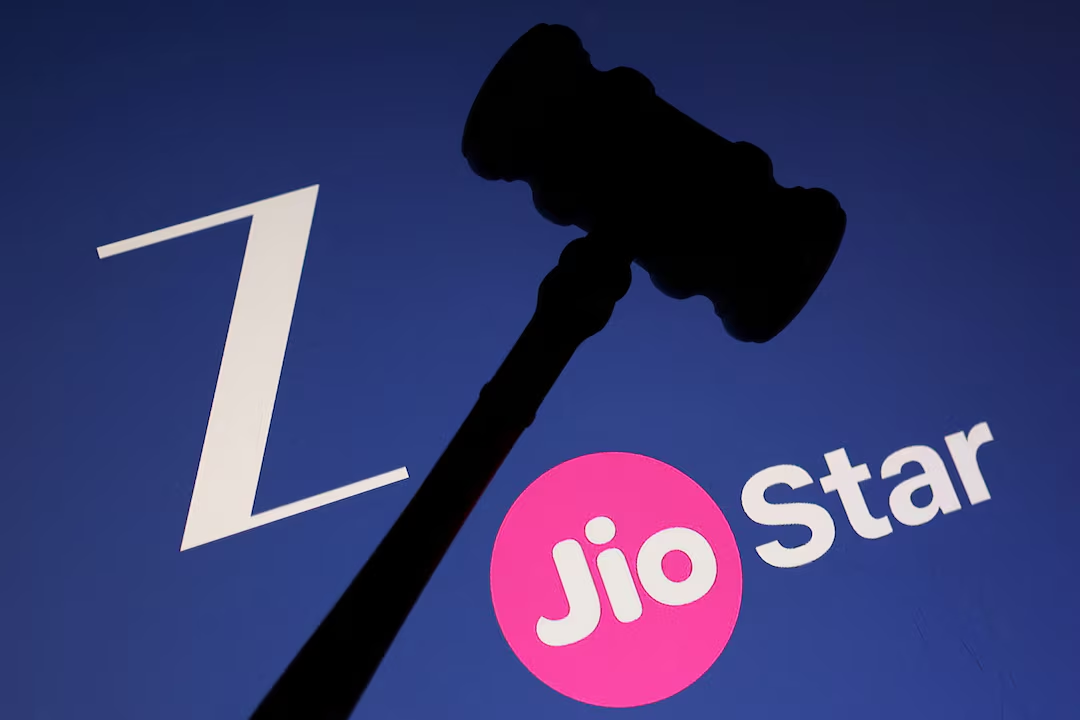
Indian media giants Zee and Reliance-Disney face off in court over alleged music rights infringement, signaling friction in industry consolidation.
In the high-stakes arena of India's media and entertainment industry, where consolidation often promises seamless dominance, a curious paradox frequently emerges. The very ambition to forge an unassailable behemoth can inadvertently trigger a cascade of unforeseen friction points, revealing cracks in even the most meticulously planned strategies. As two global giants, Reliance Industries and The Walt Disney Company, move to formalize their colossal joint venture in India, a seemingly minor legal skirmish has ignited, threatening to complicate a transaction valued at approximately $8.5 billion and poised to reshape the subcontinent's digital and broadcast landscape.
The proposed merger, set to combine Reliance's JioCinema streaming service and media assets with Disney's Star India operations, envisions a formidable entity capable of reaching over 750 million viewers across more than 100 TV channels and two dominant streaming platforms. This alliance is designed to create an undisputed market leader, leveraging Reliance's deep pockets and distribution prowess with Disney's rich content library and established brand equity. Yet, even before the ink fully dries on regulatory approvals, the very forces it seeks to overcome the fragmented, competitive Indian market are manifesting in an unexpected legal challenge.
The Contender: Zee's Persistent Pursuit
The instigator of this fresh legal turbulence is Zee Media Corporation Limited, a subsidiary of Zee Entertainment Enterprises Limited (ZEEL). Zee, a name synonymous with Indian broadcasting for over three decades, finds itself in a precarious position. Following its own tumultuous journey, including a high-profile failed merger with Sony's India operations and ongoing battles over corporate governance and debt, Zee is fighting to retain its relevance in an increasingly consolidated market. Once a pioneer, it now navigates a landscape where its former rivals are forging alliances of unprecedented scale.
Zee's legal action against the Reliance-Disney combined entity, particularly targeting its sports broadcasting arm, alleges a breach of music copyright. The specific claim centers on the unauthorized use of musical works owned by Zee Media during broadcasts of sporting events, notably cricket matches, which are a cornerstone of Indian entertainment and advertising revenue. This is not merely a technicality; in the content economy, intellectual property is the fundamental currency, and its alleged misappropriation, however small the initial claim, can carry significant strategic weight.
The core of the dispute revolves around music synchronization and public performance rights. Broadcasters often license music libraries for background scores, montages, and promotional content. If Zee Media holds the exclusive rights to certain musical compositions or sound recordings that were used in broadcasts by Star India (now part of the Reliance-Disney JV) without proper licensing, it constitutes a direct violation. The legal remedy sought includes an injunction to prevent further use and significant financial damages, reflecting the commercial value attached to such rights.
The Copyright Conundrum in India's Media Landscape
India's copyright framework, primarily governed by the Copyright Act, 1957, with significant amendments in 2012, aims to protect original literary, dramatic, musical, and artistic works. However, enforcement and interpretation, especially in the dynamic digital and broadcasting spheres, remain complex. The sheer volume of content, diverse regional audiences, and the rapid evolution of distribution platforms present continuous challenges.
The role of collecting societies like the Indian Performing Right Society (IPRS) for musical and literary works, and Phonographic Performance Limited (PPL) for sound recordings, is crucial in managing these rights. Broadcasters and digital platforms typically obtain blanket licenses from these bodies or directly from rights holders. A lapse in this intricate licensing chain can lead to disputes like the one Zee has initiated. While the immediate focus is on music, such disputes often highlight broader issues in content rights management.
"This isn't just about a few songs; it's a strategic move in a larger chess game. For a consolidated entity like the Reliance-Disney JV, ensuring bulletproof content licensing is paramount. Any chink in that armor, particularly concerning intellectual property, can be exploited. For Zee, it's an opportunity to assert its position, even if it's a nuisance claim, or genuinely protect its assets at a critical juncture for its competitor. It underscores the immense value of every piece of IP in the digital age, and how even seemingly minor rights can become leverage points in billion-dollar deals."
Dr. Kavita Sharma, Media Law Analyst and IP Strategist
The Indian media market has witnessed numerous copyright battles, from major music labels suing streaming platforms for unpaid royalties to production houses clashing over film and TV show rights. These cases often underscore the fragmented nature of content ownership and the challenge of managing vast libraries of intellectual property, especially when mergers and acquisitions transfer control of these assets. For the Reliance-Disney JV, inheriting Star India's extensive content library also means inheriting its rights portfolio, and any pre-existing liabilities within it.
Strategic Intent: Beyond the Music
While the lawsuit's stated objective is to protect Zee Media's music copyrights and seek damages, its timing and context suggest a deeper strategic calculus. Zee Entertainment has been through a turbulent period, missing its merger deadline with Sony, resulting in a public fallout. Its market capitalization has faced pressure, and its future independence in a consolidating market remains a concern. Against this backdrop, launching a legal challenge against the nascent Reliance-Disney behemoth could serve multiple purposes.
Firstly, it could be a genuine attempt by Zee to protect valuable intellectual property. Even if the alleged infringement is minor, the principle holds significant weight. Allowing unchecked use of copyrighted material sets a dangerous precedent and erodes the value of one's own content library. For a content-centric company like Zee, safeguarding IP is fundamental to its long-term survival and valuation.
Secondly, it could be a tactical maneuver to slow down or complicate the Reliance-Disney integration. A legal challenge, however small, can be a distraction, consume management resources, and potentially introduce delays in regulatory approvals or operational synergy. In the competitive Indian market, where first-mover advantage and seamless integration are critical, any impediment can be costly.
Thirdly, the lawsuit could be a form of strategic signaling. It communicates to the market, and specifically to the new mega-entity, that Zee remains a relevant player capable of asserting its rights. It also reminds the industry that despite the scale of the new venture, it will not be immune to legal scrutiny or challenges from existing players.
Implications for Founders and Operators
For founders and operators in the media, tech, and content sectors, this dispute offers several critical lessons. Firstly, due diligence in mergers and acquisitions, particularly concerning intellectual property, must be exhaustive. The seamless transfer and verification of all content rights, from film libraries to music catalogs, are non-negotiable. Any overlooked licensing agreement or potential infringement liability can surface post-merger, leading to costly legal battles and reputational damage.
Secondly, the value of intellectual property, even granular elements like specific music rights, is increasingly being recognized and aggressively protected. In a content-driven economy, every piece of original work holds potential commercial value, and rights holders are becoming more assertive in demanding fair compensation and adherence to licensing terms. Ignoring these nuances can expose businesses to significant legal and financial risks.
Finally, the competitive landscape in India remains fiercely contested. Even as large-scale consolidation reshapes market dynamics, incumbent players will seek avenues to assert their presence and protect their interests. Legal challenges can become a tool in this strategic arsenal, forcing larger entities to allocate resources to defense rather than pure growth. This ongoing tension between consolidation and fragmentation through legal action will likely define the next phase of India's digital economy.
The outcome of Zee Media's suit against the Reliance-Disney joint venture is yet to be determined. It could lead to a swift settlement, a protracted legal battle, or even an injunction impacting content delivery. Whatever the immediate resolution, the incident serves as a stark reminder that in the race for market dominance, legal skirmishes over intellectual property are not merely technicalities, but strategic battlegrounds that can significantly impact valuations, timelines, and the broader competitive fabric of the industry.
Key Takeaways
IP Due Diligence is Paramount: The lawsuit highlights the critical importance of meticulous intellectual property due diligence in large-scale mergers, as inherited liabilities can trigger significant legal and financial complications.
Content Rights as Strategic Levers: Even seemingly minor content rights, such as music synchronization, can become powerful strategic tools for market players seeking to assert their position or create leverage against larger competitors.
Complexities of India's IP Enforcement: The case underscores the ongoing challenges and nuances of intellectual property enforcement in India's dynamic and diverse media landscape, particularly concerning digital and broadcast rights.
Consolidation Breeds Friction: While large mergers aim for market dominance, they often generate friction with existing players, who may use legal channels to protect their interests and disrupt the integration process.
Operational and Reputational Risks: Beyond direct financial damages, such lawsuits can introduce operational delays, consume management attention, and carry reputational risks for major entities in the public eye.
Frequently asked questions
What is the lawsuit between Zee and Reliance-Disney about?
Zee has filed a lawsuit against the newly merged Reliance-Disney entity, alleging a breach of music copyright. The legal action centers on the use and rights of musical content in India's entertainment sector.
Which companies are involved in the copyright dispute?
The primary companies involved are Zee Entertainment Enterprises and the merged entity of Reliance Industries and Disney's India operations.
What industry does this lawsuit impact?
This lawsuit significantly impacts the Indian media and entertainment industry, particularly concerning music rights, content licensing, and consolidation strategies.
Why is this lawsuit considered high-stakes?
It's high-stakes because it involves two of India's largest media conglomerates and could set precedents for intellectual property rights and content acquisition in a rapidly consolidating market.
Is this related to the Reliance-Disney merger?
Yes, the lawsuit targets the Reliance-Disney merged entity, suggesting that the alleged copyright breach is either a consequence or a point of contention arising from the consolidation.
Where is this legal dispute taking place?
The legal dispute is unfolding within the Indian judicial system, specifically in the context of India's media and entertainment industry.