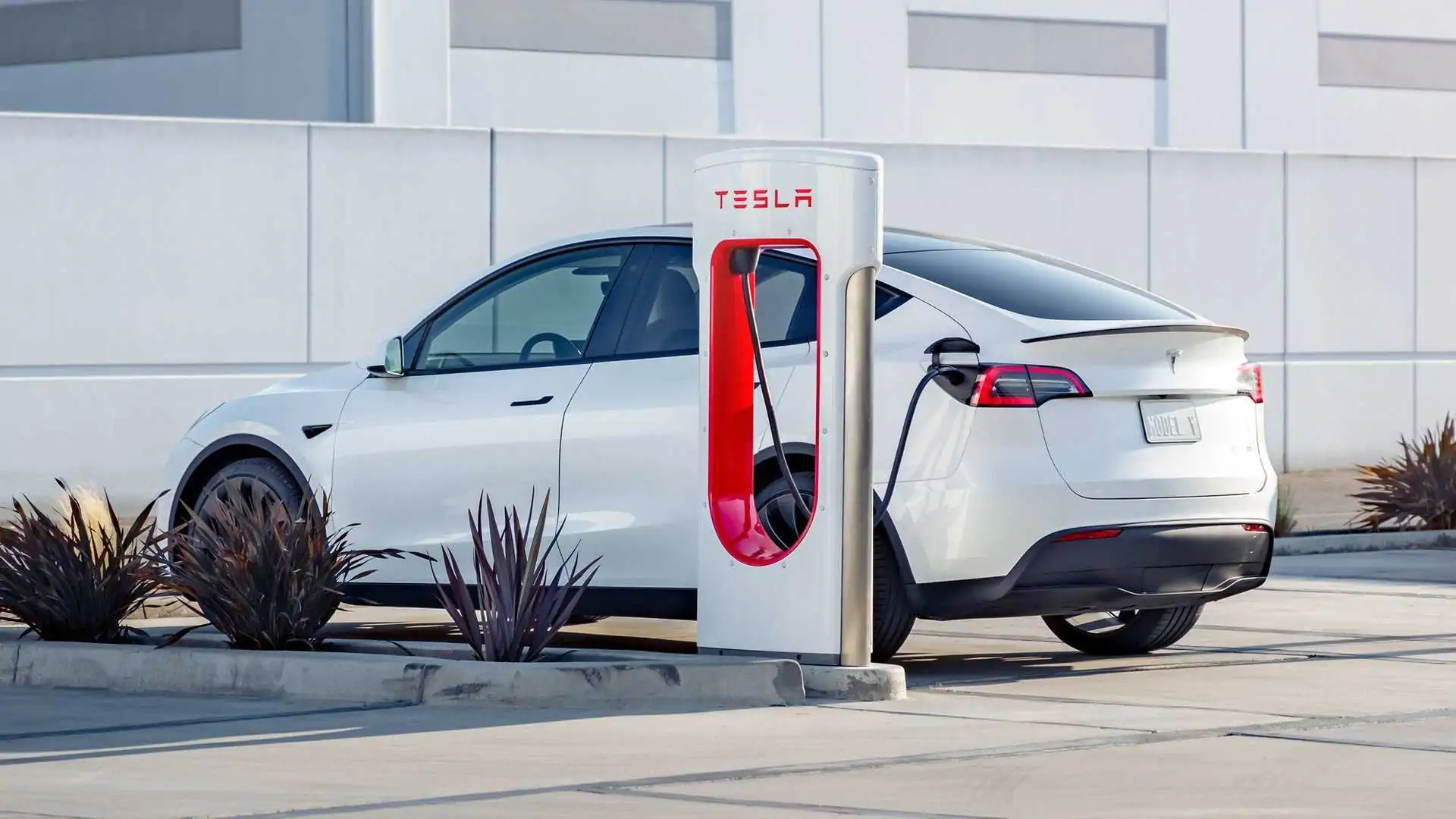
When South Korea online sales hit a record 730 billion won in July 2025, the headline was technically about e-commerce. But the real story was sitting in a showroom that doesn't exist.
As Tesla started taking orders for its 2025 Model S and Model X in June, Korea's online car purchases surged 55% year-on-year to 730 billion won — the largest single-month increase in online automotive spending since October 2023. Statistics Korea, which tracks these numbers monthly, put it plainly: "Tesla's new model launches seem to have lifted the overall gross online shopping." That's a remarkable sentence when you unpack it. One company's product drop, in one category, moved a country's entire e-commerce index. KED GlobalKED Global
And this wasn't a fluke. It's the predictable output of a model Tesla's been quietly running in Korea for eight years.
The direct-to-consumer bet that paid off — twice
Online orders have been the dominant channel for Tesla in South Korea since the company introduced internet sales in 2017. That was years before most automakers had figured out how to sell floor mats online without a dealership getting nervous. Tesla came in without legacy infrastructure, didn't negotiate with Korean dealership networks, and built its entire customer acquisition flow through a browser. KED Global
That choice, which looked eccentric in 2017, now looks prescient. In Q1 2026, Tesla sold 20,964 vehicles in South Korea — a 335% jump from the same period a year earlier — capturing a 25.53% market share to rank first among imported car brands for the first time in the company's history in the country. BMW came in second. Mercedes-Benz was third. Both brands that have physical dealer networks, financing desks, and decades of brand cultivation in a market that's historically loved German luxury. Seoul Economic Daily
Tesla beat them using a website.
March 2026 was particularly striking: Tesla's 11,130 units in a single month made it the first imported brand in South Korean history to cross the 10,000-unit monthly threshold. BASENOR
What actually drove the surge — it wasn't just the cars
The easy read here is "Koreans love Tesla." The more accurate read is: the South Korean government made Tesla structurally cheaper than its competitors, and Tesla engineered its pricing to exploit that precisely.
South Korea raised its maximum EV purchase subsidy to 6.8 million won ($4,700) for 2026, up from 5.8 million won the previous year, while the national subsidy budget increased 20% to 936 billion won ($658 million). The price cap for full subsidy eligibility sat at 53 million won — and Tesla's Model Y, starting at 49,990,000 won, came in just under it. That's not a coincidence. That's deliberate pricing architecture. Electric Vehicles
The South Korean government also confirmed EV purchase subsidies in January 2026 — earlier than the typical schedule. That early clarity eliminated buyer hesitation that usually suppresses Q1 EV sales while consumers wait to see if subsidies will be renewed. Tesla, with inventory ready and prices already optimized for subsidy eligibility, was perfectly positioned to capture that pent-up demand. BASENOR
"Tesla's ability to align its pricing with the Korean government's subsidy thresholds is a masterclass in market intelligence. It's not just product — it's policy literacy operating at scale." — Automotive industry analyst, speaking to regional press in Seoul, Q1 2026
The global context: South Korea as an EV bellwether
South Korea is Tesla's third-largest market globally, trailing only the United States and China. That's not a minor footnote — it positions a 51-million-person peninsula between two of the world's dominant EV markets, and suggests Korea is punching well above its weight. Why? Drive Tesla
Part of the answer is infrastructure. South Korea's broadband penetration and smartphone-first consumer behavior make it a natural environment for direct-to-consumer models. User penetration in South Korean e-commerce will reach 84.3% in 2025 and is expected to hit 96.1% by 2030 — numbers that make most Western markets look digitally underdeveloped. When Elon Musk replied to a post on X noting that South Koreans are enthusiastic adopters of Tesla's Full Self-Driving software, he said: "Koreans are often a step ahead in appreciating new technology." That's flattery, but it's not wrong. StatistaTESLARATI
The other part of the answer is market structure. Imported EVs gained a market share of 42.8% in South Korea in 2025, while the share of domestically produced EVs declined from 75% in 2022 to 57.2%. Hyundai and Kia still lead overall unit volumes, but their imported-brand dominance at home is eroding — fast. Sales of China's BYD and Sweden's Polestar also saw explosive growth, with BYD up roughly 400-fold in Q1 2026. The market isn't just becoming EV-first. It's becoming globally contested territory in a way it simply wasn't five years ago. TESLARATISeoul Economic Daily
The contrarian case: Tesla's Korea momentum has a ceiling
Here's what the good-news framing misses. The subsidy structure that's turbocharged Tesla's Korea numbers is, by design, temporary and politically negotiable. The price cap for subsidy eligibility remains at 53 million won in 2026 but will drop to 50 million won in 2027. Tesla's Model Y, currently priced just under the threshold, will either need another price cut — compressing already thin margins — or lose the subsidy advantage that's been central to its Korean story. Electric Vehicles
Meanwhile, BYD's expansion in Asia is moving fast. Chinese EV makers don't have Tesla's brand premium in Korea, but they have something arguably more valuable in a subsidy-sensitive market: cost structure. If BYD engineering its pricing to fall below Korean subsidy thresholds with the same precision Tesla has shown, the competitive calculus shifts.
And then there's the domestic brands question. Hyundai's IONIQ lineup and Kia's EV series haven't sat still. Korean consumers don't have strong loyalty to foreign brands the way some other markets do — they have loyalty to value. When that value equation shifts, so do the numbers.
What this means for founders and operators
The July 2025 e-commerce record is a useful case study for anyone building a direct-to-consumer model in Asia-Pacific. Three things stand out.
Government subsidy alignment is a product decision. Tesla treats regulatory pricing structures the same way a SaaS company treats payment tiers — it engineers its product to land exactly where the incentive is. Founders expanding into Korea, Japan, or Southeast Asian markets with subsidy programs should be doing the same analysis.
Online-only distribution isn't the future everywhere, but it's the present in Korea. South Korea's e-commerce market generated revenue of $112 billion in 2025, and projections for 2026 indicate a 5–10% growth rate — in a market already mature enough that mobile commerce will represent 77% of online spending by 2026. The infrastructure for direct-to-consumer is built. The question is whether you use it. Ecdb
One product launch can move macroeconomic indices. When a single company's model release causes Statistics Korea to flag it as a national e-commerce driver, that's not a marketing win — it's a market concentration story. For investors and operators thinking about Korea's digital commerce future, understanding the Tesla variable is now basically table stakes.
What to watch
Whether Tesla prices the incoming Model Y L — expected to launch in South Korea following its China debut — within the 2027 subsidy cap of 50 million won, and how that affects Q1 2027 sales data
BYD's pricing strategy in Korea as it scales from near-zero to serious volume; if it cracks the subsidy threshold reliably, the competitive pressure on Tesla's Korea margins becomes significant
South Korea's broader EV infrastructure rollout: the country aims to have 70% of vehicles on the road be zero-emission by 2035, and how aggressively it funds charging infrastructure will determine how fast that ceiling rises Electric Vehicles
The July 2025 online shopping record will look, in hindsight, like a leading indicator — not of Korean consumer enthusiasm for EVs specifically, but of how completely a single well-positioned brand can reshape a country's digital commerce metrics when it gets the product, price, and policy variables aligned at the same time. Tesla did that. The question for everyone else is whether it's replicable, or whether it only works if you're Tesla.