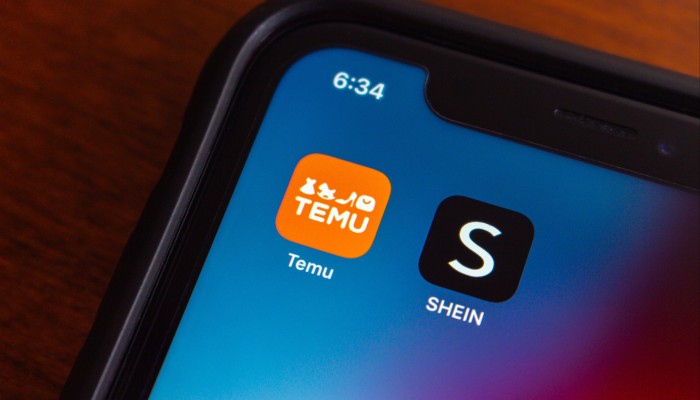
While Berlin’s politicians were busy debating the nuances of the energy transition, the "factory-to-consumer" (F2C) model was quietly dismantling the German middle market. New data from IW Consult, commissioned by the German Retail Federation (HDE), reveals the butcher’s bill: Temu and Shein are costing Germany 2.4 billion euros in lost added value annually.
This isn't just a story about cheap clothes. It is a systemic leak. That €2.4 billion figure represents a direct transfer of economic vitality from German high streets and tax coffers into the balance sheets of PDD Holdings and Shein’s mysterious offshore entities. When you factor in the ripple effect, the HDE warns that 40,000 German jobs have already evaporated into the digital ether.
The "De Minimis" Loophole: A Tax-Free Invasion
The primary weapon of choice for Temu and Shein has long been the de minimis threshold—a customs loophole that allows parcels valued under €150 to enter the EU duty-free. It was designed for occasional gifts; it is currently being used to subsidize a retail invasion.
By bypassing traditional import structures, these platforms operate in a regulatory "no-man's land." While a local boutique in Munich must comply with the German Supply Chain Act (LkSG) and pay for GDPR-compliant data handling, the F2C giants simply fly over the red tape.
"We are witnessing a massive regulatory failure. It is not that German retailers can't compete on merit; it's that they are playing a professional match against an opponent that is allowed to ignore the offside rule. If policymakers do not finally take decisive and tangible action, I see a bleak future for Germany as a business location."
— Alexander von Preen, President of the HDE
The German government, finally feeling the sting of €420 million in lost annual tax revenue, has begun to swing back. As of July 1, 2026, the EU is set to introduce a temporary €3 customs duty on all low-value parcels, effectively killing the "free ride" for sub-€150 shipments. But is it enough to stop a company like PDD Holdings, which reported a staggering $54 billion in revenue for fiscal 2024?
Key Takeaways for Founders and Operators
Logistics is the New Product: The dominance of Temu and Shein isn't built on fashion sense; it's built on a "chartered-air" logistics stack that bypasses traditional warehousing.
Regulatory Arbitrage is Ending: The EU’s raid on Temu’s Dublin headquarters in early 2026 signaled a shift from "observation" to "enforcement." Operators should expect mandatory product safety audits for all cross-border arrivals.
The "Local" Pivot: Traditional retailers like Zalando and H&M are fighting back by leaning into circular economy initiatives and European logistics speed, which F2C models can't match without local warehouses.
The Job Toll: The retail sector alone accounts for 28,300 of the 40,000 jobs lost. Founders in the HR-tech and reskilling space should look at the German retail workforce as a critical area for transition support.
Global Market Dynamics: The London IPO and the Trump Factor
The friction isn't limited to the Rhine. Shein—which recently moved its headquarters to Singapore—spent much of 2025 in a high-stakes game of "IPO Whac-A-Mole." After failing to secure a listing in New York due to U.S. Congressional scrutiny over labor practices, the company’s London Stock Exchange debut remains stalled as of May 2026.
Meanwhile, across the Atlantic, the return of "America First" trade policies has seen the U.S. effectively end the de minimis exemption for Chinese-origin packages. This has forced Temu to pivot, aggressively targeting the German and UK markets to offload inventory that is no longer profitable in the States.
The Perspective Piece: The Mirage of the "Cheap" Purchase
For the German consumer, a €5 shirt on Temu feels like a win. But in the analytical cold light of day, it's a subprime loan taken out against their own economy. When the local department store closes, the property taxes that fund the local "Kita" (kindergarten) disappear. When 40,000 jobs go, the social safety net strains. We are subsidizing the destruction of our own commercial infrastructure for the sake of disposable electronics.
Berlin’s Counter-Strike: Too Little, Too Late?
The German Economic Institute (IW) highlights a sobering reality: 51% of Temu and Shein users surveyed said they would have bought the same products from local German retailers if the Chinese platforms didn't exist. This isn't "new" demand; it's cannibalization.
To combat this, the German Customs Authority has ramped up inspections, mirroring a French initiative that found up to 75% of imported ultra-fast fashion failed to meet EU chemical and safety standards.
But the F2C giants are nothing if not agile. Temu is already shifting toward a "Local-to-Local" model, recruiting European sellers and setting up regional hubs to circumvent the new 2026 duties. They are no longer just guests in the German market; they are moving into the house and changing the locks.
The Temu and Shein phenomenon has proven that in the modern economy, friction is the only true barrier to entry. For years, Germany relied on the friction of geography and regulation to protect its retail sector. That wall has crumbled.
As we look toward the second half of 2026, the question for German founders isn't how to beat these giants on price—that’s a losing game. The question is how to rebuild a retail value proposition that isn't just about the "stuff," but about the speed, sustainability, and social contract that a parcel from Guangzhou can never deliver. If the 2.4-billion-euro leak isn't plugged soon, the "bleak future" the HDE fears won't be a prediction—it will be the status quo.