Chinese EV manufacturers are rapidly expanding into international markets. Discover which electric vehicles are poised to enter Canada next.
The global automotive industry is witnessing a significant strategic pivot, as Chinese electric vehicle (EV) manufacturers increasingly target international markets. Following substantial penetration into Europe, Southeast Asia, and Latin America, the focus is now turning to North America, with Canada emerging as a primary entry point. This move is driven by a confluence of Canada's ambitious EV adoption targets, a less prohibitive tariff landscape compared to the United States, and the established demand for cost-effective, technologically advanced vehicles.
Chinese automakers have cultivated a formidable domestic industry, characterized by intense competition, rapid innovation, and economies of scale. This has resulted in a portfolio of EVs that often boast competitive pricing, advanced battery technology, and sophisticated in-car software. As the domestic market matures, companies like BYD, SAIC (MG), Geely (through various brands), Nio, and Xpeng are seeking new avenues for growth and brand recognition abroad.
The Canadian Market: An Open Door?
Canada presents a unique opportunity for these manufacturers. The federal government has mandated that all new light-duty vehicles sold in the country must be zero-emission by 2035, with interim targets of 20% by 2026 and 60% by 2030. This regulatory push, combined with provincial incentives in jurisdictions like British Columbia and Quebec, has created a fertile ground for EV adoption. In 2023, ZEVs accounted for 10.8% of new light-duty vehicle registrations in Canada, signaling a clear upward trend.
Crucially, Canada's tariff structure offers a more welcoming environment than its southern neighbor. While the United States recently increased tariffs on Chinese-made EVs to 100%, Canada maintains Most Favoured Nation (MFN) tariffs, typically around 6.1% for imported vehicles. This significant difference positions Canada as a strategic beachhead for Chinese brands looking to establish a North American presence, potentially circumventing or at least mitigating the more aggressive protectionist measures enacted by the U.S.
Recent reports indicate active reconnaissance by several Chinese automakers. Delegations have visited Canada, exploring distribution networks, engaging with potential dealers, and conducting market research on consumer preferences and regulatory compliance. These are not merely speculative inquiries but calculated preliminary steps towards market entry.
Likely Contenders and Their Flagship Models
Several key players from China's EV ecosystem are poised to make their mark in Canada. Their strategies often involve leveraging existing global successes and adapting models for North American specifications.
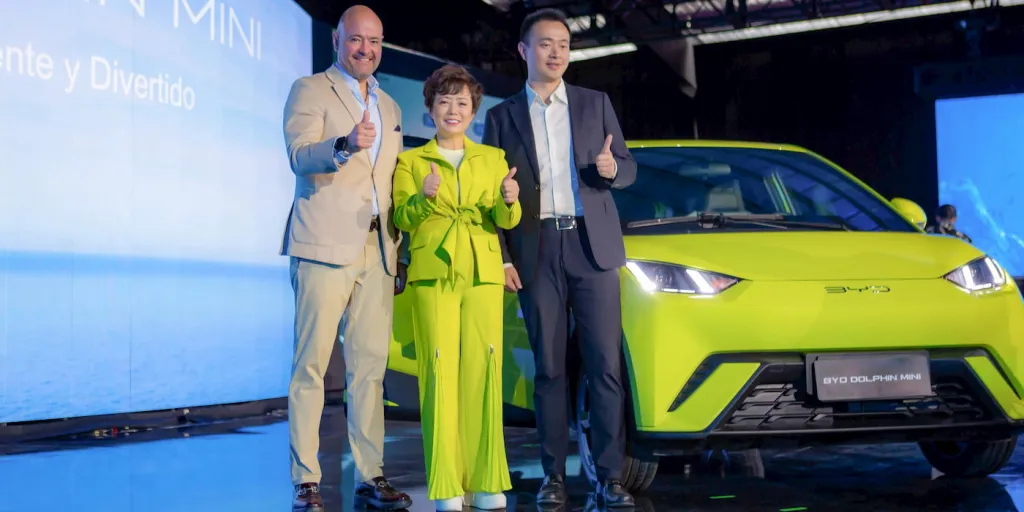
BYD (Build Your Dreams): The global EV sales leader in Q4 2023, BYD has a robust lineup and aggressive international expansion plans. Models like the Atto 3 (known as Yuan Plus in China), a compact SUV, and the Dolphin hatchback have seen strong sales in Europe and Asia. The Seal sedan, a direct competitor to Tesla’s Model 3, offers compelling performance and range. BYD’s vertical integration, including battery production (Blade Battery technology), gives it a significant cost advantage.
SAIC (Shanghai Automotive Industry Corporation): Operating internationally under the MG brand, SAIC has already established a significant presence in Europe and Australia. The MG4 EV, a well-regarded compact hatchback, and the MG ZS EV, a popular compact SUV, are strong candidates. These models are known for their value proposition and modern design, appealing to a broad segment of EV buyers.
Nio: Positioned as a premium brand, Nio emphasizes service and technology, including its pioneering battery swap stations. Models such as the ET5 sedan and the EL6 (ES6 in China) SUV offer luxurious interiors, advanced driver-assistance systems, and competitive range. Nio's challenge will be to replicate its unique service model, which includes a comprehensive "power experience" with home charging, public charging, and battery swap options, in the Canadian context.
Xpeng: Another technology-focused OEM, Xpeng is known for its advanced autonomous driving capabilities and sleek designs. The Xpeng G9 SUV, a large and feature-rich electric SUV, and the P7 sedan, a stylish sports sedan, could find an audience in Canada among those seeking cutting-edge tech and performance. Xpeng has already begun deliveries in several European countries.
Chery: One of China's largest state-owned automakers, Chery is aiming for international expansion with its Omoda and Jaecoo sub-brands, which focus on modern and adventurous designs. The Omoda E5 and Jaecoo J7 EV are potential models that could enter the Canadian market, offering competitive pricing and contemporary styling.
Economic and Geopolitical Implications
The entry of Chinese EVs into Canada carries multifaceted implications for various stakeholders. For Canadian consumers, it promises increased competition, potentially leading to lower prices, a broader selection of models, and accelerated EV adoption. This could be particularly impactful in the more affordable segments, where options are currently limited.
From an economic standpoint, direct investment by Chinese automakers in Canadian manufacturing, research and development, or even simply establishing extensive sales and service networks, could create jobs and stimulate local economies. This potential for investment, however, must be weighed against concerns about intellectual property transfer and domestic industry competitiveness.
Geopolitically, Canada's open stance towards Chinese EV imports could create friction with the United States. The Biden administration has expressed concerns about China's manufacturing overcapacity and the potential for unfair trade practices. Should Chinese EVs gain significant traction in Canada, Washington may exert pressure on Ottawa to align its trade policies more closely with U.S. protectionist measures, particularly given the integrated nature of the North American automotive supply chain under USMCA.
The provenance of critical minerals and components, especially batteries, will also be a key consideration. As Canada aims to build out its own EV supply chain, the relationship with major Chinese battery producers and raw material suppliers will be complex, balancing the need for secure supply with national security and economic independence objectives.
Challenges and the Road Ahead
Despite the apparent advantages, Chinese automakers face significant hurdles in the Canadian market. Brand perception and consumer trust remain paramount. Established brands from North America, Europe, Japan, and Korea have decades of presence and proven reliability. Chinese brands will need to invest heavily in marketing, customer service, and robust warranty programs to build confidence.
Building out a comprehensive charging infrastructure and a reliable service network across Canada's vast geography will be another substantial undertaking. Consumers expect readily available charging options and accessible maintenance for their vehicles, requirements that necessitate significant upfront investment and strategic partnerships.
Regulatory landscapes could also shift. While Canada currently offers a more open market, public and political sentiment could evolve. Concerns around data privacy, cybersecurity, and national security could lead to new regulations or tariff adjustments, mirroring moves seen in other sectors. The U.S. pressure on Canada regarding trade with China is a constant background hum.
Competition from established OEMs will be fierce. Ford, GM, Stellantis, Hyundai, Kia, and Volkswagen are all expanding their EV portfolios with models designed for the North American market, often leveraging local manufacturing. Chinese brands will need to differentiate not just on price, but also on technology, design, and user experience to carve out market share.
The models likely to succeed first will be those offering compelling value in high-volume segments: compact SUVs, sedans, and potentially hatchbacks. These vehicles align with Canada's urban demographics and the growing demand for practical, efficient EVs. Premium offerings, like those from Nio and Xpeng, will target niche segments initially, relying on technological differentiation and brand prestige.
Key Takeaways
Canada's lower tariffs (approx. 6.1%) compared to the U.S. (100% on Chinese EVs) make it a strategic entry point for Chinese automakers into North America.
Companies like BYD, SAIC (MG), Nio, Xpeng, and Chery are actively exploring the Canadian market, bringing models like the Atto 3, MG4 EV, ET5, G9, and Omoda E5.
The influx of Chinese EVs is expected to increase competition, potentially lower prices for consumers, and accelerate Canada's EV adoption targets (100% ZEV sales by 2035).
Geopolitical tensions, particularly U.S. pressure on Canada, and concerns over data privacy and supply chain security, could influence future regulatory environments.
Building consumer trust, establishing extensive charging and service networks, and competing with entrenched OEMs represent significant challenges for new entrants.
What to watch next
1. Government policy shifts: Observe whether Canada implements new tariffs or non-tariff barriers in response to domestic industry pressures or U.S. diplomatic efforts, potentially altering the current market advantage for Chinese EVs.
2. Initial market reception and sales data: Monitor the performance of the first wave of Chinese EVs in Canada, focusing on consumer acceptance, sales volumes, and the effectiveness of nascent distribution and service networks. This will indicate the viability of broader expansion.
3. Investment in local production: Look for any announcements regarding Chinese automakers establishing manufacturing or assembly plants in Canada. Such investments would signal a long-term commitment, help mitigate tariff risks, and deepen economic ties.
Frequently asked questions
Why are Chinese EV manufacturers targeting Canada?
Chinese EV manufacturers are focusing on Canada due to its ambitious EV adoption goals, supportive government policies, and its position as a gateway to the broader North American market. This strategic move follows successful entries into European, Southeast Asian, and Latin American markets.
Which Chinese EV brands are likely to enter Canada?
Brands like BYD, Nio, XPeng, and Geely are among the most likely candidates to enter the Canadian market.
What types of EVs are expected to come to Canada?
A range of electric vehicles, from affordable compacts to luxury sedans and SUVs, are expected to be introduced.
How will Chinese EVs impact the Canadian auto market?
They are expected to increase competition, potentially lower prices, and offer consumers more diverse EV options.
Are there any regulatory hurdles for Chinese EVs in Canada?
Yes, manufacturers will need to comply with Canadian safety, emissions, and import regulations, which can be complex.
What are Canada's EV adoption goals?
Canada aims for 100% of new light-duty vehicle sales to be zero-emission vehicles by 2035, with interim targets in place.