At the recent Global EV Summit in Singapore, the phrase "REALLY Quick Charge" echoes through the convention halls. It is more than a catchy slogan. It represents a fundamental shift in electric vehicle adoption. It promises to dismantle the last vestiges of range anxiety, but only if the industry can solve the complex calculus of affordability and flexibility.
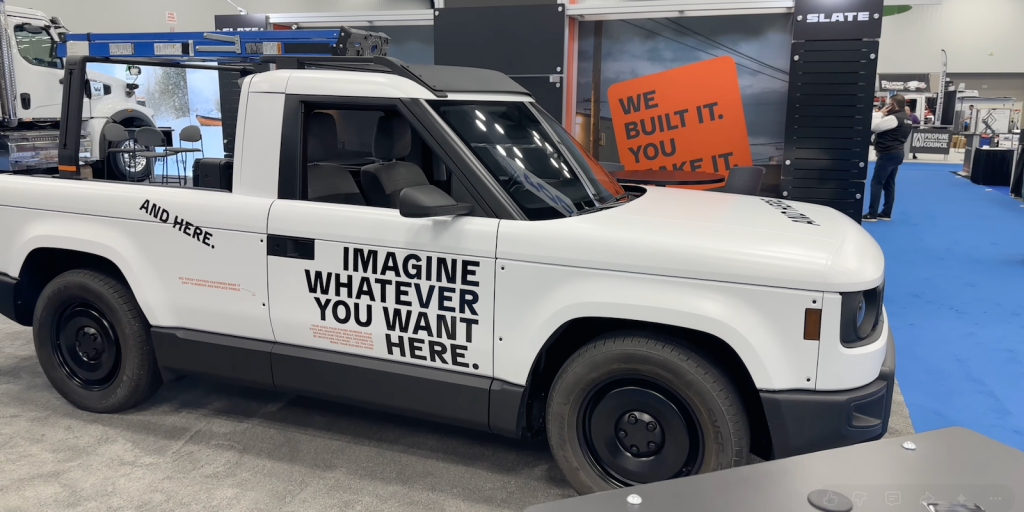
Slate Auto, an emerging force in the automotive sector, positions itself at the forefront of this charge. We sit down with Adrian Vance, Slate Auto's Chief Commercial Officer, who outlines a vision where EV charging is as seamless and ubiquitous as refueling a petrol car. Vance speaks with a blend of technical expertise and market acumen, his points sharp and direct.
The challenge is immense. Today's public charging infrastructure often frustrates users. Slow speeds, unreliable stations, and fragmented networks plague the experience. Slate Auto aims to redefine this with its "REALLY Quick Charge" initiative. It is not just about faster electrons; it is about building an ecosystem.
The Dawn of Ultra-Fast Power
Vance describes the current landscape. "We are moving beyond the 150 kW and even 350 kW benchmarks," he states. "Our next-generation systems target sustained outputs exceeding 500 kW, with commercial vehicle applications pushing into the megawatt range." This leap means charging an EV from 10% to 80% capacity in under ten minutes for compatible vehicles. Imagine adding 300 kilometers of range during a quick coffee break. This fundamentally alters the perception of EV travel.
Such power demands a robust grid and advanced battery thermal management. Slate Auto is investing heavily in both. Their new battery architectures feature enhanced cooling systems and optimized cell chemistries. These innovations permit higher charge rates without compromising battery longevity, a common concern among consumers.
The technology is not theoretical. Prototypes are operating. The real hurdle lies in deployment at scale. Each ultra-fast charger requires significant grid upgrades, often equivalent to powering an entire small neighborhood. This infrastructure cost quickly escalates, presenting a substantial barrier to entry for many operators.
Untangling the Affordability Knot
Affordability remains a critical bottleneck. The capital expenditure for deploying a network of 500 kW-plus chargers is staggering. A single ultra-fast charging stall can cost upwards of $150,000, excluding land acquisition and grid connection fees. Building a comprehensive corridor network demands hundreds of millions, if not billions, in investment.
Vance acknowledges this head-on. "We cannot expect consumers to bear the full brunt of infrastructure costs through exorbitant charging prices," he explains. "Our strategy involves multi-party partnerships: utility companies, property developers, and government bodies. We are exploring innovative financing models, including revenue-sharing agreements and public-private partnerships, to distribute the financial load."
Another aspect of affordability is the operational cost. The peak power draw of ultra-fast chargers can incur significant demand charges from utilities. Slate Auto is integrating large-scale battery energy storage systems (BESS) at its charging hubs. These systems buffer grid demand, drawing power during off-peak hours and discharging it to vehicles during peak charging times. This evens out the load, reducing electricity costs and improving grid stability.
The Flexibility Imperative: Standards and Locations
Flexibility extends beyond just charging speed. It encompasses charger compatibility, location, and payment systems. The ongoing "charger war" between various standards—CCS, NACS, GB/T, CHAdeMO—creates consumer confusion and stifles network growth. Slate Auto's approach is pragmatic.
"We are developing hardware that is inherently multi-standard compatible," Vance asserts. "Our 'REALLY Quick Charge' stations will feature connectors for all dominant standards relevant to their geographical region. In North America, this means NACS and CCS. In Europe, CCS is primary. In China, GB/T is paramount. This ensures maximum vehicle compatibility and user convenience, regardless of vehicle brand."
The geographical distribution of these chargers is also critical. Urban centers demand compact, high-density solutions, perhaps integrated into existing parking structures. Rural corridors require strategically placed hubs, often co-located with amenities like restaurants and rest stops. Slate Auto's modular design philosophy allows for flexible deployment, from single-stall installations to multi-megawatt charging parks.
"The true measure of success for ultra-fast charging will not be peak power output, but rather the seamless integration into daily life. It's about reliability, interoperability, and the psychological comfort of knowing a charging option is always just around the corner. The industry must prioritize user experience above all else."Dr. Anya Sharma, Professor of Electrical Engineering, ETH Zurich
Beyond the Battery: Grid and Data Management
The sheer energy demands of ultra-fast charging pose a significant challenge to existing grid infrastructure. A single charging hub with multiple 500 kW stalls can draw several megawatts of power, equivalent to a small industrial plant. This necessitates sophisticated energy management. Slate Auto's solution integrates advanced software platforms. These platforms predict demand, optimize charging schedules, and facilitate vehicle-to-grid (V2G) capabilities where feasible.
Data analytics play a crucial role. By collecting real-time usage data, Slate Auto can identify peak demand periods, predict maintenance needs, and optimize energy procurement. This data-driven approach is essential for maintaining network reliability and profitability. It also informs future site selection, ensuring new installations address areas of genuine need, preventing 'charger deserts' or over-saturation.
Consider the European context. Regulators push for open data sharing and interoperability. Slate Auto designs its systems to comply with these evolving standards. This ensures its network can communicate effectively with other charging operators and energy providers, creating a truly interconnected ecosystem.
Global Ambitions and Regional Nuances
Slate Auto's "REALLY Quick Charge" strategy is inherently global, yet tailored to regional specifics. In North America, the focus is on building out interstate highway corridors and urban hubs, supporting the burgeoning market for electric trucks and SUVs. The recent push for NACS adoption creates a clearer, albeit still evolving, pathway.
In Europe, the emphasis shifts to dense urban networks and cross-border compatibility. The EU's Alternative Fuels Infrastructure Regulation (AFIR) mandates specific charging capacities and intervals along major transport corridors. Slate Auto's modular approach helps meet these stringent requirements efficiently.
The Asian market, particularly China, presents both the largest opportunity and unique challenges. China's rapid EV adoption and its extensive domestic charging networks, largely dominated by GB/T standards, require a different market entry strategy. Slate Auto is exploring partnerships with established Chinese charging operators to leverage their local expertise and infrastructure footprint.
The Path Forward: Scalability and Trust
The ultimate success of "REALLY Quick Charge" hinges on two factors: scalability and trust. Scalability means deploying thousands of these high-power stations globally, ensuring consistent performance and uptime. Trust means building confidence among consumers that charging will be reliable, fast, and fairly priced.
Vance concludes, "We are not just selling power. We are selling convenience, peace of mind, and ultimately, a cleaner future. The founders and operators in this room understand that innovation without execution is merely a concept. Our commitment is to execute, to build, and to lead this transition responsibly."
The road ahead is long, filled with technical intricacies and economic hurdles. But the vision is clear: to make range anxiety a relic of the past. Slate Auto’s "REALLY Quick Charge" initiative offers a compelling blueprint for how this future might unfold, balancing the need for speed with the realities of affordability and flexibility across a global stage.
KEY TAKEAWAYS
Ultra-fast charging (500 kW+) is emerging as a critical enabler for mass EV adoption, fundamentally reducing charging times to under 10 minutes for compatible vehicles.
Affordability is addressed through innovative financing models (public-private partnerships, utility collaborations) and operational cost reduction (on-site battery storage to manage demand charges).
Flexibility is paramount, requiring multi-standard charging hardware, modular station designs for diverse locations, and sophisticated energy management for grid integration.
Global deployment strategies must account for regional charging standards (NACS, CCS, GB/T) and varying regulatory landscapes to ensure interoperability and market penetration.
Success hinges on building a reliable, user-friendly network supported by robust data analytics and strong multi-stakeholder partnerships to ensure scalability and consumer trust.