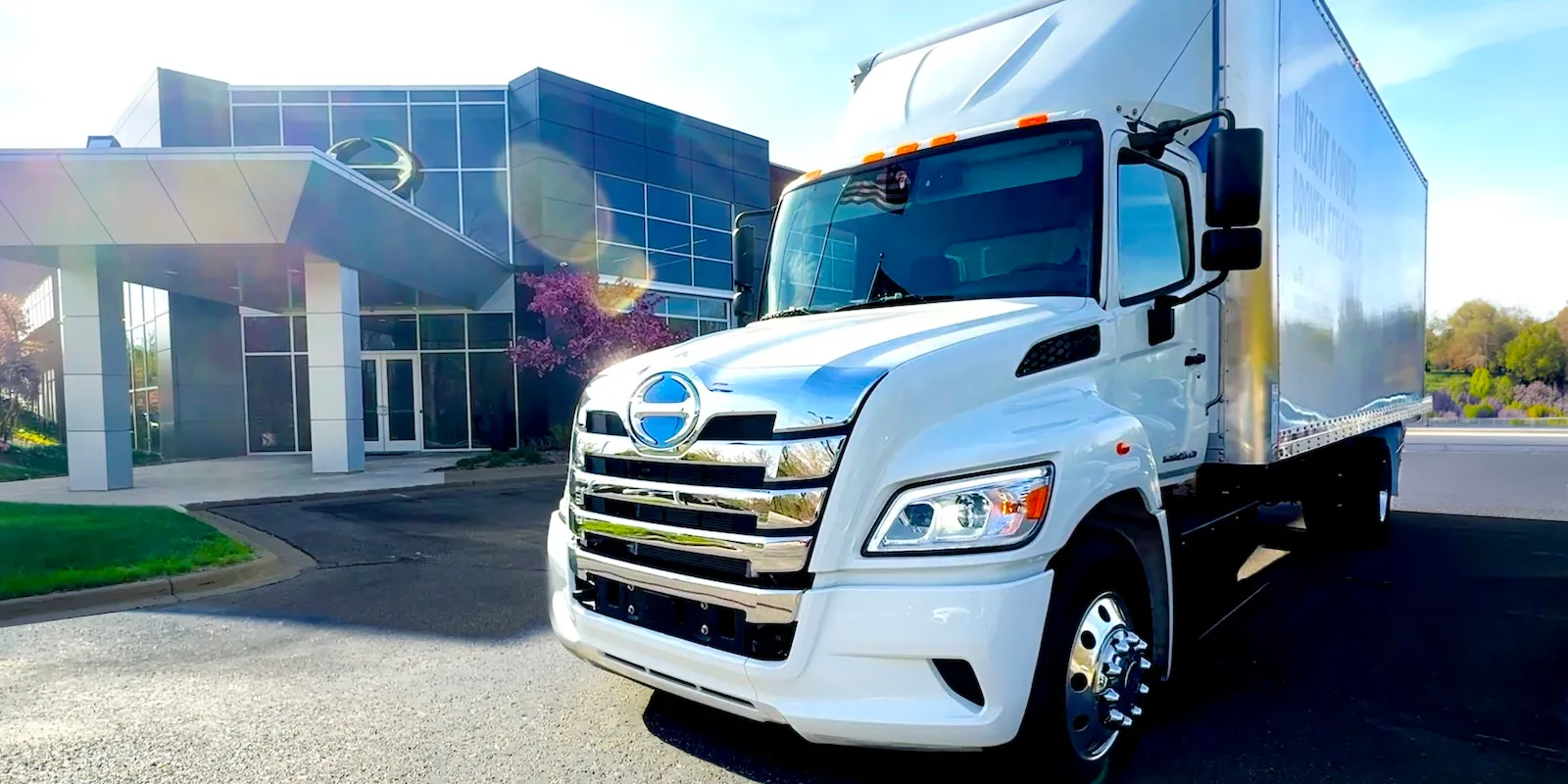
The global transition to electrified commercial fleets just received another significant jolt with Toyota Hino's unveiling of its new Le Series of electric medium-duty (MD) trucks at the recent ACT Expo. This debut is more than just a product launch; it represents a strategic pivot for a legacy automotive giant, signaling intent to capture a crucial segment of the rapidly evolving logistics landscape. For founders, investors, and fleet operators, the implications are profound, demanding a rigorous analysis of market shifts, technological readiness, and the daunting path to operational scalability.
Hino, a venerable name in commercial vehicles for over a century, stands as Toyota's dedicated truck and bus subsidiary. This new Le Series leverages Toyota's extensive research and development in electrification, marrying Hino's robust commercial vehicle engineering with a sophisticated battery-electric powertrain. The initial lineup targets Class 5-7 segments, crucial for last-mile delivery, urban logistics, and vocational applications, areas ripe for immediate electrification due to predictable routes and return-to-base charging models.
The Strategic Imperative: Decarbonization and Disruption
The impetus behind Hino's aggressive move is multifaceted. Globally, regulatory pressures are intensifying. California's Advanced Clean Trucks (ACT) rule, the European Union's stringent CO2 emission standards for heavy-duty vehicles, and similar mandates across Asia are creating an inescapable drive towards zero-emission transport. Forward-thinking companies are not merely reacting to regulations; they are proactively investing in sustainable logistics to meet investor ESG (Environmental, Social, and Governance) demands and consumer expectations.
From an investor's vantage point, the medium-duty electric truck market presents a compelling growth story. Projections suggest this segment could expand at a compound annual growth rate exceeding 25% over the next decade. For investors, Hino's entry, backed by Toyota's financial muscle and manufacturing prowess, offers a relatively secure play in a sector otherwise dominated by high-risk, high-reward startups. The challenge for these startups will be differentiating against an incumbent with established dealer networks, service infrastructure, and a reputation for reliability.
Founders operating logistics and distribution businesses face a complex equation. The upfront capital expenditure for electric trucks remains significantly higher than their diesel counterparts. A single Class 6 electric box truck, for instance, might command a price tag upwards of $180,000, compared to $90,000 for a diesel equivalent. However, the promise of substantially lower operational costs from reduced fuel consumption and maintenance offers a compelling long-term value proposition. The Le Series, boasting an estimated range of up to 200 miles on a single charge and compatibility with DC fast charging, aims to directly address the practical needs of urban delivery cycles.
Engineering for the Electric Future
The Le Series is expected to feature a modular battery architecture, allowing for configurations tailored to specific range and payload requirements. While specific battery chemistry details remain proprietary, it is safe to assume Toyota's vast experience in battery development, including advancements from its passenger vehicle division, will contribute to a robust, long-lasting power source. The integration of advanced telematics and fleet management software is also a given, critical for optimizing routes, monitoring battery health, and managing charging schedules. This level of data integration moves beyond mere transportation to a sophisticated operational ecosystem.
For a fleet manager, or "user," the introduction of a Hino electric truck means a shift in operational paradigms. While the quiet operation and instant torque of an electric powertrain can enhance driver comfort and reduce fatigue, the immediate concern pivots to charging infrastructure. A fleet of ten Le Series trucks, each requiring a 50kW fast charger, demands substantial electrical grid upgrades and careful facility planning. Hino's strategy will likely include partnerships with energy providers and charging solution companies to offer a holistic ecosystem, rather than just selling trucks.
"Toyota Hino's entry into the medium-duty electric truck segment is a watershed moment, not just for the company, but for the broader commercial vehicle market. Their legacy in reliability combined with Toyota's deep electrification expertise creates a formidable competitor. This move will undoubtedly accelerate the global transition to zero-emission fleets, pushing both traditional OEMs and EV startups to innovate faster and scale more aggressively. The market will now demand proven uptime and comprehensive support, areas where Hino has a clear advantage."
Dr. Anya Sharma, Lead Analyst at Global Mobility Insights
Global Implications and Regional Nuances
The global reach of Toyota Hino ensures the Le Series will not be confined to North American markets. In Europe, where cities like London and Paris are implementing ultra-low emission zones, the Le Series could find rapid adoption among logistics providers seeking compliance and operational efficiency. In Asia, particularly in densely populated urban centers, the reduction in noise and air pollution offered by electric trucks aligns with public health initiatives and sustainable urban planning goals. However, regional differences in charging standards, grid stability, and government incentives will necessitate localized strategies for sales, service, and infrastructure development.
An analyst examining the competitive landscape sees Hino’s move as a direct challenge to established players like Daimler's Fuso eCanter and Volvo's FL Electric, as well as new entrants like Rivian's delivery vans and various Chinese manufacturers. Hino's strength lies in its extensive global dealer network and a reputation for durability, which can assuage concerns from fleet operators wary of untested technologies. The company’s long-standing relationships with vocational bodybuilders also streamlines the customization process, a critical factor for diverse MD applications.
For founders evaluating their fleet’s future, the total cost of ownership (TCO) calculation for the Le Series will be paramount. While the initial sticker price is high, the lifetime savings on fuel, reduced brake wear (due to regenerative braking), and simplified maintenance schedules (fewer fluids, no exhaust aftertreatment systems) can present a compelling financial argument over a typical 7-10 year operational lifespan. Government incentives, such as federal tax credits in the US or purchase grants in Europe, will also significantly influence adoption rates and TCO.
Challenges on the Road Ahead
Despite the optimism, significant hurdles remain. The availability of robust, scalable charging infrastructure is perhaps the most pressing. While depot charging works for many MD applications, the expansion of public charging networks suitable for commercial vehicles lags behind passenger car infrastructure. Furthermore, the global supply chain for critical battery components, including lithium, cobalt, and nickel, faces increasing geopolitical pressures and demand-supply imbalances, potentially impacting production costs and vehicle availability.
Another challenge involves driver acceptance and training. While electric trucks offer a smoother, quieter ride, the differences in regenerative braking, power delivery, and range management require specialized instruction. Fleet operators must invest in comprehensive training programs to ensure drivers can maximize efficiency and safety. The residual value of early-generation electric trucks also remains an unknown variable for investors and owners, as battery degradation and technological obsolescence could impact resale markets.
Toyota Hino's Le Series debut at ACT Expo is more than just an announcement; it is a declaration of intent from a major global player to lead in the electrification of commercial transport. For founders, it signals a rapidly accelerating market requiring strategic fleet transitions. For investors, it solidifies a compelling growth segment backed by a credible incumbent. For users, it promises a tangible path to operational efficiency and sustainability, albeit one that demands significant investment in infrastructure and training. The road to fully electrified logistics is long, but with players like Hino committing significant resources, the journey is undeniably picking up pace.
KEY TAKEAWAYS
Accelerated Market Shift: Hino's entry, backed by Toyota, validates and accelerates the transition to electric medium-duty trucks, intensifying competition and driving innovation.
Holistic Ecosystem Approach: Success hinges not just on the vehicles, but on integrated solutions encompassing charging infrastructure, telematics, and comprehensive service networks.
TCO vs. CapEx: Founders must carefully analyze the Total Cost of Ownership (TCO) benefits, weighing significant upfront capital expenditures against long-term operational savings and potential incentives.
Global Regulatory & ESG Driver: International emissions regulations and growing investor demand for ESG compliance are primary catalysts for fleet electrification across all major economic regions.
Infrastructure is King: The scalability of electric truck adoption will be directly correlated to the rapid deployment and standardization of robust charging infrastructure, both at depots and along key logistics corridors.
Frequently asked questions
What did Toyota Hino debut at ACT Expo?
Toyota Hino unveiled its new Le Series of electric medium-duty (MD) trucks at the recent ACT Expo. This debut signals their intent to capture a crucial segment of the rapidly evolving logistics landscape.
What is the Toyota Hino Le Series?
The Le Series is Toyota Hino's new line of electric medium-duty trucks designed to facilitate the global transition to electrified commercial fleets and improve urban logistics.
When was the Toyota Hino Le Series unveiled?
The Toyota Hino Le Series of electric MD trucks was unveiled at the recent ACT Expo, an event focused on advanced clean transportation technologies.
Why is the Le Series debut significant for Toyota Hino?
The debut represents a strategic pivot for Toyota Hino, signaling their commitment to electric vehicles and aiming to capture a crucial segment of the rapidly evolving logistics landscape with electrified commercial fleets.
What kind of trucks are in the Le Series?
The Le Series consists of electric medium-duty (MD) trucks, targeting a key segment within commercial transportation for urban delivery and logistics.
Where can I learn more about the Le Series electric MD trucks?
Further details about the Le Series electric MD trucks can typically be found on Toyota Hino's official websites or through industry publications covering the ACT Expo announcements.