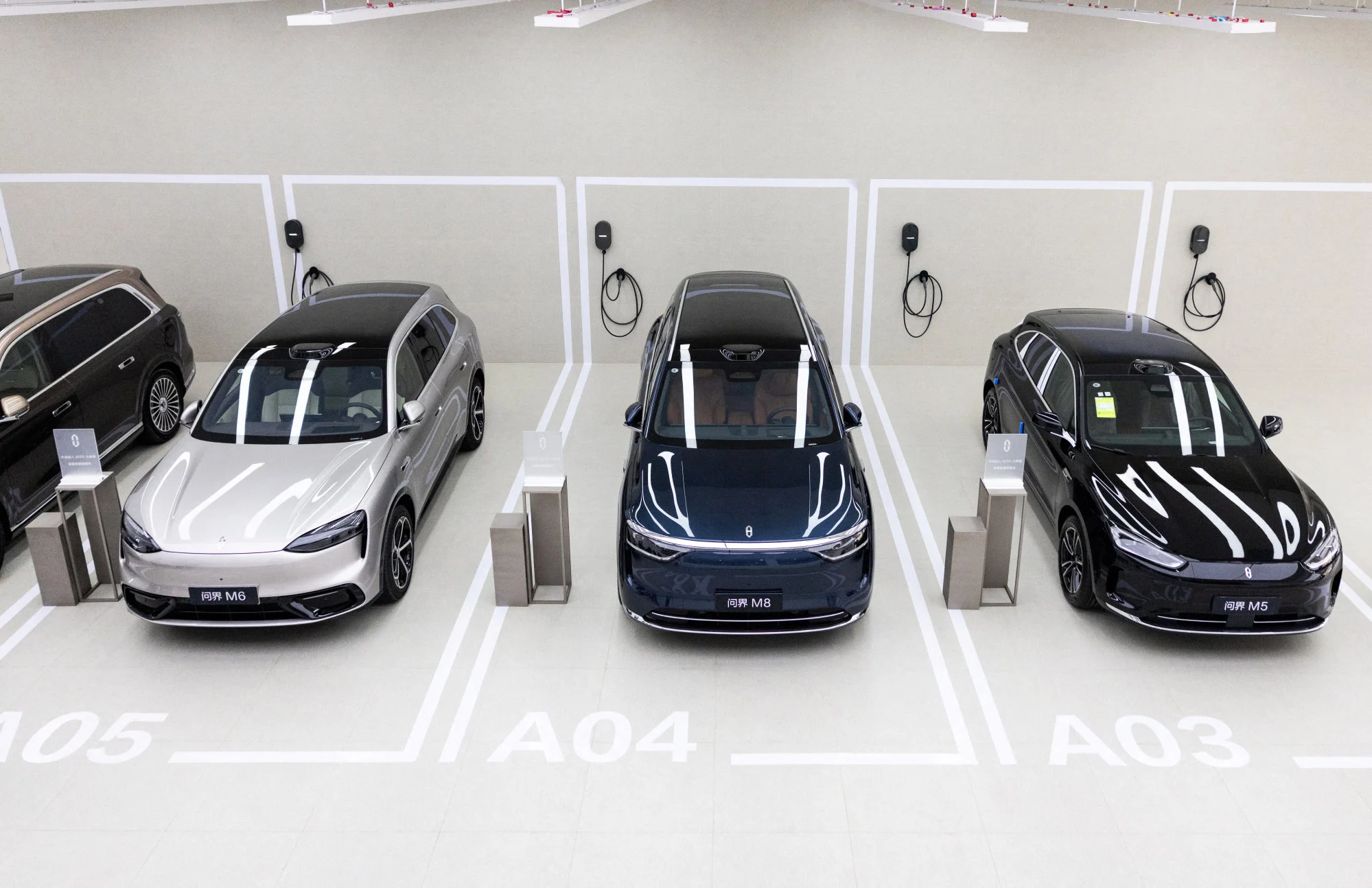
The planned investment reinforces Huawei’s ambition to position itself as a critical technology supplier in the automotive sector rather than a traditional car manufacturer. Instead of building vehicles directly, the company has focused on developing intelligent driving systems, AI chips, and software platforms that automakers can integrate into their models.
As global competition in autonomous vehicles intensifies, the scale of the commitment underscores how strategically important the sector has become.
Expanding Beyond Telecommunications
Huawei’s push into autonomous driving reflects its broader diversification strategy following U.S. sanctions that restricted access to advanced semiconductors and telecom equipment markets.
Over the past several years, the company has redirected resources toward cloud computing, AI chips, and smart vehicle platforms. Its Ascend AI processors and in-car intelligent driving systems are central to this transformation.
Autonomous driving offers Huawei an opportunity to leverage its strengths in hardware engineering, networking infrastructure, and AI model optimization.
China’s Autonomous Race
China has become one of the world’s most active testing grounds for autonomous vehicles. Domestic automakers and tech companies are rapidly integrating advanced driver-assistance systems (ADAS) and pursuing higher levels of automation.
Government support for intelligent transportation infrastructure has further accelerated development.
Huawei’s $11.7 billion commitment positions it to compete with both domestic rivals and global players developing self-driving systems.
Unlike companies pursuing fully autonomous robotaxi models, Huawei’s strategy has emphasized scalable intelligent driving features embedded in consumer vehicles.
Hardware and Software Integration
Self-driving technology requires a combination of high-performance computing, advanced sensors, mapping systems, and AI algorithms.
Huawei’s expertise in semiconductor design and communications infrastructure allows it to integrate multiple layers of the autonomous stack — from onboard processors to vehicle-to-infrastructure connectivity.
The investment is expected to accelerate development of:
High-performance automotive AI chips
Advanced perception and decision-making systems
Cloud-based training infrastructure
Smart cockpit integration
This vertical approach mirrors strategies seen among leading U.S. and European technology firms seeking tighter control over AI-enabled mobility ecosystems.
Competitive Landscape
Globally, autonomous vehicle investment remains capital intensive and technically complex. Companies across North America, Europe, and Asia have poured billions into self-driving R&D, though timelines for full autonomy continue to evolve.
In China, the competition includes automakers, startups, and major tech firms. Huawei’s capital commitment signals that it intends to remain a core infrastructure player in the sector rather than a peripheral supplier.
Given the rapid evolution of AI models capable of real-time perception and planning, computing power and software integration will determine long-term competitiveness.
Regulatory and Market Context
Autonomous vehicle deployment depends not only on technology but also on regulatory frameworks. China has gradually expanded pilot zones for intelligent driving features, particularly in major urban areas.
As consumer EV adoption accelerates, intelligent driving capabilities are becoming key differentiators in purchasing decisions.
Huawei’s investment suggests confidence that demand for higher-level automation features will continue rising domestically and potentially internationally.
The Broader Signal
Huawei’s $11.7 billion investment underscores how autonomous driving has evolved from experimental research to strategic infrastructure.
As vehicles become rolling AI platforms, technology companies are embedding themselves deeper into automotive supply chains.
For Huawei, the move is both defensive and forward-looking — diversifying revenue streams while positioning itself at the center of intelligent mobility.
In the AI era, the future of transportation is increasingly defined not by horsepower alone, but by processing power.