Hyundai Motor Group thinks it has the answer. And on April 28, 2026, it started testing it on the streets of Seoul.
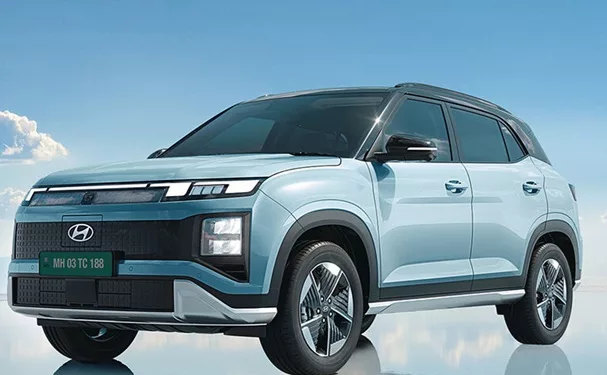
Hyundai Motor Group said Tuesday it had launched a pilot electric vehicle battery subscription service with Hyundai Motor and Hyundai Capital, targeting corporate taxis whose battery warranties expire in the first half of this year. As part of the pilot, five Ioniq 5 corporate taxis will operate in the Seoul metropolitan area to assess the impact of battery separation on operating costs. Participating operators will pay a monthly subscription fee to Hyundai Capital and, when a battery needs replacement, exchange the used unit for one owned by Hyundai Capital. MIT Technology ReviewHumai
Five vehicles. One city. The smallest possible credible test. But the regulatory architecture underneath it, and the commercial logic that follows if it validates, represents one of the most significant structural changes to EV ownership economics that any major automaker has attempted.
The Regulatory Unlock That Made This Possible
Battery subscription for EVs is not a new idea. NIO has run a battery-as-a-service model in China since 2020 with over 2,400 swap stations. Gogoro has built an entire electric scooter ecosystem in Taiwan around swappable batteries. What made those models possible — and what had, until recently, prevented Hyundai from doing the same in South Korea — was a regulatory question about ownership.
The programme is made possible by a special regulatory exemption approved by the Ministry of Land, Infrastructure and Transport in November, allowing electric vehicle bodies and batteries to be registered under separate ownership for the first time. Under current vehicle regulations, batteries cannot be registered or managed separately from the vehicle. That has been cited as a drag on EV demand, since battery degradation can reduce resale values and leave owners responsible for costly replacements. Humai
That November 2025 regulatory change is the pivot point. Under the previous framework, a battery was legally inseparable from the vehicle it powered — which meant that battery ownership, battery risk, and battery replacement cost all sat with the vehicle owner. Separating the legal registration of battery and vehicle body creates the foundational condition for a true subscription model: the battery can belong to Hyundai Capital, the vehicle can belong to the taxi operator, and the monthly fee governs the ongoing relationship between them.
Under current rules, batteries are typically tied to the vehicle, limiting flexibility and raising concerns over performance degradation and high replacement costs. The new framework enables batteries to be managed independently, opening the door to subscription-based models. That sentence understates the significance. "Opening the door" is what happens when you remove the regulatory deadlock that prevented OEMs, financial services arms, and fleet operators from structuring arrangements that all three parties had commercial incentives to pursue. The demand for battery subscription has existed for years. Korea's November 2025 decision made it legal to deliver. MIT Technology Review
"By offering a subscription-based solution, we aim to ease the upfront cost burden of EV ownership and support the government's push for cleaner vehicles."
— Hyundai Motor Group official spokesperson
Why Taxis Are the Right Starting Point
Hyundai Motor Group said fleet taxis are well-suited for the pilot because their high mileage accelerates battery degradation, creating faster replacement needs. The automaker said it will use the pilot to assess potential cost savings and vehicle lifespan extension under real operating conditions. Humai
The logic of starting with taxis is compellingly straightforward. High utilisation means faster battery degradation cycles — which means the subscription model's value proposition materialises quickly enough to be measured within the pilot's timeframe. A private driver replacing a battery after ten years generates one data point per decade. A taxi operator generates the same degradation data in three years. For a pilot designed to validate cost savings and operational impact, the fleet context compresses the learning cycle by a factor of three to four.
Commercial taxi operators are also, crucially, professional buyers. They can evaluate the subscription economics rationally, compare monthly costs against projected battery replacement expenses, and make decisions based on total cost of ownership rather than the psychological factors that sometimes distort private consumer choices. If the model makes financial sense, taxi operators will adopt it. If it doesn't, they'll say so clearly. That feedback quality is exactly what a pilot needs.
The Ioniq 5 selection is equally deliberate. Hyundai's flagship electric vehicle — the 2021 World Car of the Year winner, built on the E-GMP platform — carries a large-format 77.4 kWh battery pack. In intensive commercial use, that's precisely the kind of high-value component whose replacement cost most concentrates the minds of fleet operators. A model with a cheaper, smaller battery makes the subscription value proposition harder to test convincingly.
The broader commercial taxi and ride-hailing electrification context amplifies the stakes. Seoul's taxi fleet — tens of thousands of vehicles covering the metropolitan area — is one of Asia's most intensively used urban transport networks. If Hyundai's pilot demonstrates that battery subscription lowers operating costs for the commercial fleet operators who drive those taxis, the path from five vehicles to fleet-scale adoption is shorter than in most other use cases. Hyundai doesn't need to change consumer behaviour. It needs to change the procurement decisions of professional fleet managers who already know how to calculate total cost of ownership.
The BaaS Market Hyundai Is Entering — and What the Competition Looks Like
Hyundai is not entering a nascent market. It is entering one that has already been defined, and dominated, by Asian players.
The global battery-as-a-service market was valued at $6.04 billion in 2025 and is projected to reach $13.59 billion by 2034, growing at a CAGR of 9.43%. Asia-Pacific held the largest market share of 80% in 2024. The subscription model accounted for 75% of the market in 2024. Those numbers describe a market that is overwhelmingly Asian, overwhelmingly subscription-driven, and growing fast enough to attract serious capital and strategic commitment from every major player in the EV ecosystem. Fortune
NIO is a pioneer in BaaS with over 2,000 battery-swap stations in China. CATL's "Choco-Swap" push and large-scale spending commitments — including a 10,000-station partnership with Sinopec and a Choco-SEB business model with SAIC Motor that is scheduled to cover 140 Chinese cities in 2026 — create the infrastructure backbone for the sector's largest market. These are not pilot programmes. China's BaaS infrastructure is at commercial scale, with established standards, established operators, and established consumer behaviour patterns. Just Auto
Subscription plans controlled 82.76% of BaaS revenue in 2025, generating recurring billings from fleets and taxi cooperatives that favour flat operating budgets. That dominance of the subscription model over pay-per-use validates the commercial framework Hyundai is deploying in Seoul. Fleet operators don't want variable-cost structures that fluctuate with battery replacement timing. They want predictable monthly costs that sit alongside predictable fuel and maintenance expenses. The Korea Times
Battery pack prices fell 20% to $115 per kWh in 2024 — the sharpest single-year drop since 2017. Sub-$100 pricing is expected by 2027. That cost decline doesn't undermine the BaaS case — it actually strengthens it. As battery costs fall, the capital outlay that BaaS providers must make to maintain their battery inventory decreases, improving the economics of subscription pricing for both the provider and the subscriber.
Hyundai Capital's Role: Where the Financial Innovation Lives
The involvement of Hyundai Capital as the battery owner and subscription fee recipient is not incidental. It is the commercial architecture that makes the model viable.
Participating operators will pay a monthly subscription fee to Hyundai Capital and, when a battery needs replacement, exchange the used unit for one owned by Hyundai Capital. Hyundai Capital — Hyundai Motor Group's financial services arm, operating across auto financing, insurance, and leasing products in Korea and internationally — is the entity that absorbs the battery ownership risk in exchange for the recurring revenue stream. The taxi operator buys the vehicle. Hyundai Capital owns the battery. The exchange happens when needed, without the operator bearing the capital shock of a replacement event. Humai
This structure turns a high-cost, infrequent, unpredictable expense into a predictable monthly operating cost — which is precisely the financial transformation that makes commercial fleet operators willing to commit to EVs. The battery degradation risk, which is the primary financial objection to EV adoption in high-utilisation commercial contexts, transfers to Hyundai Capital, which has the data, the actuarial capability, and the inventory management infrastructure to price and manage it at scale.
Hyundai Capital is also well-positioned to monetise the secondary value of recovered batteries. Subscription models account for approximately 60% of the commercial swapping market. After extensive usage, batteries can be recovered and used in energy storage systems for fast-charging stations — allowing the battery to generate value in two sequential commercial lives. A battery that has degraded below the threshold for automotive use still retains 70-80% of its original capacity — more than sufficient for stationary energy storage applications. Hyundai Capital owning the battery across its full lifecycle means it captures both the primary subscription revenue and the secondary ESS value. That dual-revenue model is what makes the unit economics of battery subscription sustainable at scale. The Korea Herald
Key Takeaways
1. The November 2025 regulatory change is the founding event, not the pilot. Separate ownership registration of EV batteries and vehicle bodies is the legal innovation that enables everything Hyundai is now testing. Without it, the subscription model couldn't be structured. Korea has now done what China did years ago — removed the regulatory barrier that prevented market formation.
2. Five vehicles is the right number to start with. A larger pilot would generate more data but introduce operational complexity that obscures what the pilot is actually testing: whether battery subscription changes the cost and lifecycle calculus for high-mileage commercial operators. Five vehicles in one city, rigorously monitored, produces cleaner signal.
3. Hyundai Capital's involvement transforms the model from a product into a financial service. The subscription economics work because a creditworthy financial institution is absorbing the battery ownership risk in exchange for recurring revenue. Hyundai Motor alone couldn't structure this — the financial services capability is integral to the model architecture.
4. Consumer expansion in H2 2026 is the test that actually matters commercially. The taxi pilot validates the operational model. The planned second pilot for private consumers will validate whether the value proposition translates to a market where total cost of ownership reasoning is less reliable and emotional factors about battery anxiety dominate. Those are very different tests.
5. The secondary-life battery revenue is the model's hidden profitability driver. A battery that generates subscription fees for three years in a taxi, then generates ESS revenue for another five to seven years in a charging station, has a very different economic profile than one that is replaced and disposed of. Hyundai Capital capturing that full lifecycle value is what makes the subscription price commercially viable.
The Honest Limitation
Five Ioniq 5 taxis in Seoul is the smallest possible proof-of-concept for a market the size of Korea's taxi fleet, let alone the global commercial EV opportunity. The distance between "successful pilot" and "commercially scalable programme" is where most innovative EV ownership models have stalled.
The standardisation problem is particularly acute. NIO's BaaS model works in China because NIO controls its own battery architecture and its own swap network. Hyundai's model, as currently structured, requires Hyundai Capital to maintain an inventory of Ioniq 5 batteries in the Seoul metropolitan area — a relatively contained logistics challenge. Scaling to multiple vehicle models, multiple battery formats, and multiple markets introduces a complexity that the current pilot design doesn't address.
The pricing of the monthly subscription fee — not disclosed — is the number that determines whether this model works economically for operators or merely for Hyundai. If the subscription cost exceeds the monthly equivalent of a battery replacement amortised over its expected lifespan, operators will not adopt it. If it's priced to drive adoption at the cost of Hyundai Capital's returns, the model is unsustainable. The five-vehicle pilot will produce the real-world data needed to set that price correctly for the H2 2026 consumer launch. Whether Hyundai publishes those findings transparently enough for the industry to learn from them is a separate question.
The consumer pilot planned for the second half of 2026 also faces a behavioural challenge that the commercial taxi pilot does not. Private EV owners are not professional fleet managers. They don't readily calculate total cost of ownership across a multi-year ownership period. The "pay less upfront, pay monthly" value proposition resonates intuitively with some consumers and triggers subscription fatigue in others — particularly in a market where everything from software to gym memberships already carries a recurring fee.
What This Means for the Global EV Industry
Battery pack prices fell to $115 per kWh in 2024. Sub-$100 pricing is expected by 2027, which will lighten inventory financing for station operators and lower break-even utilisation thresholds — making the economics of battery subscription progressively more favourable for providers and subscribers alike. Recharged
That cost trajectory is the structural tailwind underneath Hyundai's pilot. As batteries get cheaper to manufacture and maintain, the subscription economics improve for everyone in the chain. The fixed monthly fee that covers today's battery replacement cost can cover tomorrow's replacement cost with a margin that funds the secondary-life ESS revenue model. BaaS gets more attractive as batteries get cheaper — which is the inverse of the fear that falling battery prices make BaaS irrelevant.
The global EV battery ownership transition is the most significant shift in automotive financial services since the mass adoption of vehicle financing in the 1950s. Every major market where EV adoption is a policy priority — Korea, the EU, the UK, India, Southeast Asia — faces the same underlying challenge: battery cost and degradation anxiety are suppressing demand among exactly the consumers and fleet operators who would benefit most from electrification.
Korea's regulatory innovation — separating battery and vehicle registration — offers a template that other markets can adopt with appropriate legal adjustments. India's Ministry of Power 2024 guidelines formally recognise BaaS. China's NEV Development Plan explicitly promotes convenient and efficient charging and swapping infrastructure by 2035. The policy frameworks are aligning globally around the battery separation model, even as the commercial infrastructure to deliver it at scale is still being built. The Korea Herald
Hyundai's five Seoul taxis are, in isolation, a trivially small intervention in a global EV market that sold more than 20 million vehicles in 2025. As the first operational test of a regulatory architecture that Korea spent years designing to unlock battery subscription at scale, they carry weight far beyond their number. If the pilot data validates the model — if battery subscription reduces operating costs for fleet operators, extends vehicle lifespan, and creates the secondary-life ESS revenue stream that makes Hyundai Capital's economics work — the template is ready for replication.
The battery has been the EV's most expensive anchor and its most persistent source of consumer anxiety. Hyundai is betting that the anchor can be lifted — and handed to a financial services company better equipped to carry it.