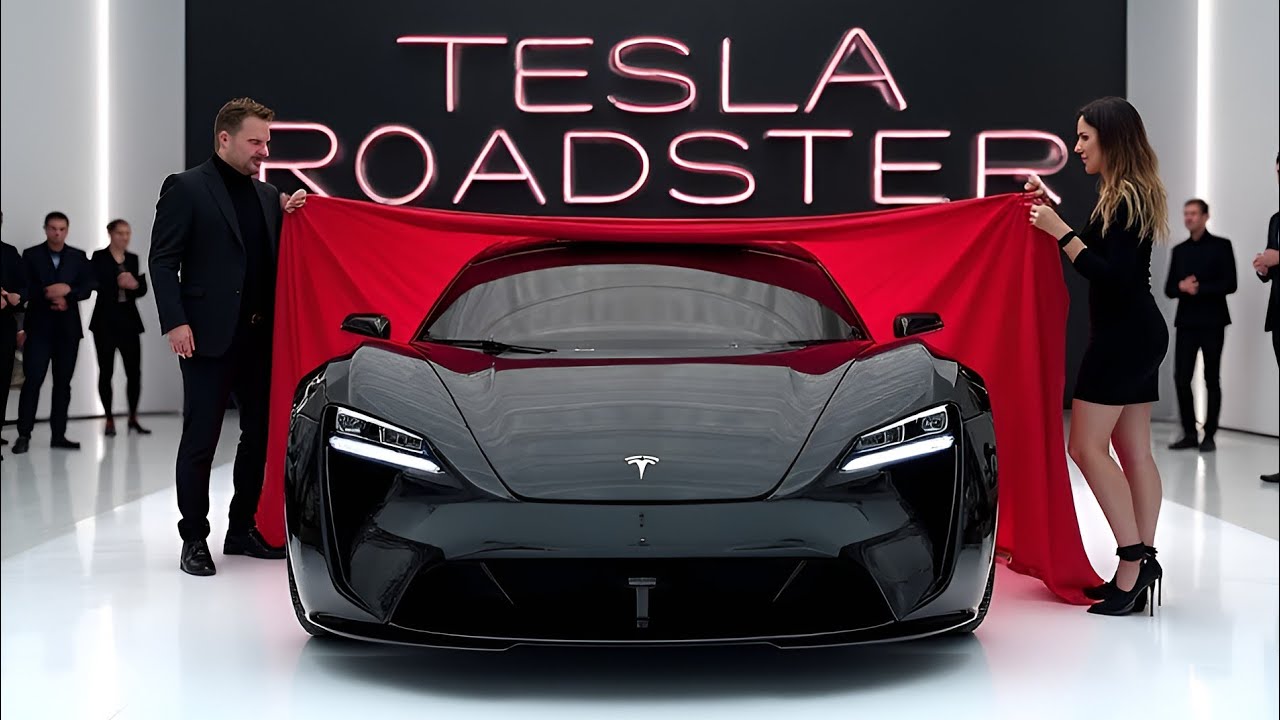
Tesla's recent filings for new Roadster trademarks, accompanied by the intriguing detail of a unique badge, mark a pivotal moment for a vehicle that has long existed in the realm of future speculation. For founders and operators navigating the relentless pace of technological disruption, this isn't merely news about a car; it's a signal of intent, a strategic play in branding, and a testament to the enduring power of a halo product in driving innovation and market perception.
First unveiled in a stunning surprise during the Tesla Semi event in November 2017, the second-generation Roadster wasn't just another electric vehicle. It was an audacious statement, a challenge thrown down to the entire automotive establishment. Its stated performance figures—0-60 mph in a breathtaking 1.9 seconds, a quarter-mile in 8.8 seconds, a top speed exceeding 250 mph, and a projected 620-mile range—were, and largely remain, unprecedented for a production car. The Roadster was designed not just to compete, but to redefine the very concept of performance.
The Genesis of a Hypercar Promise
The original Tesla Roadster, launched in 2008, was a proof of concept, a nimble, Lotus Elise-based two-seater that demonstrated electric power could be exhilarating. It was instrumental in establishing Tesla's credibility and paved the way for the Model S. The new Roadster, however, is a different beast entirely. It represents Tesla's full, unconstrained vision for an electric hypercar, leveraging over a decade of advancements in battery technology, motor design, and software integration.
Its initial reveal captivated the global tech and automotive press. The design was sleek, futuristic, and undeniably aggressive. The promise of a 2+2 seating configuration made it conceptually more practical than many traditional hypercars. Yet, despite initial promises for a 2020 delivery, the Roadster fell into a familiar pattern for ambitious Tesla projects: significant delays. These postponements were frequently attributed to the complex ramp-up of the Model 3, the Cybertruck's unique manufacturing challenges, and the development of core technologies like the 4680 battery cells and Full Self-Driving software.
Deciphering the Trademark Tea Leaves
In the highly competitive world of technology and automotive, trademark filings are far more than bureaucratic formalities. They are strategic declarations. For the Roadster, new filings, especially those pertaining to a "unique badge," suggest several critical developments. Firstly, it indicates a finalization of design and branding elements, signaling that the vehicle is progressing from conceptual design to production-ready specifications. Companies typically secure trademarks when specific design language, features, or product names are solidified and deemed valuable intellectual property.
Secondly, a unique badge for the Roadster could signify a distinct sub-brand or a special performance variant. Consider Tesla's "Plaid" designation for its highest-performance Model S and Model X vehicles. A bespoke badge for the Roadster could elevate its status further, differentiating it even from Tesla's existing performance lineup and positioning it more directly against established luxury and hypercar marques like Ferrari, Lamborghini, or Rimac. This strategy aims to create an exclusive identity, fostering an aura of ultimate performance and cutting-edge technology.
"The renewed focus on Roadster trademarks, particularly with a specific badge, is a clear signal that Tesla is moving past the R&D and prototyping phase into pre-production readiness," explains Dr. Evelyn Reed, a leading automotive industry analyst. "For a company that thrives on aspirational products, the Roadster serves as a critical halo vehicle. It's not just about selling units; it's about showcasing technological prowess, attracting top engineering talent, and defining the leading edge of what's possible with electric propulsion. A unique badge underscores that this isn't just another Tesla; it's the pinnacle."
Dr. Evelyn Reed, Automotive Industry Analyst
The Technology Underpinning the Beast
Delivering on the Roadster's extraordinary performance claims requires breakthroughs across multiple engineering disciplines. The heart of any high-performance EV is its battery. The projected 620-mile range, combined with hypercar-level acceleration, necessitates an energy-dense, high-power battery pack that can withstand immense current draws and sophisticated thermal management. Tesla's 4680 battery cells, with their larger format and tabless design, are crucial here. They promise greater energy density, improved power output, and a more efficient manufacturing process, which are all vital for a vehicle like the Roadster.
Thermal management systems will be equally critical. Sustained high-speed driving and repeated rapid acceleration cycles generate enormous heat within the battery and motors. An effective cooling system is paramount to prevent performance degradation and ensure safety. Moreover, the rumored "SpaceX Package," which includes cold-air thrusters powered by a composite overwrapped pressure vessel, hints at a radical approach to enhancing grip and maneuverability, pushing the boundaries of automotive engineering into aerospace territory.
Market Positioning and Competitive Landscape
When the Roadster finally arrives, it will enter a significantly altered landscape compared to its initial announcement. The EV hypercar segment, while niche, is growing. Competitors like the Rimac Nevera, Lucid Air Sapphire, and Porsche Taycan Turbo GT have already set astonishing benchmarks for electric performance. The Nevera, for example, has already demonstrated 0-60 mph in under 1.8 seconds and shattered numerous production car records.
For Tesla, the Roadster is less about direct volume sales and more about brand validation. It reinforces the company's image as an innovator, a disruptor, and a technological leader. This "halo effect" trickles down to other models, enhancing the brand's appeal globally, from the tech-savvy markets of Silicon Valley to the burgeoning luxury segments in China and the Middle East. It also serves as a critical testbed for advanced technologies that may eventually find their way into more mainstream Tesla vehicles.
The pricing, initially set at $200,000 for the base model and $250,000 for the Founders Series, will almost certainly see adjustments given the passage of time, global inflation, and potential upgrades in technology and features. At this price point, the Roadster will compete not only with other electric hypercars but also with established internal combustion engine (ICE) supercars. Its success will be measured by its ability to convert traditional supercar enthusiasts into electric proponents, a challenge that transcends mere performance figures and delves into the emotional connection drivers have with their vehicles.
Global Resonance and Manufacturing Prowess
The global launch of the Roadster will carry significant weight. In Europe, where stringent emissions regulations are driving a rapid transition to EVs, the Roadster will serve as a powerful symbol of electric performance capability. In Asia, particularly in China and Southeast Asia, where luxury EV markets are expanding rapidly, the Roadster will tap into a growing demand for high-status, technologically advanced vehicles. North America, with its enduring love for high-performance automobiles, will undoubtedly embrace the Roadster as a homegrown technological marvel.
Tesla's ability to manufacture a vehicle of this complexity at scale, even if "scale" for a hypercar means a few thousand units annually, will be closely watched. The lessons learned in optimizing production for the Model 3 and Cybertruck will be invaluable. The eventual production process will likely involve a blend of advanced robotics and highly skilled manual assembly, typical for ultra-high-performance vehicles, but infused with Tesla's signature approach to vertical integration and software-defined manufacturing.
Beyond Performance: Design and Experience
While performance metrics dominate discussions, the Roadster's design and user experience will be equally critical. The interior is expected to be minimalist yet luxurious, integrating advanced infotainment and connectivity features. The "unique badge" could be a focal point of this refined interior, subtly reinforcing its premium status. The interplay between physical design and software interface will be key to creating a cohesive and intuitive user experience that meets the expectations of discerning buyers in this segment.
The Roadster is more than just a car; it is a declaration of Tesla's ongoing ambition. It is a vehicle designed to push the boundaries of electric propulsion, redefine automotive performance, and maintain Tesla's position at the vanguard of the electric revolution. The new trademark filings, with their emphasis on a distinct badge, suggest that this long-awaited vision is finally coalescing into a tangible product, ready to once again electrify the automotive world.
KEY TAKEAWAYS
Strategic Intent: New trademark filings and a unique badge signal that the Roadster is progressing rapidly towards production, indicating a strategic focus on branding and product differentiation.
Halo Product Significance: The Roadster serves as a critical halo vehicle for Tesla, showcasing technological prowess, attracting talent, and validating the company's innovation leadership in the global EV market.
Technological Demands: Delivering on the Roadster's extreme performance claims necessitates breakthroughs in battery technology (e.g., 4680 cells), advanced thermal management, and potentially radical aerodynamic solutions.
Market Redefinition: The Roadster will challenge both electric hypercar competitors and traditional ICE supercars, aiming to redefine performance benchmarks and accelerate the shift towards electric propulsion in the ultra-luxury segment.
Global Brand Impact: Its launch will reinforce Tesla's brand prestige across key global markets, from Europe and North America to the rapidly expanding luxury EV segments in Asia.
Frequently asked questions
What are the new Tesla Roadster trademarks?
Tesla has filed new trademarks for the Roadster, specifically including details about a unique badge, indicating progress towards its long-awaited launch and a refreshed brand identity.
What does the "unique badge" signify?
The unique badge likely signifies a distinct design element or a new branding strategy specific to the Roadster, differentiating it from other Tesla models and highlighting its supercar status.
When is the new Tesla Roadster expected to launch?
While a precise launch date hasn't been announced, these trademark filings suggest that Tesla is making tangible progress, moving closer to the vehicle's official unveiling and market release.
Why is Tesla filing new trademarks now?
Tesla is filing new trademarks now to protect its intellectual property related to the Roadster's design and branding, particularly as the vehicle moves closer to production and market introduction.
How significant is this news for the EV industry?
This news is highly significant for the EV industry as the Roadster is poised to push performance boundaries, and its development signals Tesla's continued innovation in high-performance electric vehicles.
What impact could the Roadster have on Tesla's brand?
The new Roadster, with its unique badge and advanced features, is expected to significantly bolster Tesla's brand image, reinforcing its position as a leader in cutting-edge automotive technology and design.