Tesla pours $250M into Giga Berlin, signaling strong EV demand and aggressive European market expansion, boosting Model Y production.
The recent announcement of Tesla's $250 million investment in its Gigafactory Berlin-Brandenburg has been widely interpreted as a clear signal of robust demand for its electric vehicles and an aggressive expansion strategy to dominate the European market. This conventional wisdom posits that the substantial capital injection is primarily aimed at boosting Model Y production capacity, perhaps in anticipation of new models or a refresh, to meet an insatiable consumer appetite for Tesla vehicles across the continent. Such a narrative suggests a straightforward growth trajectory for the EV giant, where increased production directly correlates with accelerating sales and solidifying market leadership in a rapidly electrifying automotive landscape.
According to this prevailing view, Tesla's move is a natural evolution for a company known for its ambitious scaling. The investment is seen as a tactical deployment of capital to enhance manufacturing output, streamline existing processes, and potentially lay the groundwork for future product lines such as the Cybertruck or a more affordable next-generation vehicle. Analysts frequently highlight Tesla's unique direct-sales model and technological lead in battery and software integration as key drivers allowing it to continuously push for higher volumes. In this light, the $250 million is simply more fuel for an already high-performing engine, designed to keep Tesla several steps ahead of its competitors by expanding its physical footprint and production capabilities in a strategically vital region.
Proponents of this conventional wisdom point to Tesla's historical growth rates and its consistent ability to outpace traditional automakers in EV production. The European market, with its stringent emissions regulations and accelerating shift towards electric mobility, represents a critical battleground for market share. Investing in Giga Berlin, therefore, is perceived as a logical and necessary step to cater to this specific demand, reduce logistics costs associated with imports, and leverage the 'Made in Germany' appeal. The narrative emphasizes a direct correlation between investment, production expansion, and market capture, painting a picture of Tesla's unstoppable march towards global EV dominance driven by sheer manufacturing scale.
However, a deeper, more rigorous analysis reveals that while meeting demand is undoubtedly a component of the investment strategy, it is far from the sole or even the primary driver. The $250 million injection into Giga Berlin is more accurately understood as a multi-faceted strategic imperative, driven by an urgent need for cost reduction, advanced manufacturing integration, and supply chain resilience in an increasingly competitive and economically challenging global environment. This investment is less about simply producing "more" and more about producing "smarter, cheaper, and more efficiently" to secure long-term profitability and strategic independence.
Beyond Volume: The Imperative for Efficiency and Cost Reduction
The notion that Tesla is merely chasing higher sales volumes overlooks the profound pressures on automotive manufacturers worldwide to reduce per-unit costs. The EV market, once characterized by premium pricing and early adopter enthusiasm, is rapidly maturing into a highly competitive arena where price wars are becoming commonplace. Tesla itself has initiated multiple price cuts across its model lineup globally in the past year, signaling a shift from maximizing profit margins per vehicle to maximizing market share through affordability. This $250 million investment is therefore critically focused on enhancing manufacturing efficiency, which is essential for sustaining profitability amidst these pricing adjustments.
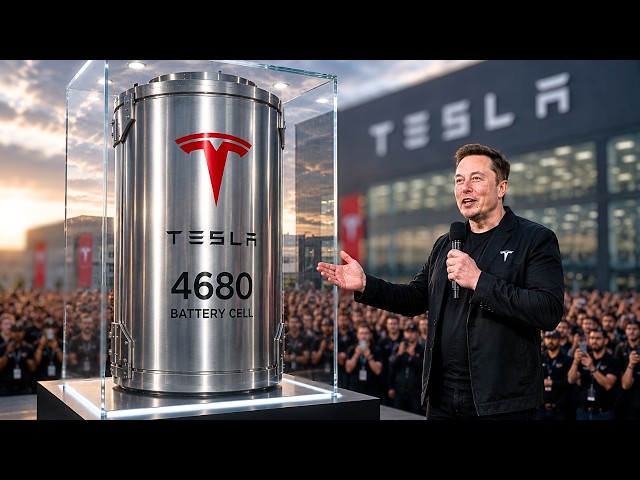
Giga Berlin, as one of Tesla's newest and most advanced facilities, is a prime candidate for deploying cutting-edge automation and lean manufacturing principles. The investment is earmarked for upgrading existing production lines, integrating more advanced robotics, and refining the manufacturing process for structural battery packs and the innovative 4680 battery cells. These technologies are not just about speed; they are fundamentally about reducing labor costs, optimizing material usage, and minimizing waste. For example, industry intelligence suggests a significant portion of the investment will go towards improving the 'gigacasting' process, which consolidates dozens of traditional parts into a single cast, drastically reducing complexity, weight, and assembly time. Such innovations directly translate into lower manufacturing costs per vehicle, enhancing Tesla's competitive edge.
Giga Berlin Investment Focus:
Automation Upgrade: Expected to increase Giga Berlin's automation percentage by an estimated 15% across key assembly lines.
Cost Reduction Target: Aiming to reduce per-unit manufacturing costs for the Model Y by approximately 8-10% within the next 18-24 months.
4680 Cell Production: Significant capital allocated to scale up integrated 4680 battery cell production, critical for future cost efficiencies and energy density.
Furthermore, the high energy costs in Germany and Europe at large necessitate a focus on energy efficiency within the manufacturing process. The investment likely includes upgrades to reduce the energy footprint of the factory, ranging from more efficient machinery to advanced heating and cooling systems. This is not merely an environmental consideration but a pragmatic economic one, directly impacting operational expenditures and overall vehicle cost. By streamlining production and reducing energy consumption, Tesla can mitigate some of the external cost pressures and maintain its aggressive pricing strategy without sacrificing critical margin.
Navigating a Crowded European EV Landscape: A Defensive and Offensive Stance
The conventional wisdom often frames Tesla as the undisputed leader, with competitors perpetually playing catch-up. However, the European EV market is rapidly maturing and becoming intensely competitive. Major legacy automakers such as Volkswagen, Mercedes-Benz, BMW, and Stellantis are aggressively launching new electric platforms and models, often tailored specifically for European tastes and driving conditions. Volkswagen's ID. series, Mercedes-Benz's EQ line, and BMW's i-models are gaining significant traction, while Asian challengers like Hyundai, Kia, BYD, and Nio are also expanding their presence with compelling offerings.
This $250 million investment in Giga Berlin can be interpreted as both a defensive maneuver to protect market share and an offensive push to maintain a technological and cost advantage. Tesla can no longer rely solely on its brand cachet; it must out-innovate and out-manufacture its rivals on cost and efficiency. By enhancing Giga Berlin's capabilities, Tesla is aiming to ensure that its Model Y remains highly competitive on price and features against a growing array of alternatives. This is particularly crucial as government incentives for EV purchases begin to wane in some European countries, placing greater emphasis on the intrinsic value and cost-effectiveness of the vehicles themselves.
The investment also signals a commitment to localizing more of its supply chain within Europe. Relying less on imports for critical components, especially battery cells and raw materials, reduces geopolitical risks, mitigates currency fluctuations, and shortens logistics times. This strategic localization not only makes the supply chain more resilient but also contributes to further cost reductions and greater control over quality. The push to integrate 4680 cell production directly within Giga Berlin is a prime example of this strategy, aiming to reduce dependence on external suppliers and maximize vertical integration.
Global Strategy and Strategic Resilience
Tesla's global manufacturing network, comprising Fremont, Shanghai, Texas, and Berlin, operates under a unified strategic vision. The investment in Giga Berlin is not an isolated decision but an integral part of this broader strategy for global resilience and localized agility. While Shanghai serves as a critical export hub for many markets, and Texas focuses on North American expansion and new product development, Giga Berlin is positioned as the crucial cornerstone for the European market and potentially for exports to other regions like the Middle East or Africa.
The pursuit of manufacturing excellence and cost efficiency in Berlin has ripple effects across the entire global operation. Innovations developed and perfected in Giga Berlin, particularly concerning the 4680 cell production and gigacasting, can be subsequently rolled out to other Gigafactories, fostering a continuous cycle of improvement and competitive advantage. This collaborative optimization is vital for Tesla to maintain its leading position against traditional automakers, which are increasingly adopting similar large-scale manufacturing techniques and battery integration strategies.
Key Takeaways on Giga Berlin's Investment
Cost Efficiency over Pure Volume: The primary driver is reducing per-unit manufacturing costs to sustain profitability amidst price competition.
Technological Advancement: Focus on integrating next-gen manufacturing processes like enhanced gigacasting and 4680 battery cell production.
Competitive Response: A strategic move to defend market share against rapidly advancing European and Asian EV rivals.
Supply Chain Resilience: Strengthening local sourcing and vertical integration to mitigate geopolitical risks and logistics costs.
Global Manufacturing Synergy: Innovations from Giga Berlin are intended to benefit Tesla's worldwide factory network.
Ultimately, while meeting customer demand remains a fundamental objective for any growth-oriented company, framing Tesla's $250 million investment in Giga Berlin solely through that lens simplifies a far more intricate strategic calculus. This capital injection represents a proactive and necessary step to fortify Tesla's competitive position by driving down costs, enhancing manufacturing sophistication, and building a more resilient and localized supply chain. It underscores a pivot in the EV industry: from merely producing electric vehicles to producing them at an unparalleled scale, efficiency, and affordability. The investment is not just about keeping pace with demand; it is about setting the pace for the next generation of automotive manufacturing and securing Tesla's profitability in a rapidly evolving, hyper-competitive global market.
Frequently asked questions
What is Tesla's recent investment in Gigafactory Berlin?
Tesla recently announced a $250 million investment in its Gigafactory Berlin-Brandenburg. This substantial capital injection is primarily aimed at boosting Model Y production capacity and expanding its European market presence.
Why is Tesla investing in Giga Berlin?
The investment signals robust demand for Tesla's electric vehicles and an aggressive strategy to dominate the European market by increasing production and market share.
Which Tesla model will benefit most from this investment?
The $250 million investment is primarily aimed at boosting Model Y production capacity at the Gigafactory Berlin-Brandenburg plant.
What does this investment mean for the European EV market?
It indicates Tesla's aggressive expansion strategy to increase its market share and production dominance within the European electric vehicle market, signaling heightened competition.
Where is Gigafactory Berlin-Brandenburg located?
Gigafactory Berlin-Brandenburg is Tesla's manufacturing facility located in Germany, specifically in Grünheide, Brandenburg, near Berlin.
Does this investment suggest strong demand for Tesla EVs?
Yes, the $250 million investment is widely interpreted as a clear signal of robust and sustained demand for Tesla's electric vehicles, particularly the Model Y.