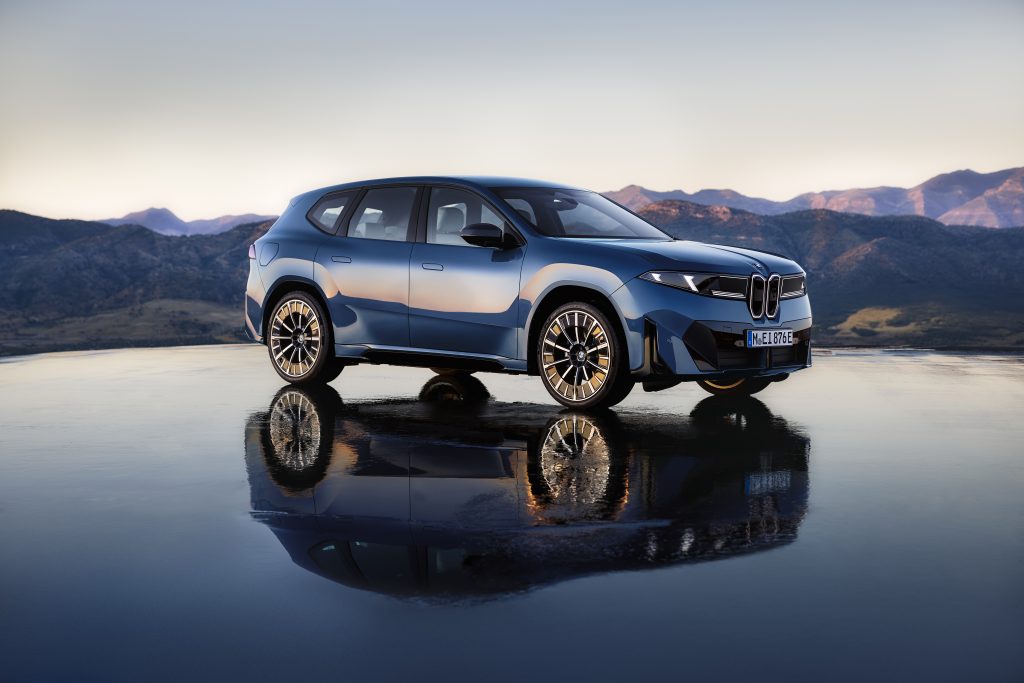
BMW's all-electric iX3 SUV demands a premium lease approaching $1,000 monthly, raising questions about EV accessibility and luxury market strategy amidst evolving consumer expectations.
The new BMW iX3, the German automaker's all-electric mid-size SUV, is hitting the market with lease figures approaching $1,000 per month in key regions, a price point that immediately triggers scrutiny over EV accessibility and premium branding strategies. This aggressive pricing positions the iX3 at the upper echelon of the electric vehicle leasing landscape, challenging consumer expectations for mainstream adoption.
BMW, a legacy automotive giant, is accelerating its push into electrification, with the iX3 serving as a critical entry in the highly competitive premium SUV segment. This particular model, based on the popular X3 platform, is designed to bridge the gap for customers transitioning from internal combustion engine (ICE) vehicles, making its financial accessibility a key indicator of broader EV market health and consumer readiness.
Industry analysis pegs typical lease offers for the iX3, especially for well-optioned trims, within the $900-$980 range monthly with standard down payments, varying slightly by market but consistently touching the four-figure threshold. Such figures are often seen with high-performance luxury sedans or larger SUVs, not a mid-tier electric crossover aiming for wider appeal and volume sales.
While BMW positions the iX3 as a premium offering, this pricing strategy stands in stark contrast to efforts by other manufacturers to lower the entry barrier for EVs, particularly in markets where government incentives are shrinking or less impactful.
The iX3's steep lease costs underscore a growing tension in the automotive industry: the push for rapid EV adoption versus the inherent expense of advanced battery technology and premium features. This is not just a BMW phenomenon; many legacy automakers are struggling to mass-produce truly affordable EVs without compromising profitability or brand perception, creating a widening affordability chasm.
This pricing dynamic exacerbates the existing divide between luxury and accessible electric vehicles, effectively segmenting the market into those who can afford a premium EV experience and those for whom electrification remains a distant, expensive dream. For many, a $1,000 monthly commitment represents a significant financial hurdle, relegating the iX3 to a niche of early adopters and corporate fleets rather than enabling broad consumer transition.
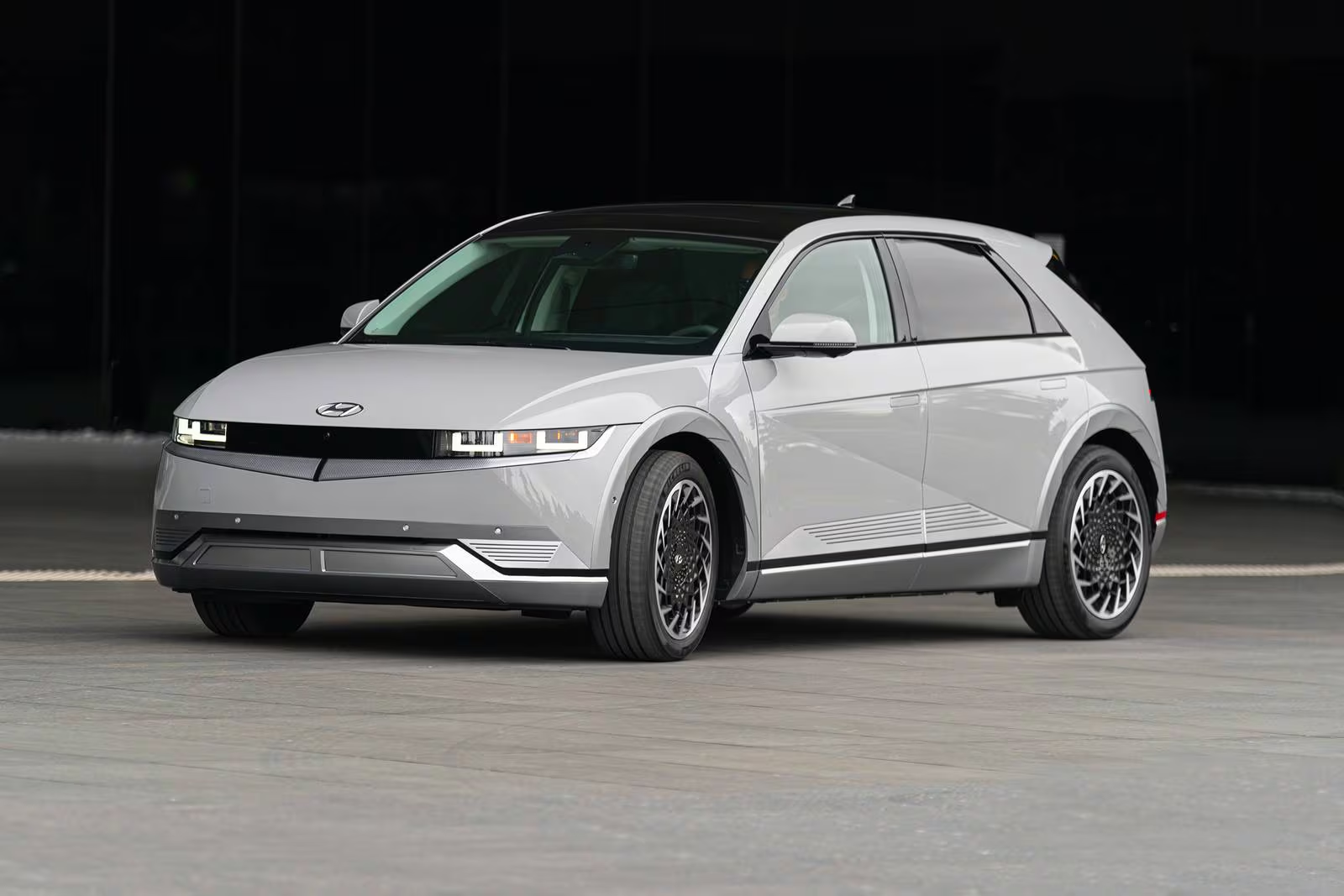
The competitive landscape highlights this discrepancy further. While the iX3 directly competes with models like the Audi Q4 e-tron and Mercedes EQC in the premium segment, its lease costs often exceed those of a similarly specced Tesla Model Y, which benefits from Tesla's vertically integrated manufacturing and direct-to-consumer sales model. Even newer entrants like the Hyundai IONIQ 5 and Kia EV6 offer compelling packages at significantly lower monthly outlays, albeit with different brand cachet.
The economics of EV leasing are complex, driven by the vehicle's MSRP, its projected residual value at lease end, and the money factor, which is essentially the interest rate. With rapid technological advancements in battery chemistry, range, and charging speeds, the fear of rapid obsolescence can depress future residual values for EVs, making lessors—and by extension, consumers—pay a higher premium upfront to mitigate that risk.
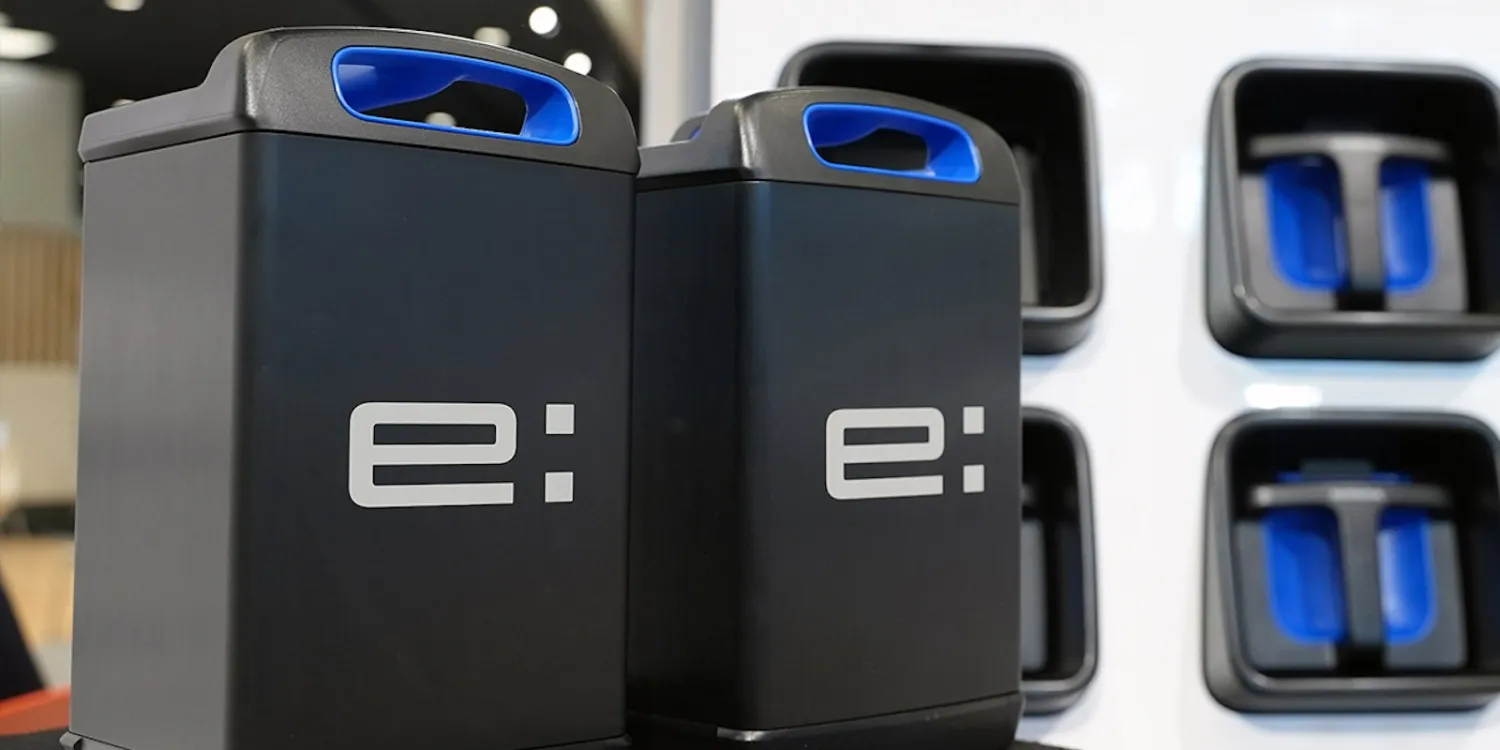
Underneath the lease payments lies the significant cost of the battery pack. The iX3, for example, features an 80 kWh battery (74 kWh usable capacity). While battery costs per kilowatt-hour have trended downwards, the sheer size required for competitive range in a premium SUV still represents a substantial portion of the vehicle's manufacturing cost, compounded by volatile critical mineral prices and ongoing supply chain complexities.
Adding to the financial pressure, government incentives for EV purchases and leases are either being scaled back or becoming more restrictive across various key markets. The US Inflation Reduction Act, for instance, introduced stringent local manufacturing and battery sourcing requirements, while several European nations have phased out or significantly reduced their direct purchase subsidies, removing a critical cushion that previously made premium EVs more palatable.
BMW's strategy appears to be a deliberate effort to maintain its premium brand positioning and margins, even if it means foregoing higher volume in the immediate term. The company has historically focused on engineering excellence and luxury attributes, and the iX3's pricing reflects a belief that its target demographic values these qualities sufficiently to justify the premium, regardless of the EV powertrain.
The rise of software-defined vehicles (SDVs) also plays an subtle role in these pricing strategies. As automakers like BMW explore subscription-based features post-purchase, the initial vehicle price or lease terms could implicitly factor in the potential for recurring revenue streams. This shift could subtly inflate upfront costs, or at least prevent them from decreasing at the rate some might expect given manufacturing efficiencies.
A direct comparison to its ICE counterpart, the BMW X3 xDrive30i, reveals the stark premium. A well-optioned gasoline X3 can often be leased for $600-$700 per month, a significant difference that underscores the current "EV premium" that consumers are expected to absorb. This disparity continues to be a major friction point for broader EV adoption, beyond early enthusiasts.
This pricing strategy effectively targets a specific segment: affluent early adopters, brand-loyal customers upgrading from other premium BMWs, and corporate fleets with sustainability mandates and robust budgets. It suggests BMW is not yet aiming for mass-market penetration with the iX3, instead focusing on profitability per unit and solidifying its luxury EV credentials.
The rapid pace of technological innovation in the EV space presents a unique challenge for residual values and, consequently, lease pricing. Today's cutting-edge battery range or charging speed could be average in just two or three years, making lessors wary of significant depreciation. This dynamic often forces higher money factors and less attractive lease terms compared to more mature, stable ICE vehicle segments.
Regional disparities further complicate the picture. Lease costs for the iX3 can fluctuate significantly between markets like Europe, North America, and parts of Asia, influenced by local taxes, import duties, specific market demand, and the availability of localized manufacturing or assembly. These variances highlight the fragmented nature of the global EV market and the differing economic pressures automakers face.
For legacy automakers like BMW, the challenge lies in scaling EV production and innovating aggressively while simultaneously maintaining brand integrity and profitability in a highly competitive and rapidly evolving landscape. The iX3’s pricing serves as a stark reminder of the financial tightrope these giants walk as they transition away from decades of ICE dominance.
The trajectory of models like the iX3 will be a bellwether for how legacy automakers navigate the tricky balance between profitability, technological advancement, and the mass market appeal essential for a truly sustainable EV future.
Frequently asked questions
How much does the new BMW iX3 cost to lease per month?
The new BMW iX3 is launching with lease figures approaching $1,000 per month in key regions. This premium pricing positions it at the upper end of the electric vehicle leasing market, prompting discussions on EV affordability.
Is the BMW iX3 an all-electric vehicle?
Yes, the BMW iX3 is an all-electric mid-size SUV, part of BMW's growing electric vehicle lineup.
Why is the BMW iX3 lease so expensive?
The iX3's high lease cost reflects its positioning as a luxury EV, premium branding strategies, and the current market dynamics for advanced electric vehicle technology.
What kind of vehicle is the BMW iX3?
The BMW iX3 is an all-electric mid-size SUV, designed to combine luxury, performance, and zero-emission driving.
Does the iX3 pricing impact EV accessibility?
Yes, the aggressive pricing of vehicles like the iX3 raises questions about EV accessibility, especially for consumers looking for more affordable electric options.
What are alternatives to the BMW iX3?
Alternatives might include other premium electric SUVs like the Tesla Model Y, Audi Q4 e-tron, Mercedes-Benz EQB, or Hyundai IONIQ 5, depending on specific features and budget.