In a significant policy shift, Tesla now requires Dutch buyers to subscribe to FSD or pay €7,500 for features once standard, marking a major change in Europe.
Tesla Inc. has ceased offering its Basic Autopilot features as a standard inclusion for new vehicle orders in the Netherlands.
Customers in the Netherlands must now purchase or subscribe to Full Self-Driving (Supervised) for €99 per month or a one-time payment of €7,500 (approximately USD 8,100 or INR 6.75 Lakh).
The move makes the Netherlands the first European market to adopt a subscription-first model for advanced driver-assistance systems, following a similar strategy in North America.
This decision coincides with the recent regulatory approval of FSD (Supervised) in the Netherlands and is seen as a testing ground for a broader European rollout.
The strategy faces potential competitive challenges from other automotive players, who offer similar active lane-centering features as standard in their vehicles.
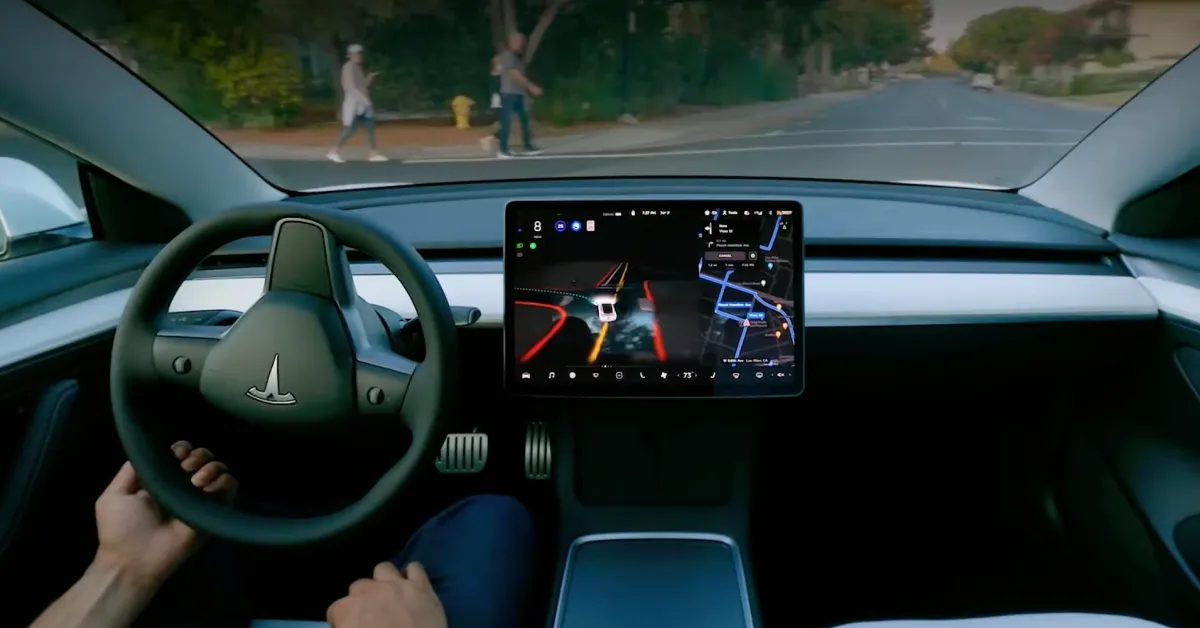
Tesla Inc., the global pioneer in electric vehicles and advanced automotive technology, has implemented a significant policy change in the Netherlands by removing Basic Autopilot functionalities from its standard vehicle offerings. Effective immediately for new orders, customers configuring a Model 3 or Model Y in the Dutch market will no longer find Basic Autopilot as a free inclusion or an optional add-on. This strategic pivot, first observed on the company's online configurator, mandates that any advanced driver-assistance features beyond basic cruise control and mandated emergency systems must now be accessed through its Full Self-Driving (Supervised) package.
The Full Self-Driving (Supervised) system, which includes features like Autosteer and active lane-centering, is available to Dutch buyers either as a monthly subscription costing €99 (approximately USD 107 or INR 8,900) or via a one-time purchase price of €7,500. This shift positions the Netherlands as the first European nation where Tesla has entirely removed the free tier of its driver-assistance software, replicating a controversial move initiated in North America in January 2026. Other major European markets, including Germany and France, continue to offer Basic Autopilot as a standard feature, at least for the time being, highlighting the Netherlands as a critical test market for this new revenue model.
Industry analysts familiar with the automotive tech sector suggest this move is intrinsically linked to Tesla's broader strategy to monetise its software capabilities and accelerate the adoption of its Full Self-Driving technology. The company has set a deadline of May 15, 2026, for the one-time FSD purchase option in the Netherlands, after which only the subscription model will be available for customers seeking these advanced features. This phased approach underscores a clear intention to transition European consumers towards a recurring revenue model for its cutting-edge, albeit still evolving, autonomous driving systems.
Strategic Implications and Regulatory Context
The timing of Tesla's decision in the Netherlands is not coincidental. The Dutch market recently became the inaugural European country to grant type approval for Tesla's FSD (Supervised) system, under the UN R-171 regulation, in April 2026. This regulatory green light has allowed Tesla to begin rolling out FSD to existing Dutch owners, paving the way for the company to experiment with its commercial strategy in a compliant environment. The removal of Basic Autopilot effectively creates a functionality gap, compelling new buyers who desire lane-keeping assistance or other advanced features to opt into the FSD ecosystem.
This aggressive push into a subscription-first model, however, presents a significant competitive conundrum for Tesla in the European landscape. Since July 2024, the EU's General Safety Regulation 2 (GSR2) has mandated that all new cars include emergency lane-keeping systems. While Tesla's vehicles inherently comply with these safety requirements, the removal of Basic Autopilot means that advanced functionalities like active lane-centering, which many competitors offer as standard, now come at a premium. For instance, a base Model 3 in the Netherlands, starting at €36,990 (approximately USD 39,949 or INR 33.29 Lakh), now only includes GSR2-mandated emergency assists, not the active lane-keeping found free in rival models.
Tesla FSD (Supervised) Pricing in Netherlands:
One-time purchase: €7,500 (approx. USD 8,100 / INR 6.75 Lakh)
Monthly subscription: €99 (approx. USD 107 / INR 8,900)
Leading automotive manufacturers such as Volkswagen, Hyundai, and Toyota consistently integrate active lane-centering and comprehensive driver-assistance suites as standard features across models priced comparably to, or even below, the Model 3. This juxtaposition forces Dutch Tesla buyers to pay a recurring fee for capabilities that are often considered table stakes in the competitive European EV market. The move has generated debate among consumers and industry observers, raising questions about the value proposition and potentially impacting Tesla's market share in regions where alternatives offer more out-of-the-box functionality.
The Road Ahead: Europe and Global Automotive Trends
Tesla's strategy in the Netherlands is widely perceived as a blueprint for a broader European rollout. The company has already indicated a May 21 deadline for one-time FSD purchases across other European markets, signaling an imminent transition to a subscription-dominated model continent-wide. As FSD approvals expand to other territories, such as Flanders, which is reportedly moving towards recognition, Basic Autopilot is expected to progressively disappear from more European configurators. This approach aligns with a growing trend in the automotive industry to generate recurring revenue through software-defined features, moving beyond traditional hardware sales.
However, the success of this strategy hinges on several factors, including regulatory acceptance, consumer willingness to pay for subscription services, and the competitive landscape. The backlash observed in North America following a similar move suggests that European consumers, accustomed to robust standard features from established automakers, might react even more strongly. The market dynamics in Europe, characterized by strong alternatives from local giants like BMW, Mercedes-Benz, and Volkswagen, alongside Asian contenders like Hyundai and Kia, could intensify the pressure on Tesla to justify the value of its paid FSD offering.
Base Tesla Model 3 Price in Netherlands:
Starting at €36,990 (approx. USD 39,949 / INR 33.29 Lakh)
Does not include active lane-centering without FSD purchase/subscription.
From an Inc42 perspective, this development highlights the escalating importance of software monetization in the global automotive sector, a trend that resonates deeply within the Indian startup ecosystem focused on mobility and AI. Companies developing advanced driver-assistance systems (ADAS) and autonomous driving technologies, both globally and in India, are closely watching Tesla's moves as a case study in commercialization. The shift underscores the broader industry's evolution towards a subscription economy, where recurring revenue streams from software and services become as critical as hardware sales. How Tesla navigates this delicate balance between driving revenue and maintaining customer satisfaction in diverse global markets will set a precedent for the future of automotive technology and business models.
Frequently asked questions
Why did Tesla make Basic Autopilot a paid feature in the Netherlands?
Tesla Inc. made Basic Autopilot a paid feature in the Netherlands to align with its Full Self-Driving (Supervised) package. This strategic move aims to standardize its advanced driver-assistance system offerings, potentially to streamline development and monetize premium software features across its global fleet. The Netherlands is the first European market to see this change.
What is the cost of FSD in the Netherlands?
In the Netherlands, customers can subscribe to Full Self-Driving (Supervised) for €99 per month or make a one-time payment of €7,500 (approximately USD 8,100 or INR 6.75 Lakh).
Is this change happening in other countries?
The article indicates that the Netherlands is the first European market where this change has occurred, suggesting that Tesla may expand this policy to other regions in the future.
What features are included in Basic Autopilot?
Basic Autopilot typically includes Traffic-Aware Cruise Control and Autosteer, which assist with maintaining speed and steering within a lane on compatible roads.
What is the difference between Autopilot and FSD (Supervised)?
Autopilot offers fundamental driving assistance, while FSD (Supervised) provides more advanced capabilities like Navigate on Autopilot, Auto Lane Change, Autopark, Summon, and Traffic Light and Stop Sign Control, requiring active driver supervision.
How does this impact new Tesla buyers in the Netherlands?
New Tesla buyers in the Netherlands will no longer receive Basic Autopilot features as a standard inclusion with their vehicle and must now purchase or subscribe to the Full Self-Driving (Supervised) package to access them.